


Photography by Fletcher Wold
At first glance, it looks like a real laptop — open on a table, the screen dark, the keyboard perfectly spaced. Visitors lean closer. Some see it sooner than others: “Is this LEGO?” one asks. A ripple of delightful laughter follows. Kelly Bartlett smiles. That’s her favorite moment — when recognition turns to wonder. Bartlett’s art operates on that line between the ordinary and the extraordinary. She builds with precision and wit, turning bricks into metaphors. Her sculptures are small, deliberate acts of seeing differently — a study of how the familiar can still surprise us.

An artist and season four LEGO Masters contestant, Bartlett approaches her work like a storyteller. Each piece is its own world: interiors that hum with unseen life, robots that observe nature’s beauty for the first time, scales that truly balance. In her hands, LEGO isn’t a toy or even a medium — it’s a language of curiosity, where every click carries meaning.
There's more! Continue reading this article by signing in or become a BRICKA subscriber.
Or sign-up to get digital access to Issue 1 for free.
Early Imagination
Bartlett grew up in the Chicago suburbs, where creativity was a household value and the holidays meant magic — specifically, LEGO magic. “The Yellow Castle was the first set I ever built,” she remembers. “My mom put it together on Christmas morning while I watched. I was just five years old and had never put together a LEGO set before.”
She and her brother spent entire weekends on the floor, building towns, crafting stories, and narrating lives for their minifigs. They built sets that became settings for their own world-building. “It’s one of my favorite memories as a kid, we just had the best time getting creative with the storytelling.”
That instinct never left her. Even when adult life crowded out play, that creative muscle — the one that loves systems, balance, and the joy of narrative — waited quietly for rediscovery.
Rediscovering the Brick
Years later, Bartlett found herself in a familiar position: watching others build. This time, it was her children, and she helped them build set after set. As the years went on, a turning point came. “We got my daughter the Pet Shop modular, and she was so excited — I remember watching her put it together, and she didn’t need my help.” Barlett kept inquiring, “Are you sure you don’t need some help with that?” She realized she was jealous — she wanted to build again.
Her husband noticed and suggested she buy her own set and build. “I said, ‘No, adults don’t do that.’ And then one day he just came home with a set for me,” she recalls. It was Assembly Square — a modular set designed more for adults. She loved it. One set led to another, and another. She built a veritable village of modular buildings that lived around her house. With every set finished, her family would ask, “What’s next?”
At a certain point, Kelly began to think her hobby was getting expensive — and, worse, she was running out of shelf space. Plus, she wanted more. “I’d get focused on a set, finish, and think, ‘oh, now that’s done, what am I going to do?’ I needed to find some way of getting more fulfillment from the hobby than what I was getting from sets.”
Then came season one of LEGO Masters. Bartlett and her family watched it and loved it: “I was so impressed with what people could build from their imaginations.” Her family thought she’d be perfect on the show, but Kelly was skeptical. “I didn’t know how to build something with no directions. I’d just never really done that before. I built sets as a kid, built sets as an adult, but didn’t know where to start to build something from scratch.”
Her MOC building breakthrough came from an online LEGO building camp by one of the LEGO Masters season one participants, Boone Langston, also of Portland, Oregon. “It was right during COVID, I signed up immediately upon hearing about it.” It was the creative freedom unlock that she needed. Boone taught techniques and gave prompts each day. Kelly would build based on the prompt and get feedback from Boone on how to build better.
After the camp finished, Kelly just continued, although now she gave herself her own prompts. “It turns out that’s what I needed from my LEGO hobby — it was using my imagination. I found this avenue for getting creative with bricks and using them as a medium to build whatever I wanted. And it opened so many doors for me — I never stopped.”
What began as a hobby transformed into a creative calling. She started sharing builds online and received encouragement from the global AFOL community — this work became her art.
Building a Practice
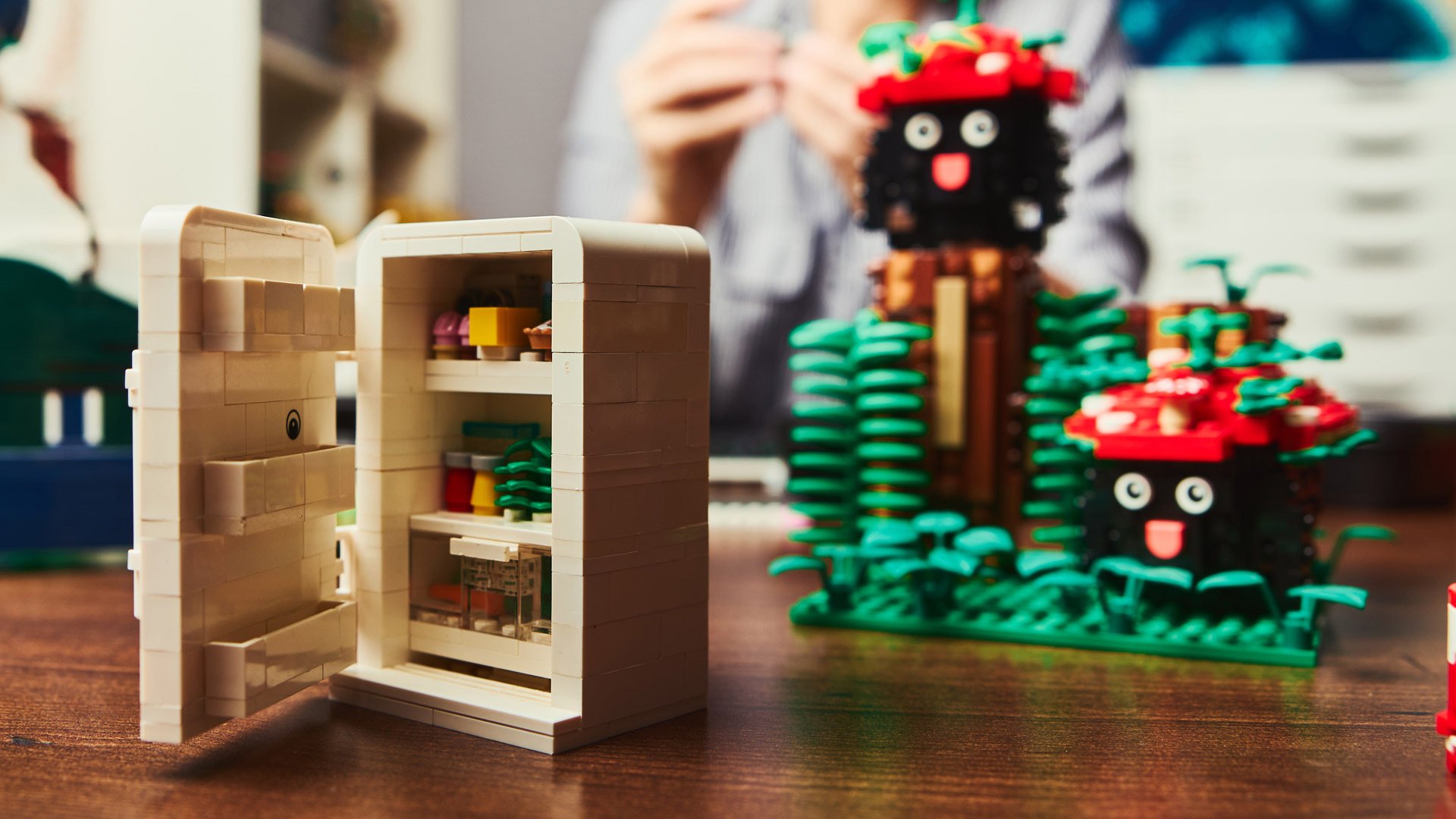
Bartlett’s first creation after Boone’s build camp was a refrigerator. “I had all this cute minifig-scale fruit — and I thought, I’m going to make a refrigerator for this, with a door that opens and closes and the drawers inside, to challenge myself.” She started experimenting with various bricks and hinges, honing the look and feel, the movement. And she did it — she made the fridge, in rainbow bricks she had on hand — then her brick collection started to grow.
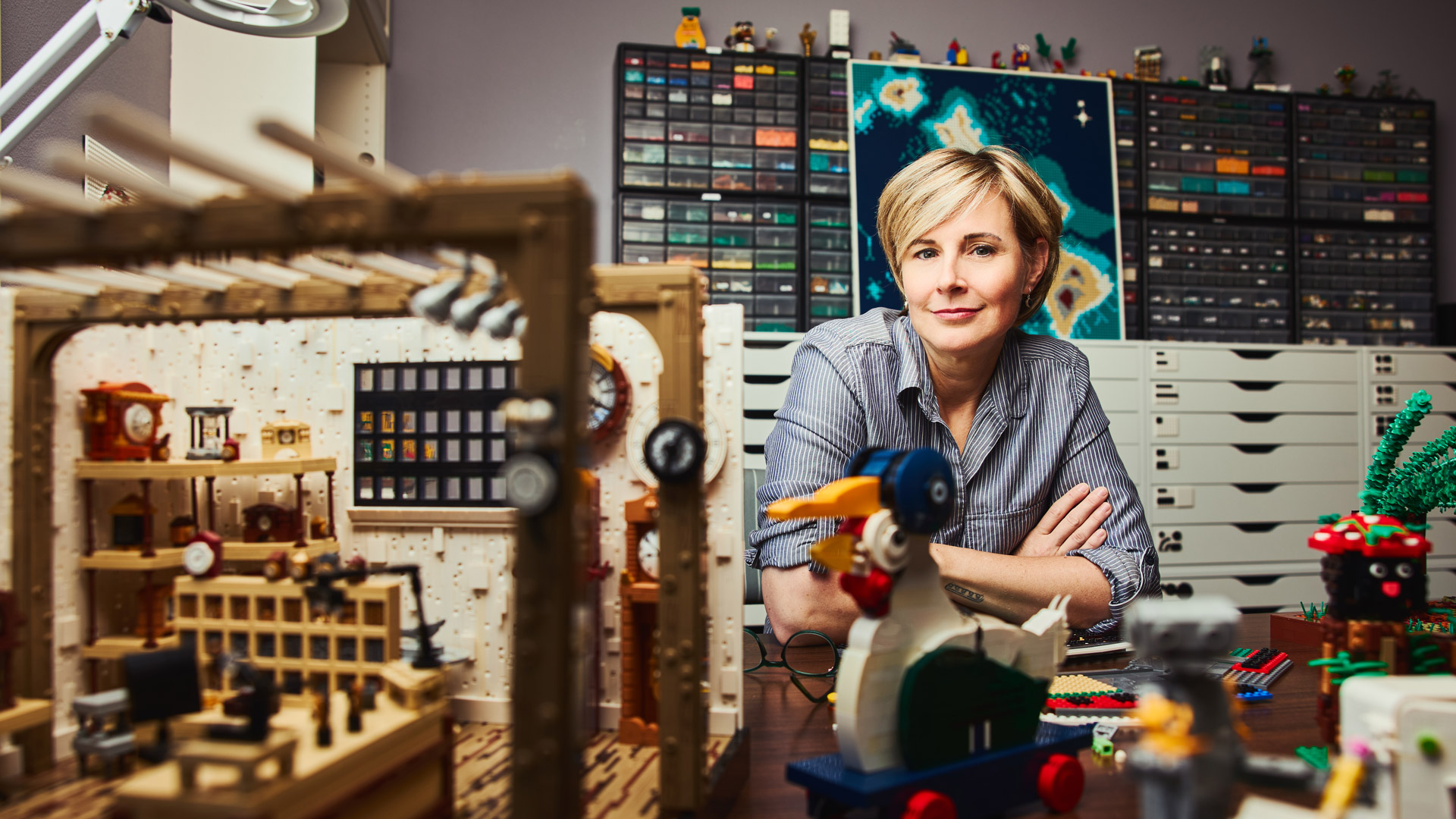
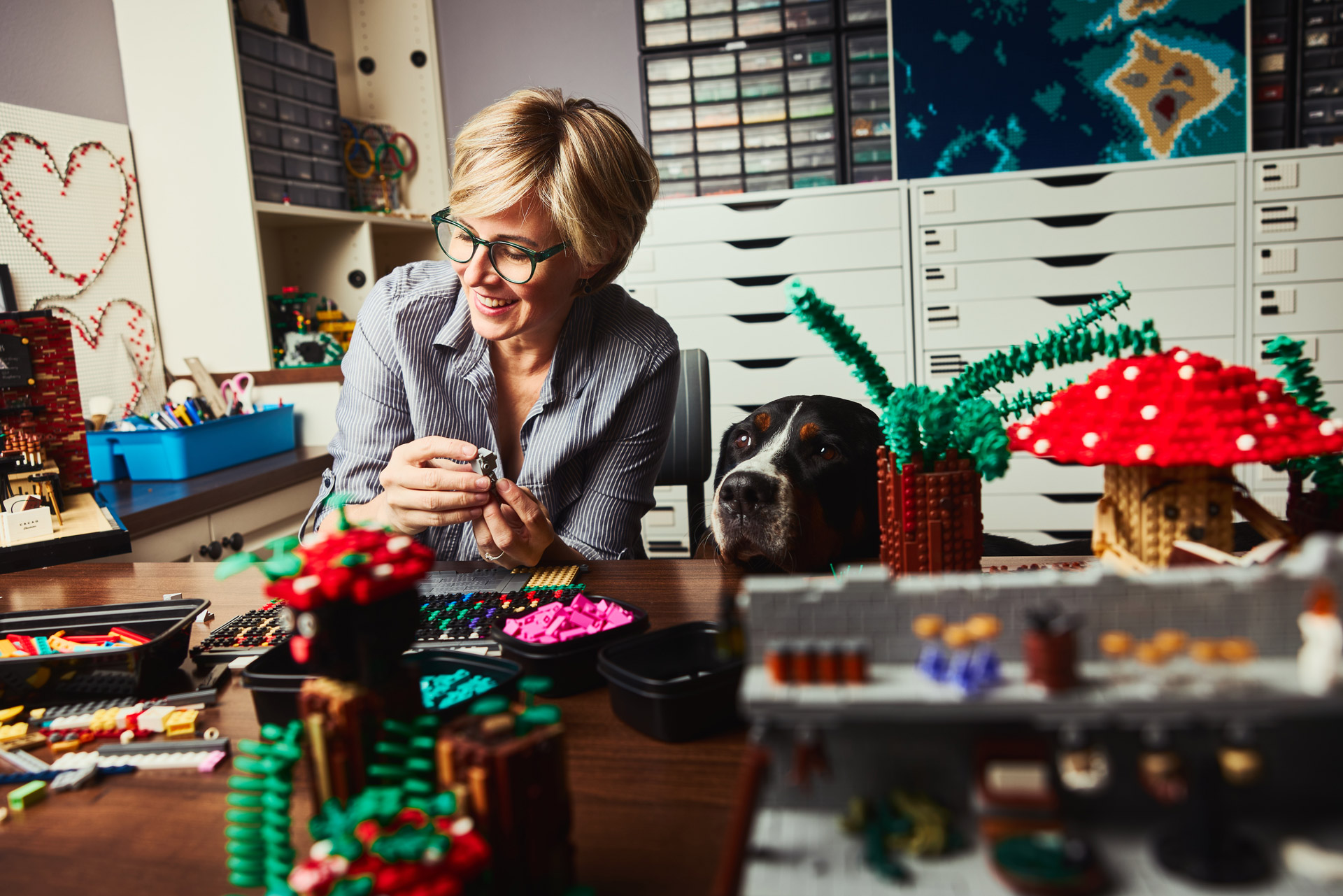
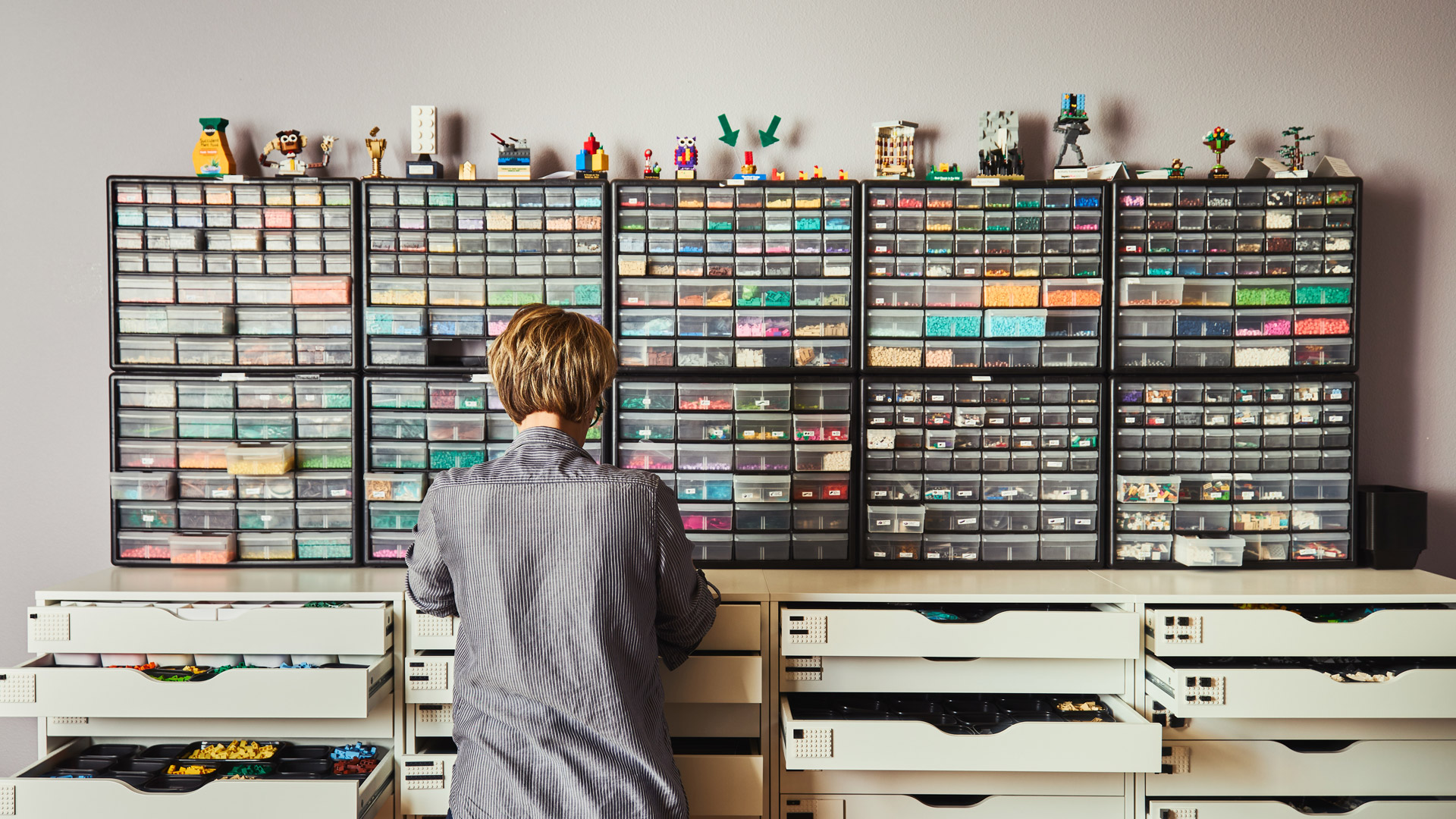
Today, Bartlett’s Portland studio is equal parts laboratory and haven. Sunlight filters through windows, hitting walls of transparent bins filled with nearly a million pieces, sorted by color, shape, and size. “I love that I can just pull parts and start making, it’s like a blank canvas.”
Her process is fluid — it’s about the feel of the bricks in her hands. Some pieces begin as sketches; others emerge directly from the building process. “I experiment with pieces and see what happens when they come together — what they do together.”
Every build reaches what she calls the point of no return — when the form and the story align and all that’s left is the work itself. “I might be jumping between MOCs, but then get to a point where I focus and want to see it done.”
Creating Worlds
As her technical skill grew, so did her ambition — from experiments on the work table to fully realized worlds that tell stories without words. Bartlett’s body of work is a study in precision, mood, and narrative — intimate scenes rendered in bricks.
Her Chocolate Shop and Clockmaker’s Studio, both featured in the LEGO House’s Masterpiece Gallery, are rich dioramas slightly larger than typical LEGO play scale, allowing Barlett to achieve greater detail. Each captures a single moment: the warmth of lamplight on a counter, the quiet clutter of tools mid-task. There are no minifigs. The people are implied — their presence felt through objects left behind. “I wanted to create spaces that feel lived in,” she says. “The details tell the story.”
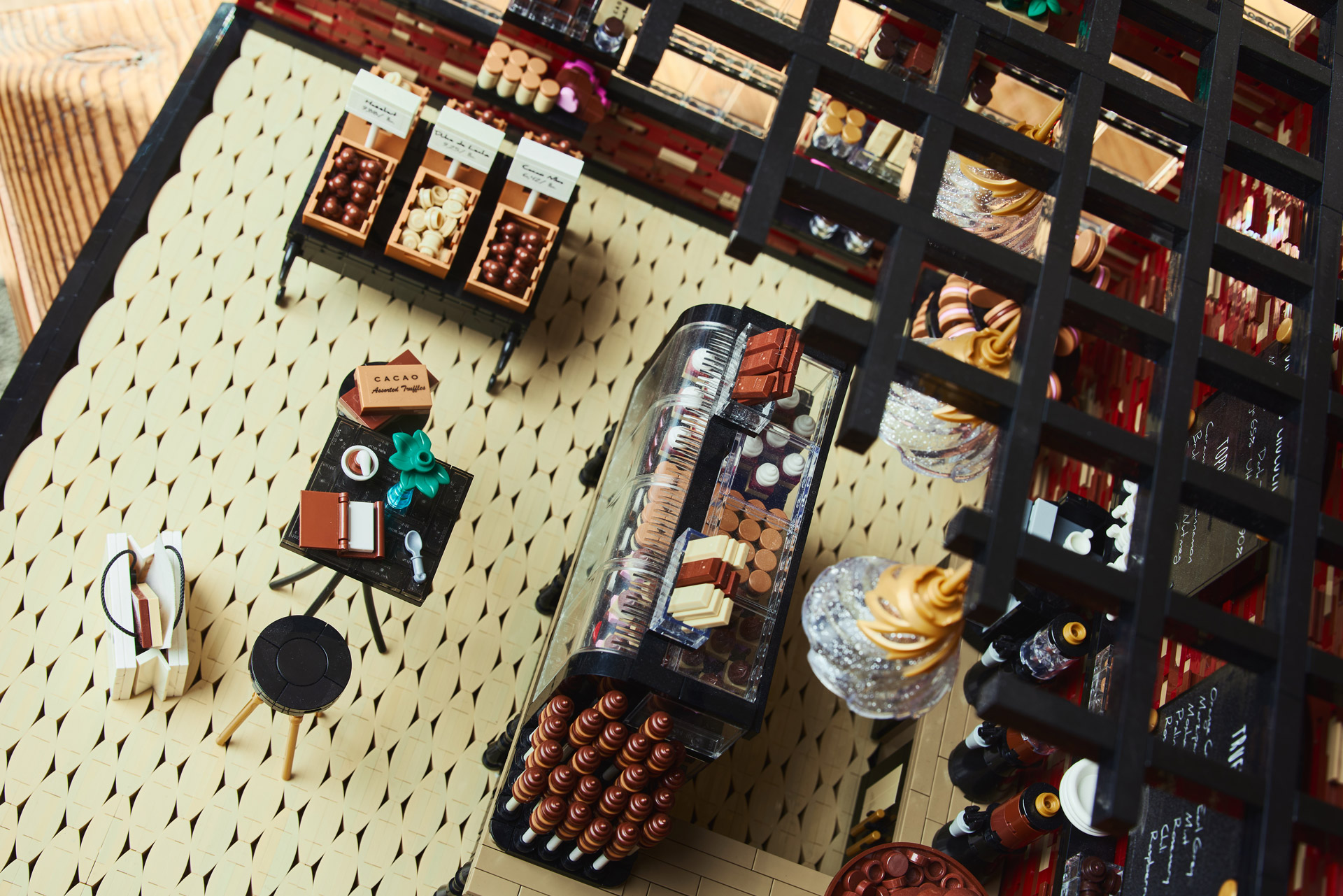
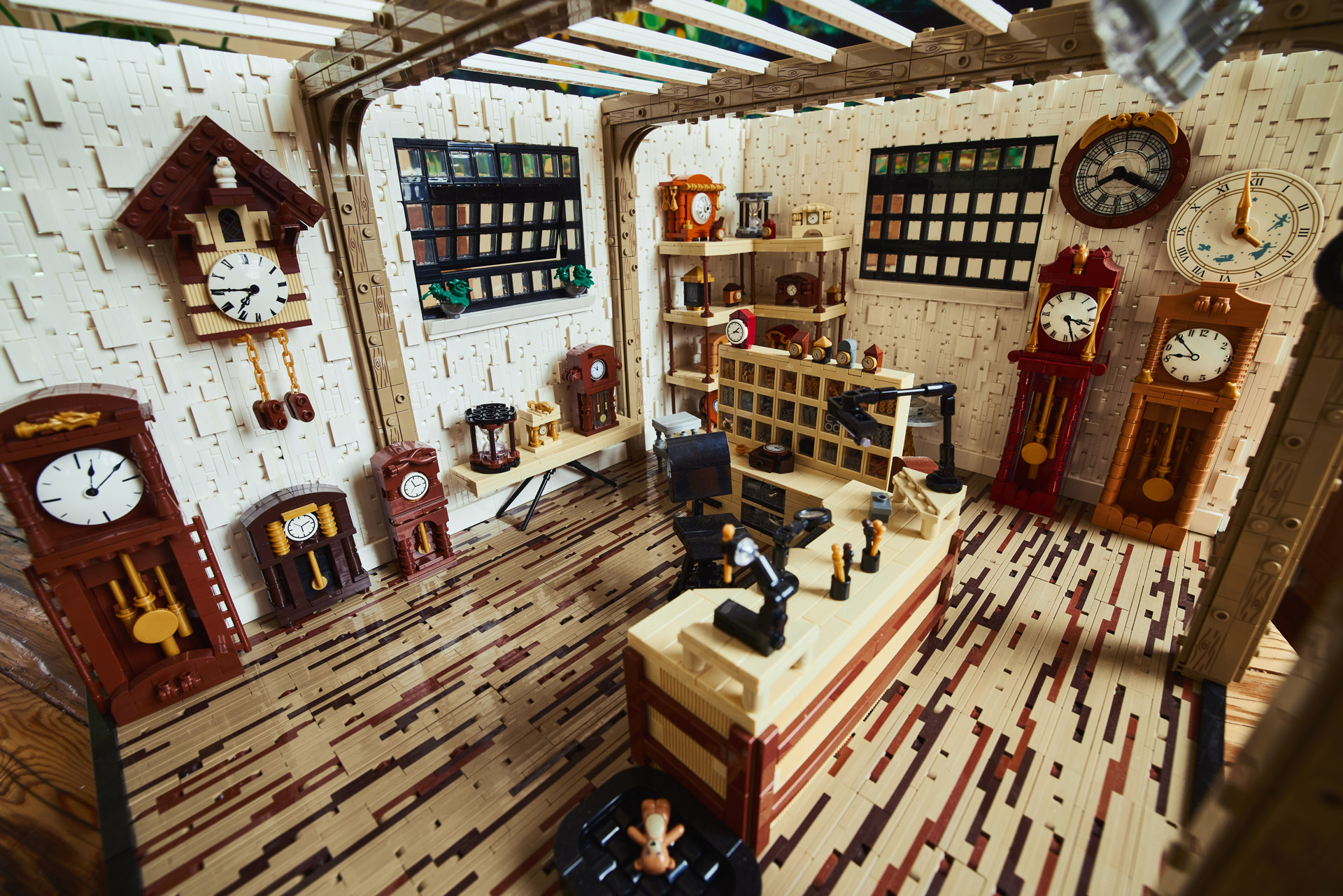
The Chocolate Shop is a meditation on comfort. Built in rich browns and tans, with accents of gold and deep burgundy, the space glows with memory and may even make you feel a bit hungry. If The Chocolate Shop is about indulgence and intimacy, The Clockmaker’s Studio is about time and focus — a builder’s portrait without the builder. The room is smaller, tighter — a stool pushed just slightly off-center, as if the craftsman stepped away mid-thought. Both pieces, in their own ways, are about devotion and the daily rhythm of making.
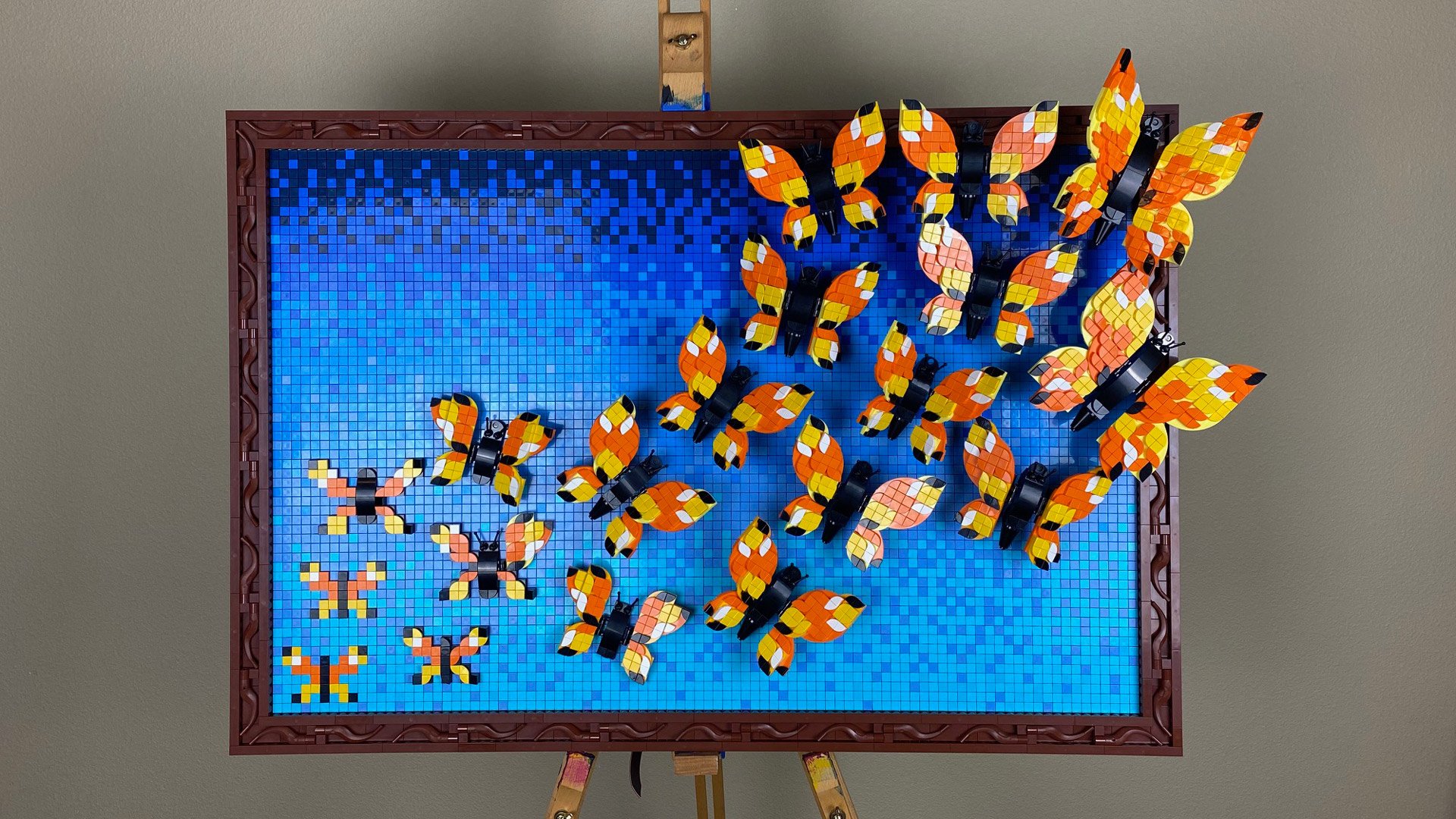
At LEGO Headquarters in Billund, her wall art installation, Emergence, takes flight — delicate arcs of colorful wings built from geometric elements. Barlett’s butterflies begin as brick pixels, then become three-dimensional right before our eyes, before bursting from the frame itself.
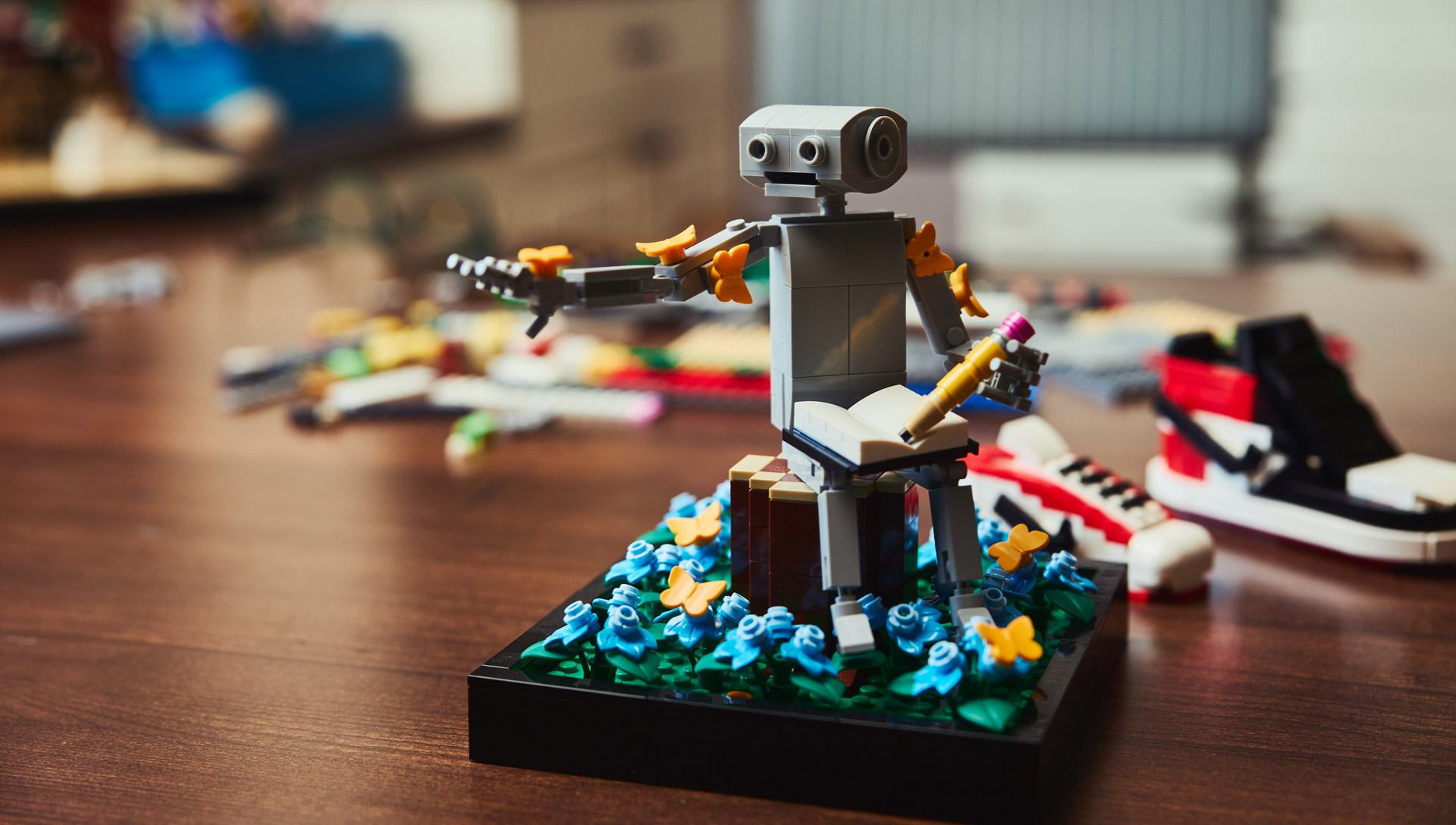
In every piece, Bartlett invites you to slow down and notice — to see story in stillness. One of her favorites, The Naturalist, is a small grey robot perched on a log, sketchbook in hand, surrounded by colorful butterflies. “I would say story definitely drives all my creations.” For this piece, the narrative is a robot experiencing the wonder of our natural world — and perhaps feeling emotions for the first time. The sculpture radiates life — a sentient machine finding wonder in nature — and encapsulates her entire artistic worldview: that play and observation are two sides of the same creative impulse.
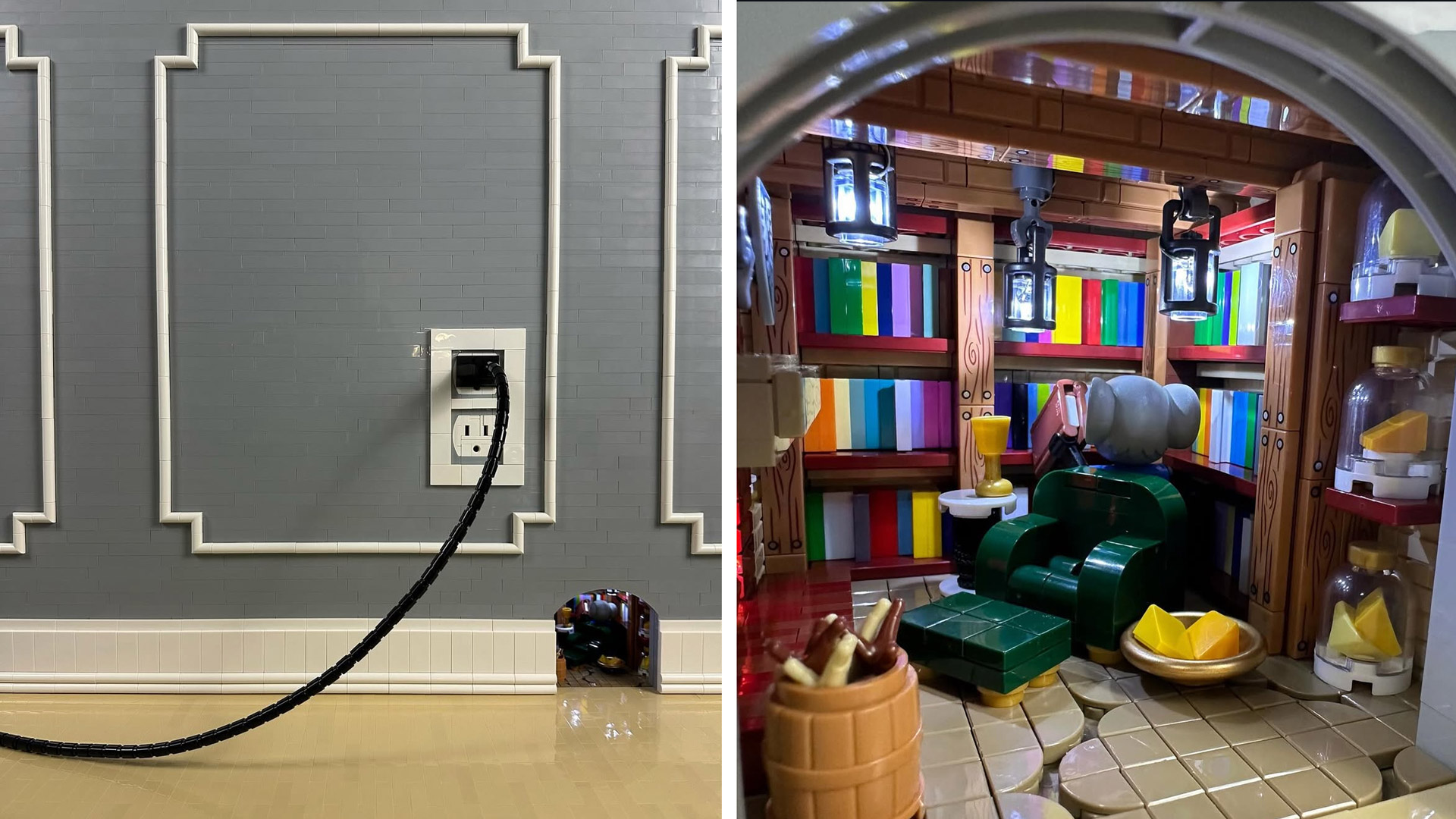
Another favorite is her Hideaway, a life-sized, brick-built wall with a mouse-scale domestic scene built into the baseboard: a tiny room with working lights, furniture, and a power outlet above it. The piece flips perspective, making the viewer both a giant towering above and a child kneeling to peer into this little world.
Scale is part of Bartlett’s recent explorations. She often builds larger pieces and commissions in her kitchen and has taken over part of the garage. Her kitchen bears her signature — a LEGO tile backsplash in soft, natural tones, with three-dimensional brick flowers that seem to bloom from the wall.
Together, these works define Bartlett’s creative signature: LEGO as emotional story. Her worlds aren’t static; they invite you in — to look closer, imagine deeper, and feel something unexpected.
Visibility and Voice
When Bartlett was cast on LEGO Masters, she carried that philosophy onto the national stage. The show reached out to her a few years in a row, she politely declined several times before finally saying yes, and was paired with Emilee Dahl for season four.
The pressure cooker of timed builds pushed her to new creative heights. “We built a clarinet, a roller coaster, a fantasy scene — all in mere hours. You can’t overthink. You just have to trust yourself and your partner. It was a bit stressful, definitely challenging, and it was fun – but fun was maybe third down the list,” she jokes.
The visibility brought new opportunities: gallery invitations, corporate commissions, LEGO collaborations, and events. Bartlett approached each with the same reverence as her personal work.

Her collaboration with Miracle-Gro brought more nature into her brick world — lush vertical garden vignettes that blended realism with whimsy.
A national law firm recently commissioned her to create a set of golden scales. “In my head, it’s a puzzle to solve. The commissions I say yes to usually get a yes because they sound creatively exciting.” The firm wanted it to be gold, which was an interesting constraint for Bartlett, given the limited number of LEGO parts in gold, and she also wanted to make it functional, to actually tip based on weight. The result is indisputably LEGO and sophisticated enough to exist in a law office.
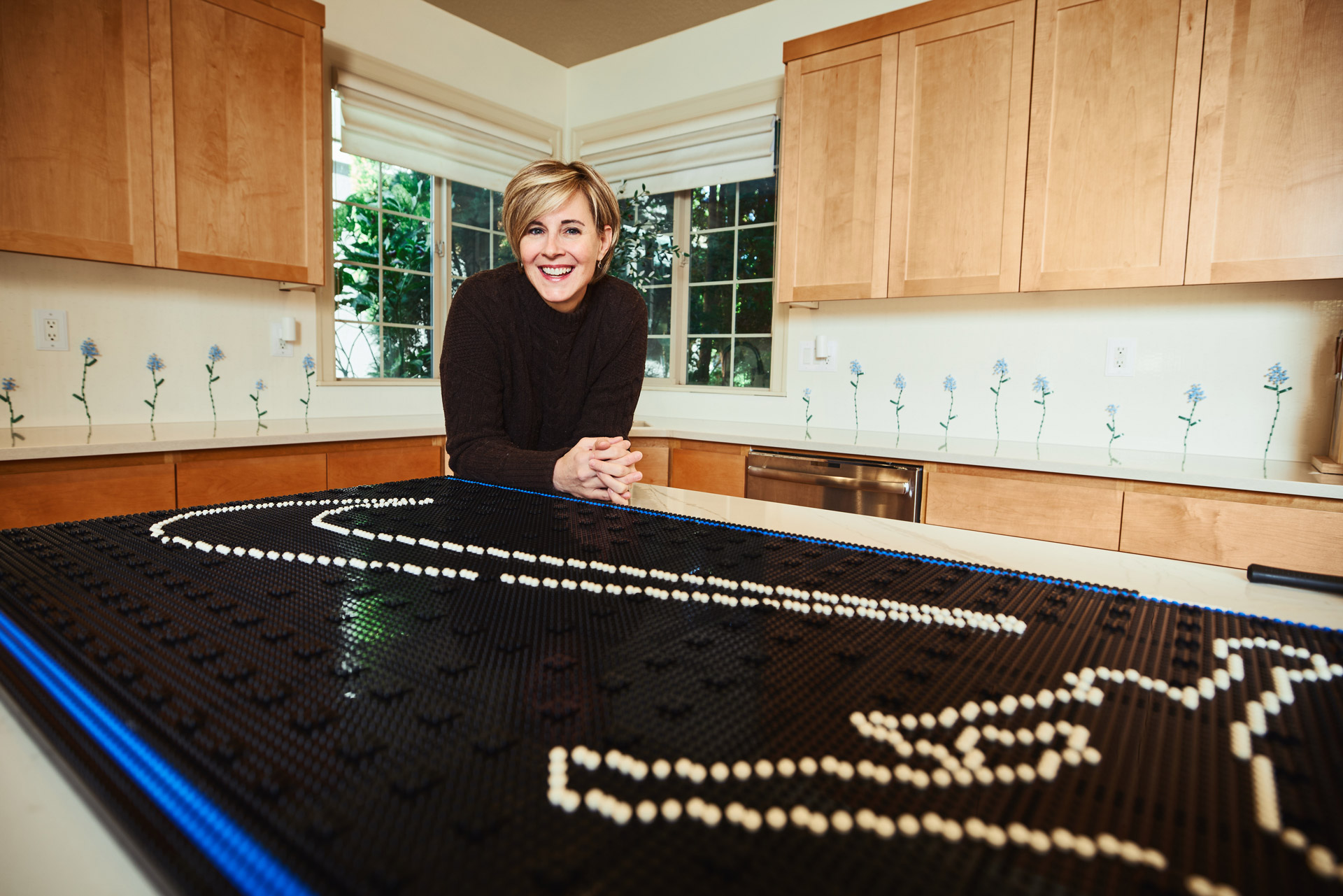
Her most recent commission is a large-scale brick-built frame featuring the Nike, Air Jordan, and Converse logos in black on a white background. The logos are monochrome but have a faceted texture, which makes them come alive and pop from the white background. That background is 6x6 white tiles that members of the Nike team will sign and install on the piece. Here, Kelly is still the storyteller, but also the facilitator of a shared experience, memory, and artifact.
The Next Chapter
Bartlett’s next big leap comes early next year: a solo exhibition at the Coos Bay Art Museum in Oregon — her first gallery-scale show. It’s a milestone for both her and a chance to inspire: “I want to inspire more people to think of LEGO as an art medium,” she says. “I hope to be one of the people putting LEGO art in more places, so I can keep growing as an artist and keep creating.”
She revels in making her dreams into reality — something she does with every piece. Asked why LEGO continues to captivate her, Bartlett doesn’t hesitate. “It’s the creative freedom and the possibilities of doing anything. The LEGO medium makes me feel free to experiment and make mistakes. There’s always something new to create, and I just keep thinking, ‘Now what can I build?’”
From narrative-driven worlds to large-scale installations, Bartlett’s work doesn’t just recreate the world — it reawakens our capacity to notice it: to find story in structure, emotion in order, and true wonder in these little plastic bricks.
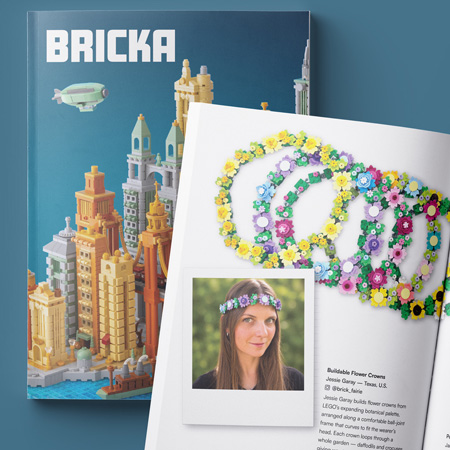
You’re reading the BRICKA Issue 1 preview.
Subscribe to unlock the full magazine archive and future issues.