

Photography by Avantika Gargya
Printmaking has always been an act of translation.
Ink to surface. Surface to paper. Pressure as the bridge between the two. For centuries, the plate has taken many forms — carved wood, shaped rubber, etched metal — each one holding an image in reverse, waiting to be revealed. The process is slow, physical, and a little uncertain. You never fully see the result until the moment of the pull.
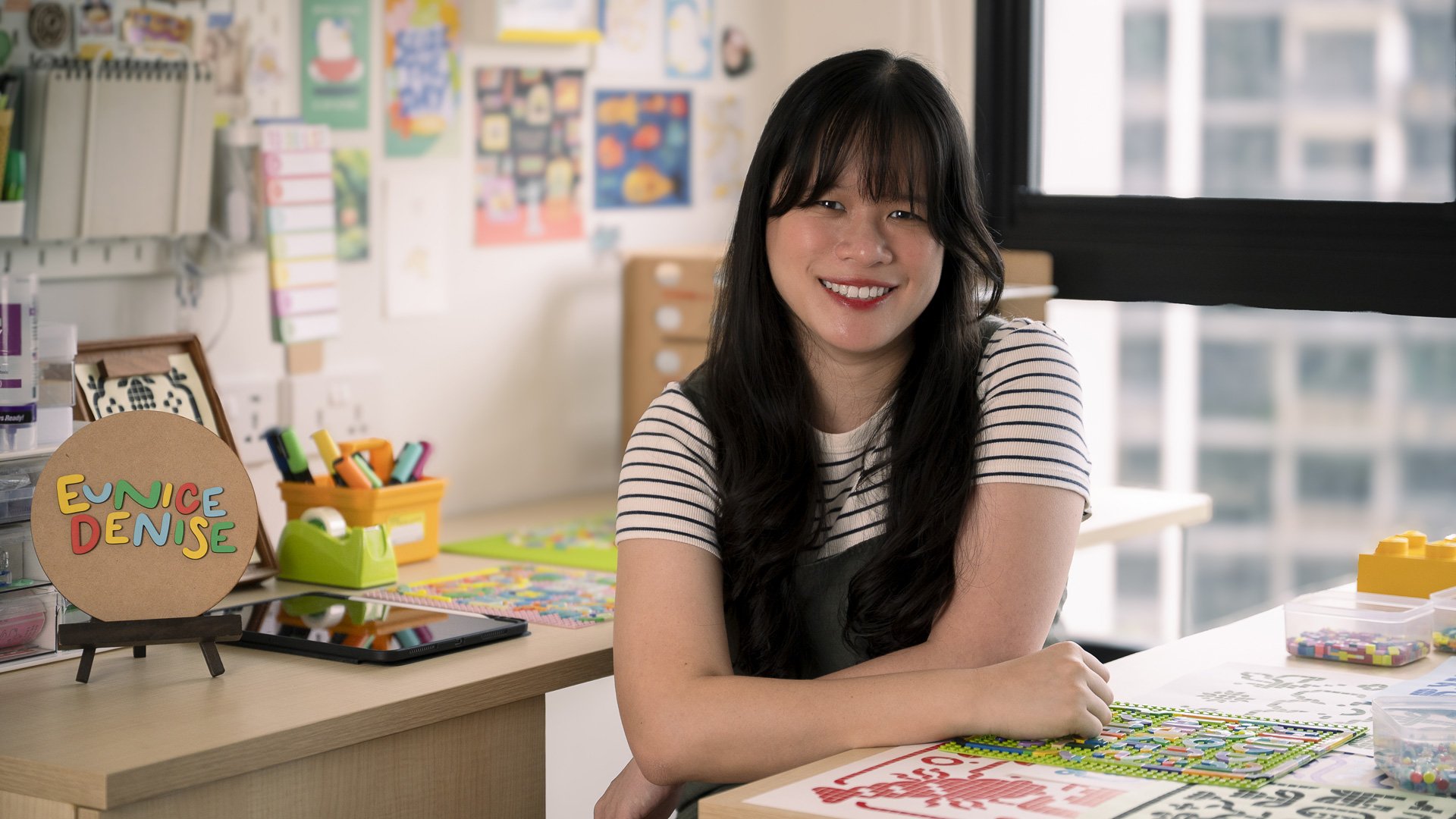
But what about a different kind of plate? Singapore-based printmaking artist Eunice Chiong uses LEGO tiles arranged on a base plate as her printing plate — it’s built, not carved.
The results carry the feel of LEGO — those oh-so-recognizable tile shapes — as well as Eunice’s unique, abstract graphic designs that come to life as she pulls the paper from the press.
There's more! Continue reading this article by subscribing to BRICKA.
There's more! Continue reading this article by subscribing to BRICKA.
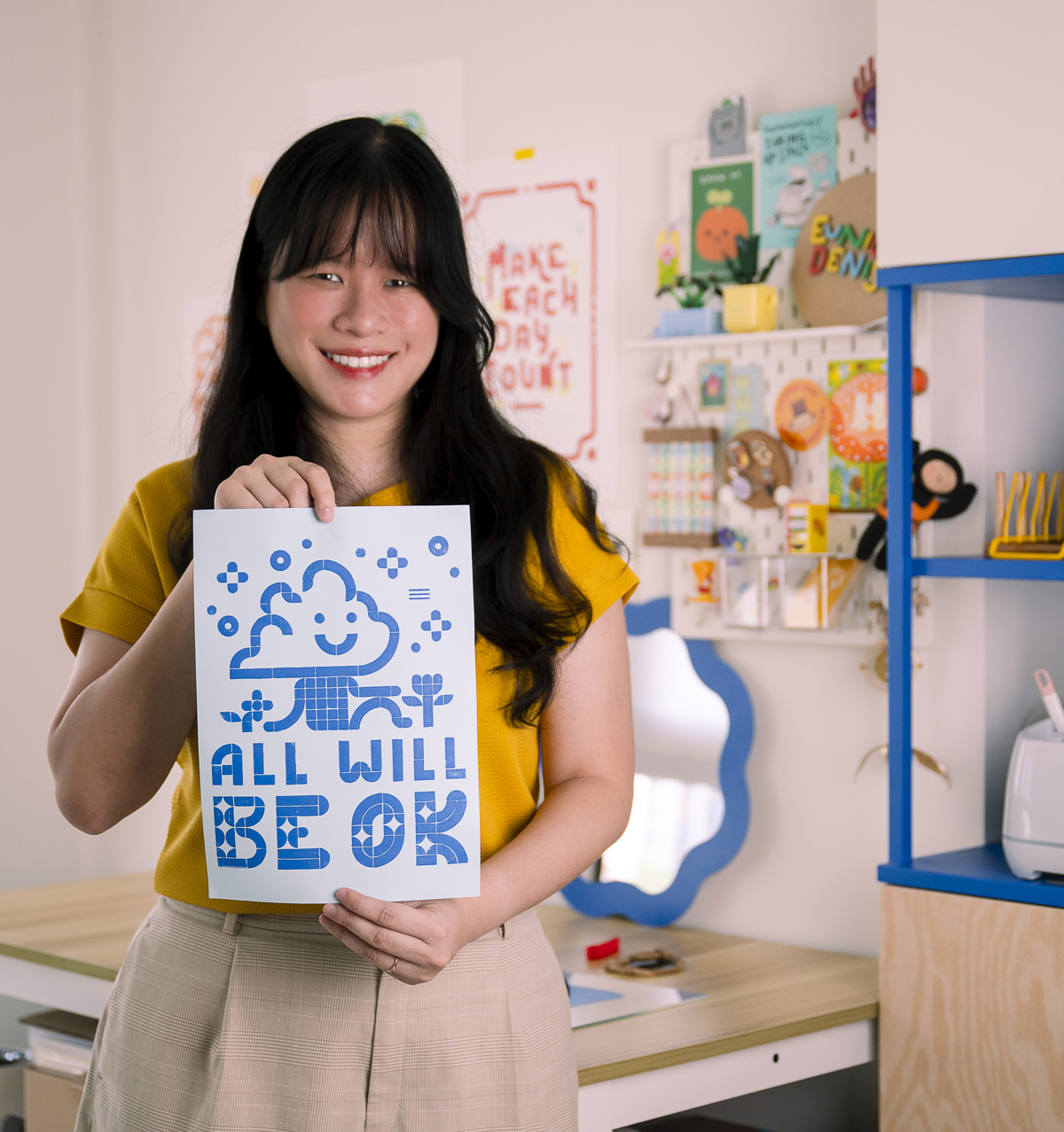
Drawing Letters
Eunice grew up in Singapore, in a house where thoughtful craft was always present. She found her parents to be very creative — her father drawing and making, her mother crafting in her own way, both of them quietly reinforcing the idea that things could be shaped, adjusted, and made better.
Her early creativity showed up as a particular form of drawing: hand-lettering. “I used to draw a lot of words,” Eunice says. “Just doodling on my school notebooks.”
Page after page, filling notebooks with letterforms — stretching them, thickening them, rearranging them — long before she had language for it. It was simply a way of making something feel right on the page. It was creative work, but not the kind that gets recognized early. Not the kind teachers point to and say, this is art.
Looking back, she’s clear about it: “I don’t find myself very good at drawing.” Drawing images felt uncertain, ungrounded — too many possibilities, no clear way onto the blank page. Words, on the other hand, offered something to hold onto. “With hand lettering, you can be as creative as you want — the letters just have to look like letters.” Letters carried structure with them. There were constraints.
“I enjoy creating with constraint… figuring out how to be creative within a structure.”
That thread carried forward into her early creative life. She started a craft blog, posting consistently even when no one was reading. It was a forum for craft practice. Eunice created small tutorials, “how to make bunting for your cake, scrapbooking, and all that.” Instagram followed, then a hand-lettering account. Small compositions, shared regularly. A rhythm taking shape.
Eventually, that rhythm turned outward. Client work came in. Illustration projects. “I made menu cards for a café, I illustrated food, and did illustrations for an economics textbook.” The beginnings of something that looked like a creative career were taking shape. But the reality didn’t quite align. The pace was relentless. “I was doing all these kinds of things… while I was at a full-time job, and I burned out and didn’t draw anymore after that for a long time.”
Her career in digital marketing focused on strategy, analytics, and planning. A different kind of creative environment, but she wasn’t making.
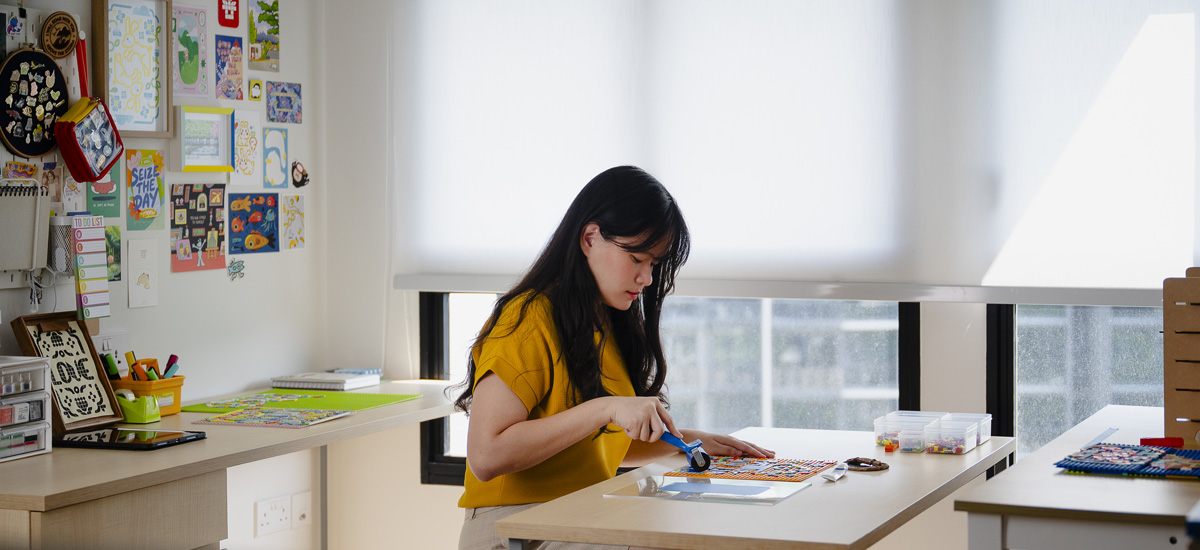
The Leap
Turning thirty has a way of sharpening questions that were easy to ignore before. For Eunice, it arrived as a “30-year-old crisis.” The path she was on was stable, structured, and clear. But something about it no longer felt like it belonged to her. “Is this what I want to do with my life?”
It wasn’t. In her words, “I just wanted to try everything.” She left her job with no plan other than to get back to making and trying everything she hadn’t been able to do while she was too busy with her job.
The pressure to produce something useful disappeared. The need to turn creativity into work, into output, into something validated by others — it all fell away. What remained was something closer to how she had always made things in the first place: out of curiosity, within a system, for herself.
She gave herself a time period — six months— and returned to making. Starting with small experiments: ideas that didn’t need to go anywhere, content shared not because it had to perform, but because it felt good to make. The same instinct that had driven her blog years earlier resurfaced, but this time with intention behind it.
Inktober had always been in the back of her mind. A global challenge built around a simple idea: create something in ink every day for the month of October — it offered exactly the kind of structure she was drawn to. A prompt, a cadence, a clear boundary. But year after year, it remained something she admired from a distance. Life was full, time was tight, and without the right medium, it never quite aligned. Now, with space finally carved out and a growing pull toward making again, all that was missing was the form it would take.
“I saw someone doing LEGO printmaking,” she says. It was a short video — ink rolled across bricks, paper pressed, an image revealed. It was an Instagram Reel by Paris-based artist Eric Schwarz (@comicblues). She continued, “I thought, ‘this is so interesting.’”
LEGO wasn’t part of her adult life at all. At her grandparents’ house, there were just two boxes — no sets, no instructions, no intended outcomes. As a young child, she built within what was there, learning early how to make something from a fixed system, how to adapt when the right piece didn’t exist, how to work with what she had rather than what she imagined.
She saw Eric’s video two weeks before October 1, the official start to Inktober. And despite never having done LEGO printmaking, it sparked something inside her. That same day, she ordered a handful of LEGO Lots of Dots sets. “Those were the first set that I’d ever bought for myself,” Eunice shares with a smile. “And then I bought all the tools.”
The first print would be the first post. No buffer. No rehearsal.
Committing publicly changed the nature of the experiment. It removed the option to hesitate. “The moment I did the first piece,” she says, “I was like, my gosh, this is quite hard… and I can’t believe I already said that I’m gonna do it.” There was no turning back. Each day began the same way: set up, ink, print, share. Then do it again. “I literally wake up, print, and then sleep,” she says.
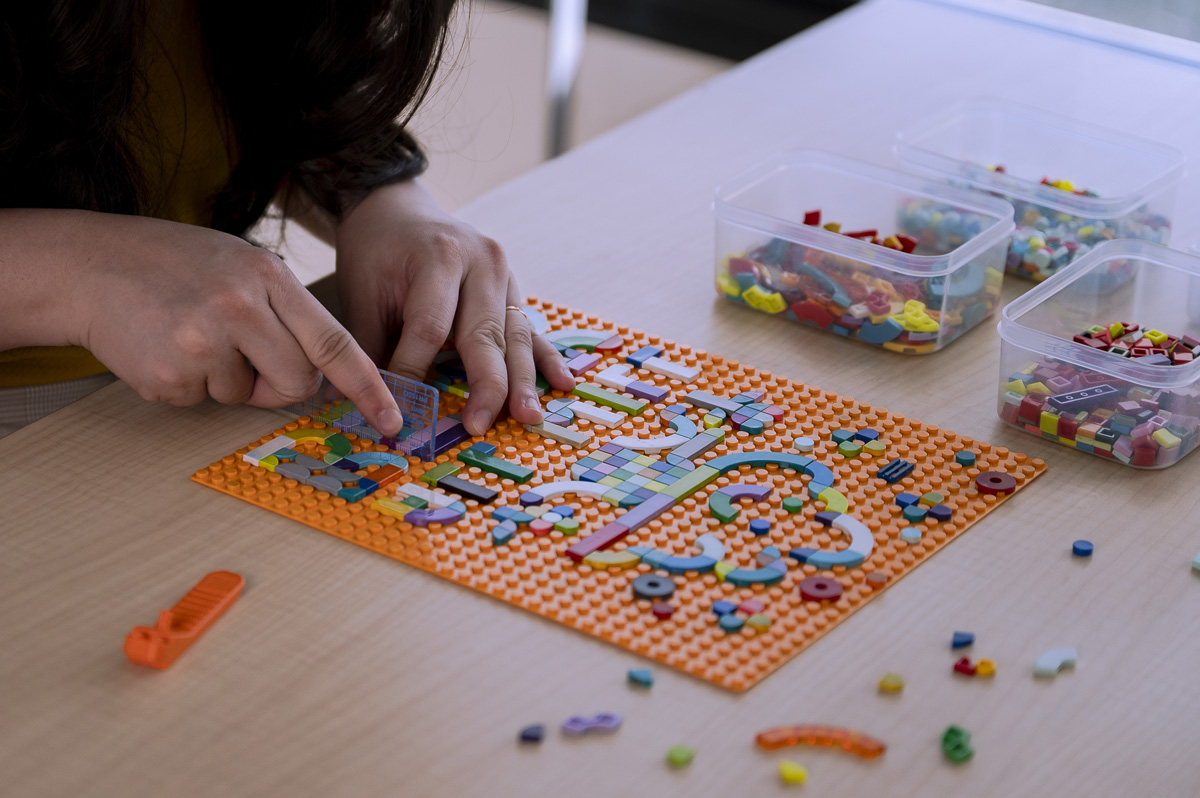
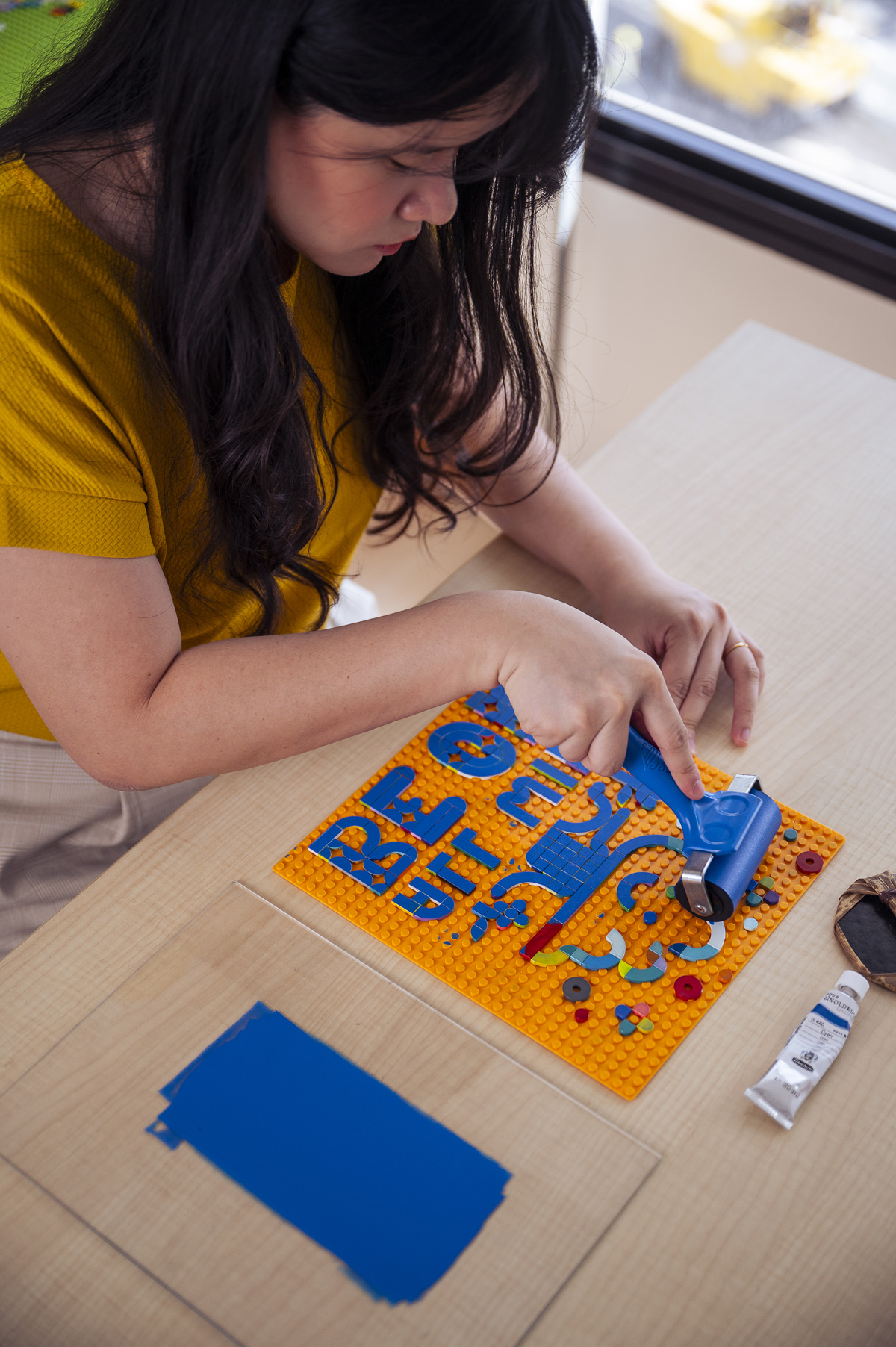
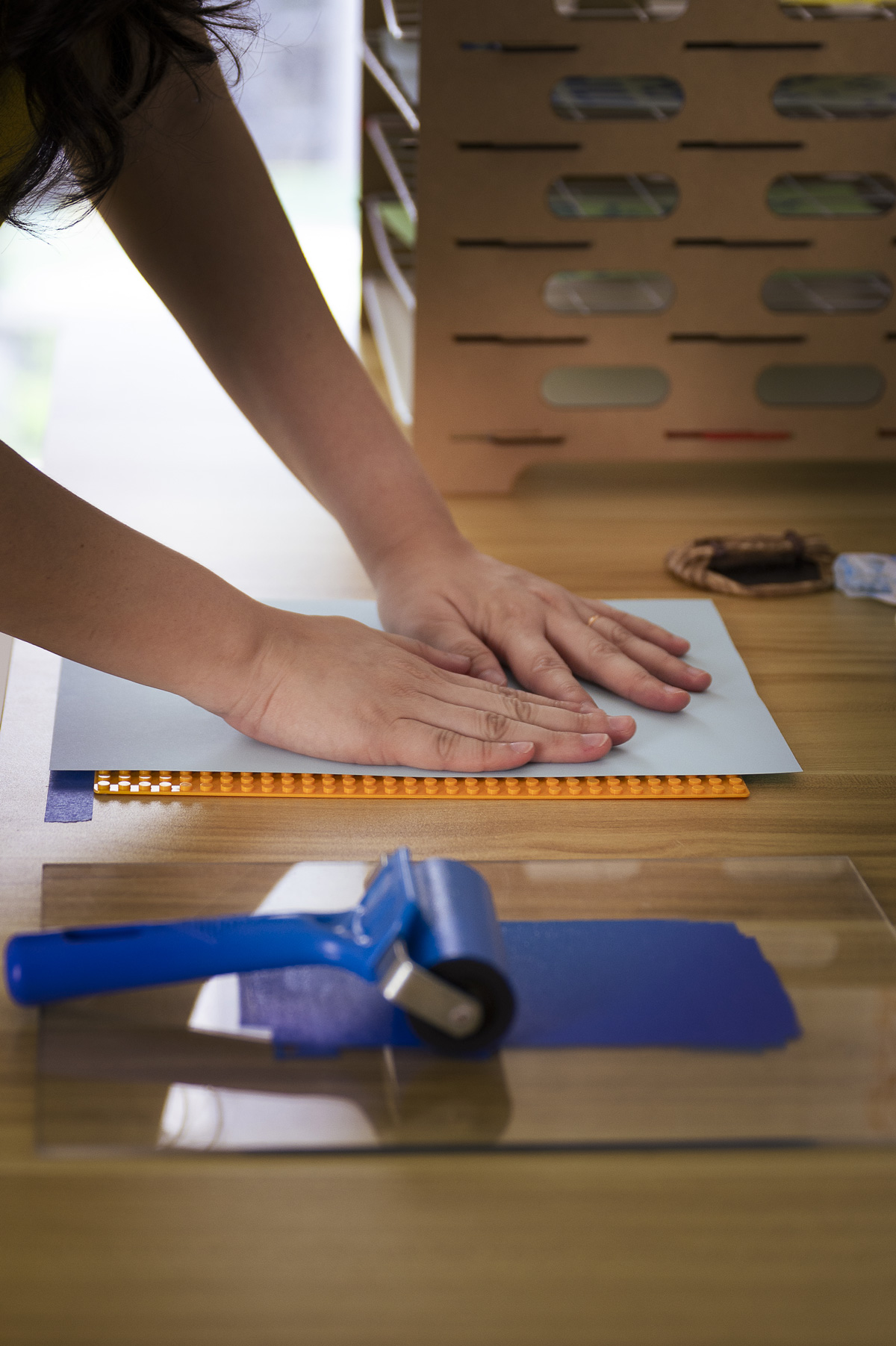
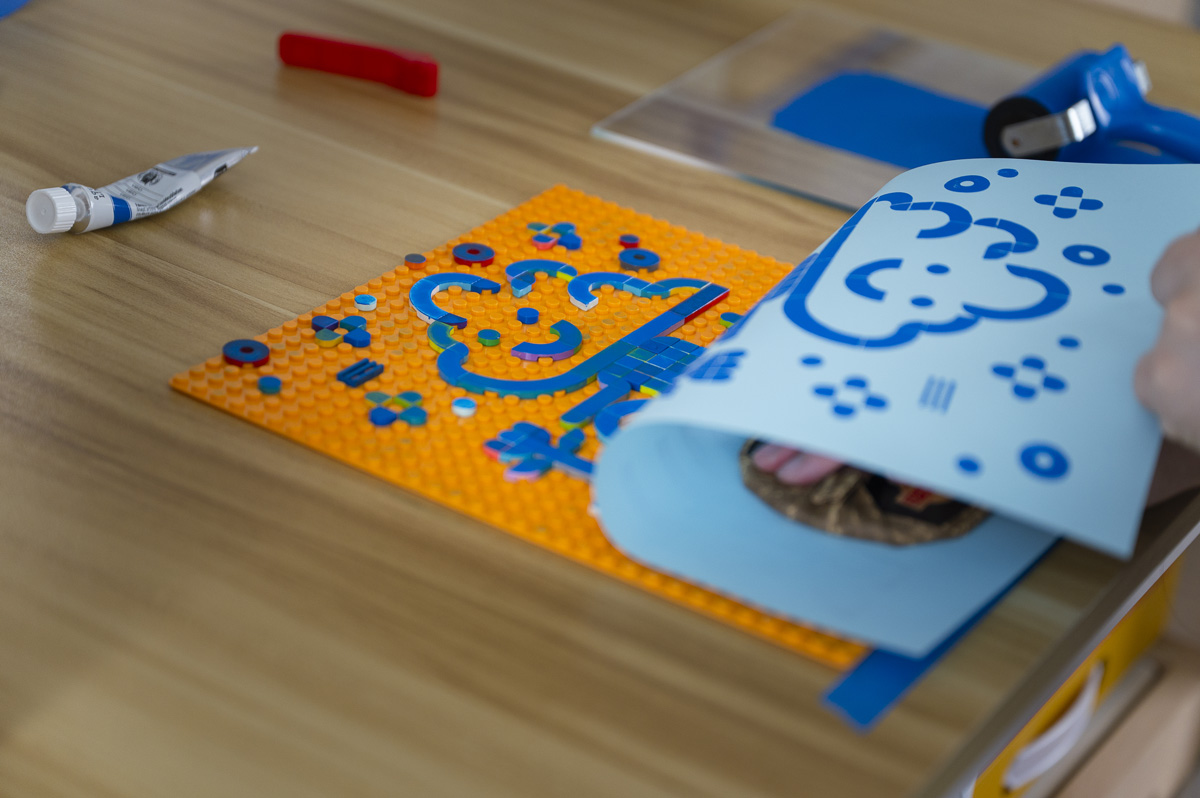
There was no prior experience to rely on. No background in printmaking. Everything had to be learned in real time, through repetition and failure. Ink didn’t behave the way she expected. Pressure was inconsistent. Some prints came out too light, others too heavy. Sections failed to transfer. Edges blurred. Entire compositions had to be rethought after seeing them on paper for the first time. “There were so many things that went wrong,” she says. And all of it unfolded in public, each post carrying the evidence of that learning. There was no separation between practice and output. The experiment wasn’t hidden behind the work — it was the work. “The 30 days was my experiment,” she says. “From day one to day 30.”
With the dedicated practice of Inktober’s 30 days, prints started to hold together more consistently. The relationship between ink and surface became more predictable. Pressure adjusted. Composition tightened. “I started to understand how the ink works,” she says. With that understanding came space — room to move beyond figuring out whether it would work and into what it could become.
“I started to explore more shapes,” she says. Patterns began to emerge — symmetry, density, a tendency to fill space completely rather than leave it open. The grid wasn’t just a constraint; it became something to build within, a visual riddle to solve.
From Words to Forms
At the beginning, the work looked familiar. The first pieces Eunice made during the 30-day challenge leaned on what she already knew: hand lettering, phrases, compositions that felt closer to posters than prints. Words anchored the image. They gave it structure, something to build around. It was a natural starting point, a way into an unfamiliar medium using a language she already understood.
But as the days passed, her creativity within the system was unleashed.
“I realized I really like… not having words,” she says. The grid started to take over.
Without text to guide the composition, the pieces themselves — curves, corners, circles — became her new visual vocabulary. Shapes began to repeat, mirror, balance. The work grew denser, more resolved. Less about saying something directly, more about building something that could be read visually, almost instinctively.
“I generally like really full designs,” she says. “I don’t like gaps — I need to put something there.”
That instinct — to fill, to resolve, to bring every part of the surface into conversation — became more pronounced as she added abstract forms and subjects into her work.
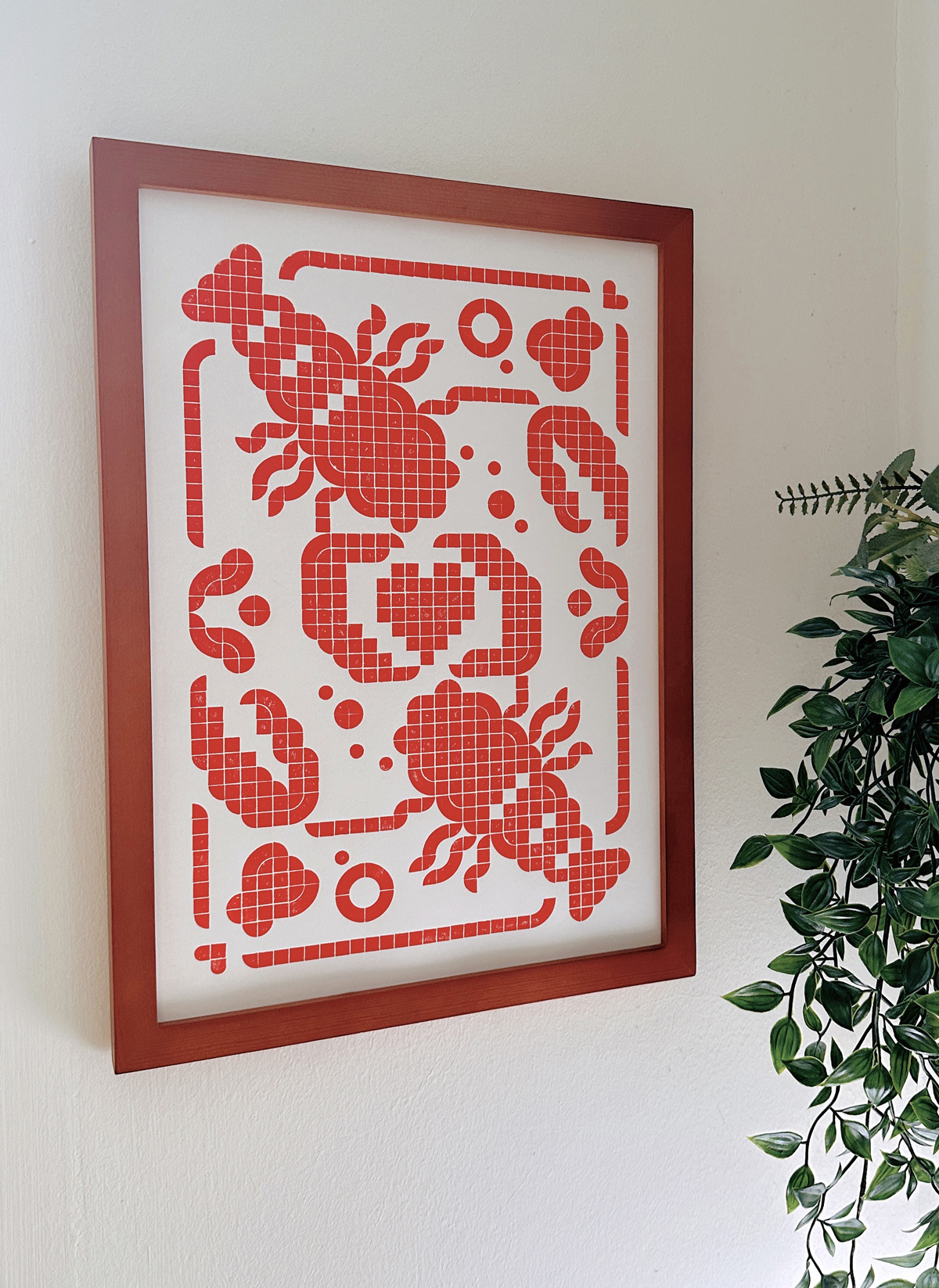
In You Are My Lobster, the composition locks into place almost immediately — a symmetrical field anchored by two mirrored lobsters, their forms simplified into a system of curves, corners, and tight right angles. At the center, a small heart holds the entire piece together, both visually and emotionally. What feels playful at first reveals a deeper precision the longer you look. Each curve is negotiated through the constraints of the brick—rounded forms stepping across the grid, never quite smooth, but resolved enough for your eye to accept them as continuous.
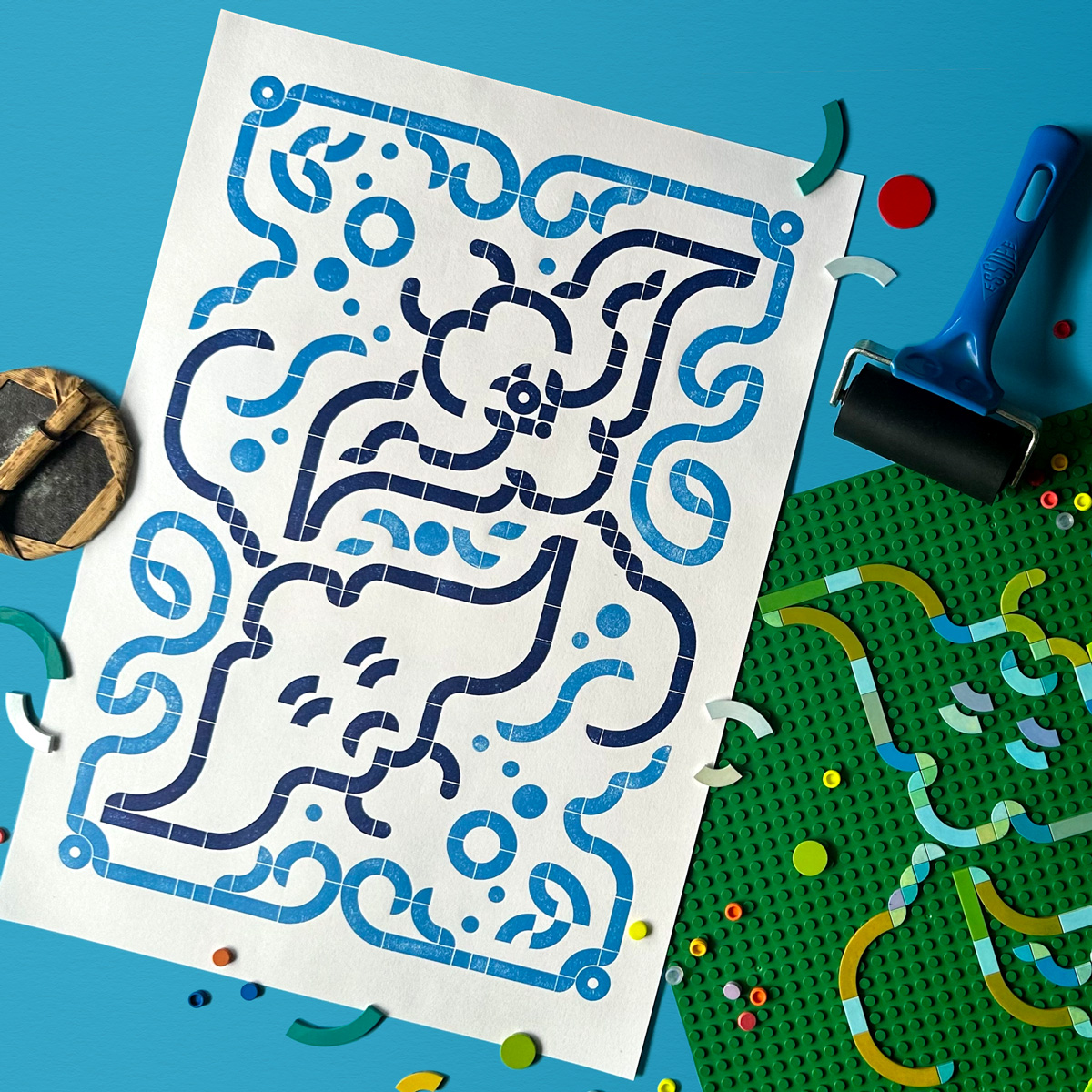
In Mesmerised by Mantas, the grid loosens. The composition flows outward, anchored by the sweeping form of the manta ray, its wings stretching across the page in long, continuous arcs. The curves feel fluid, almost effortless, but up close you can see the negotiation happening — each bend approximated through discrete pieces, each line stepping just slightly as it moves. Surrounding elements echo that motion—swirls, circular forms, smaller gestures that extend the rhythm beyond the central figure.
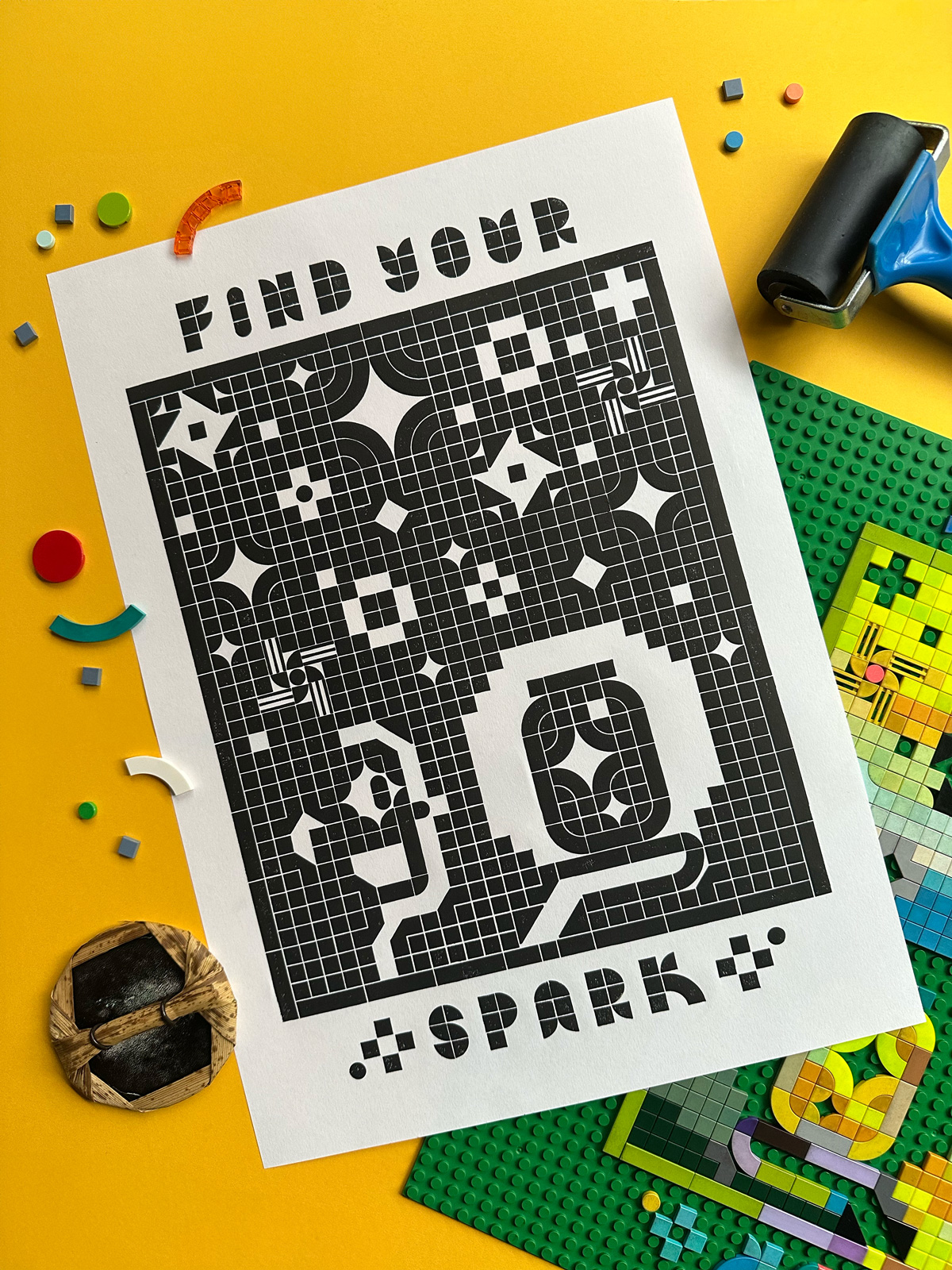
Then in Find Your Spark, the system tightens again, but with a different, inverted approach to the print. The grid is fully activated — dense, packed, almost vibrating with energy. Black ink fills the page, broken by sharp geometric interruptions: stars, diamonds, rotating forms that create moments of release within the field.
Each piece begins loosely, almost before she can explain it — Eunice’s inspiration comes from everywhere. “Sometimes it’s something someone said, sometimes it’s a memory,” she says. “You’re my lobster,” is a quote from the show Friends. A visit to the aquarium becomes the slow movement of a manta ray. A feeling, a moment, a passing thought — there isn’t always a clear origin. “They just come, and I just execute.”
On her iPad, she begins sketching in Procreate, working through the composition on a grid, asking the questions that will define everything that follows: how big should this be, and how small can it go? “The eye can only be as small as a one-by-one circle,” she explains. From there, everything builds outward. Scale becomes a constraint, curves are negotiated through what’s possible — “The biggest smooth curve… is a four by four” — and the image takes shape as a kind of visual equation. “It’s really a puzzle,” she says.
Then the image flips. What reads clearly on the screen has to be rebuilt in reverse on the base plate, each tile placed with care, translating the plan into something physical. Piece by piece, the composition locks into place. Ink is rolled across the surface, catching surfaces, skipping over the tiny gaps. She lays the paper down gently, then presses — by hand, by feel — pressure becoming the final variable she can influence.
Sometimes she pauses, lifting a corner to check the transfer, adjusting before committing fully. And then, the moment everything builds toward: the pull. The paper lifts, and the image reveals itself all at once — never perfectly predictable, always carrying the trace of the system, the hand, and the thousand small decisions that brought it there.
Sharing the Process
From her early craft blog to now, with process videos on Instagram
(@eunicedenise), Eunice continues to create content alongside her art — paying forward the inspiration she received from that early Instagram post about LEGO printmaking. “I like showing the process,” she says. “That’s the fun part.”
She takes viewers step by step through her process, from inspiration to design to building and printing. And in that way, she’s reducing the distance between maker and viewer — the response followed quickly.
“A lot of people say, ‘I didn’t know you could do that with LEGO,’” she says. Others take it one step further: “They’ll say, ‘Oh, I think I can try this.’”
That flip — from I didn’t know to maybe I could — is subtle, but it matters. It turns the work from something to admire into something to attempt. The medium itself plays a role in that. LEGO is familiar. Accessible. Something most people have held in their hands before. Seeing it used in an unexpected way opens a door.
Within the broader LEGO community, the material often comes with its own expectations — how it should be used, what counts as building, what doesn’t. Eunice’s work sits slightly outside of that. The bricks become tools, components in a process that leads somewhere else. It’s less about the object and more about what the object can do.
What began as people asking questions online gradually became something more tangible: teaching. She started doing small workshops in schools and now even does sessions at her own studio with a handful of participants at a time.
The setup is intentionally simple. No pressure to produce something perfect. No expectation of prior experience. Just the materials, the process, and the time to try.
And then, the moment that matters most. They roll the ink. Place the paper. Apply pressure. Lift. “You can see their reaction,” she says. “They’re like, ‘Oh wow.’”
It’s the same moment that hooked her — the reveal, the translation from plate to paper — but now she experiences it from the other side of the table. What once felt personal has become something shared. In guiding others through the process, she’s opening a door. Watching someone realize they can make something, that they can do this, has become just as meaningful as the work itself.
She wasn’t expecting to see it there. A café, somewhere familiar but not planned. A wall of artwork, the kind you scan quickly at first. And then — a pause. One of her prints, hanging quietly among the rest. “It was one of the pieces I made during Inktober,” she shares with delight.
“For the thirty-day challenge, I only made a maximum of three prints per piece, so when I saw it at the café, I thought, ‘Who bought this?’” But there it was. The same geometric curves, the same grid, the same language she built piece by piece at her own table — now living out in the world without her.
“I don’t know where this will go,” she reflects. She didn’t set out to become a printmaker. There was no plan to move from lettering to LEGO to workshops to seeing her work show up in places she never put it herself. She followed a curiosity, gave it structure, and stayed with it long enough for something to take shape.
“If you can make,” she says, “you should.”
That’s what remains at the center of it. Not a career path or an outcome. Just the act of making — again and again, within whatever constraints you have in front of you.
You don’t need to know what you’re making yet.
You just need to place the first piece.