

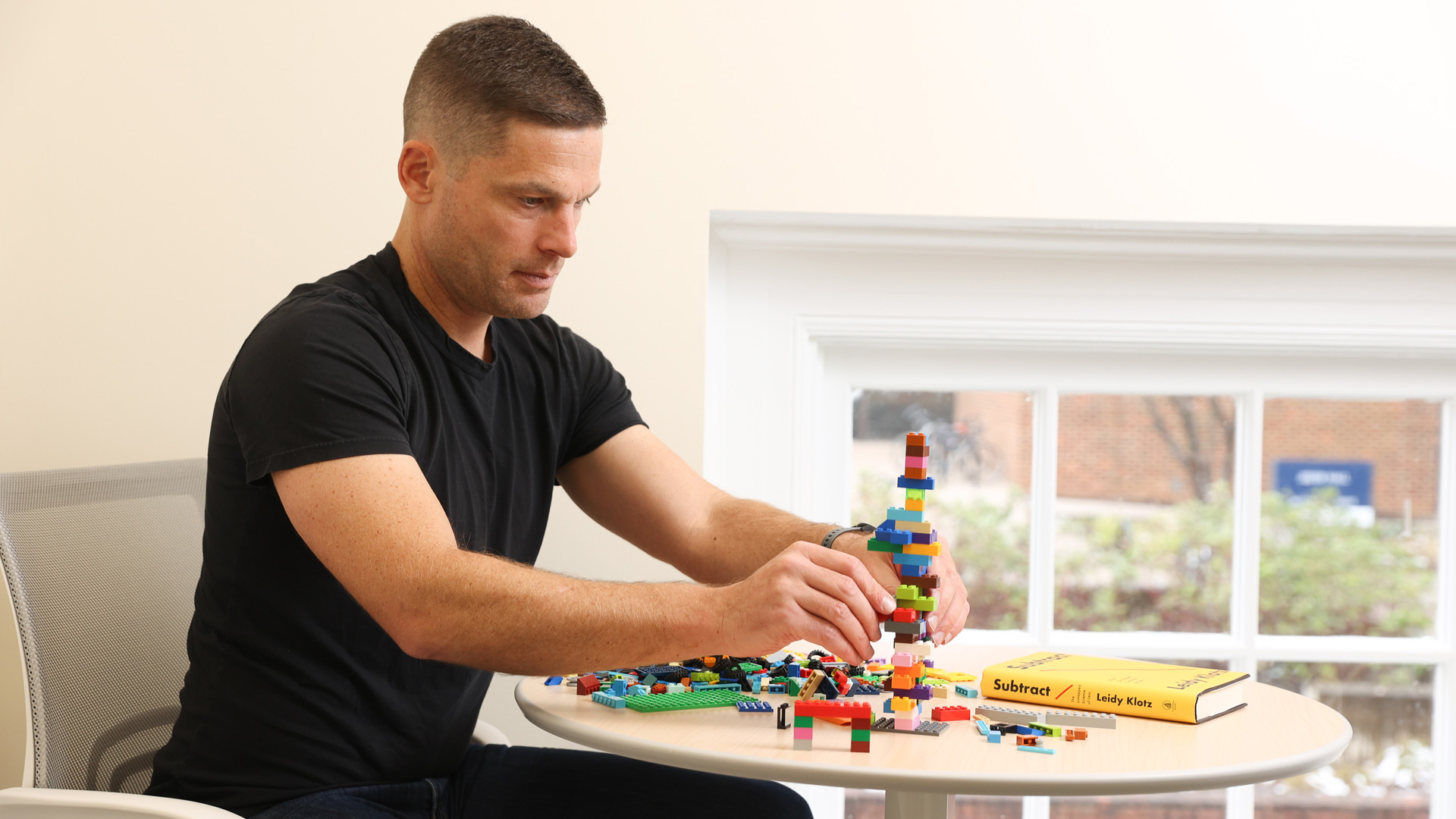

Photography by Amanda Maglione
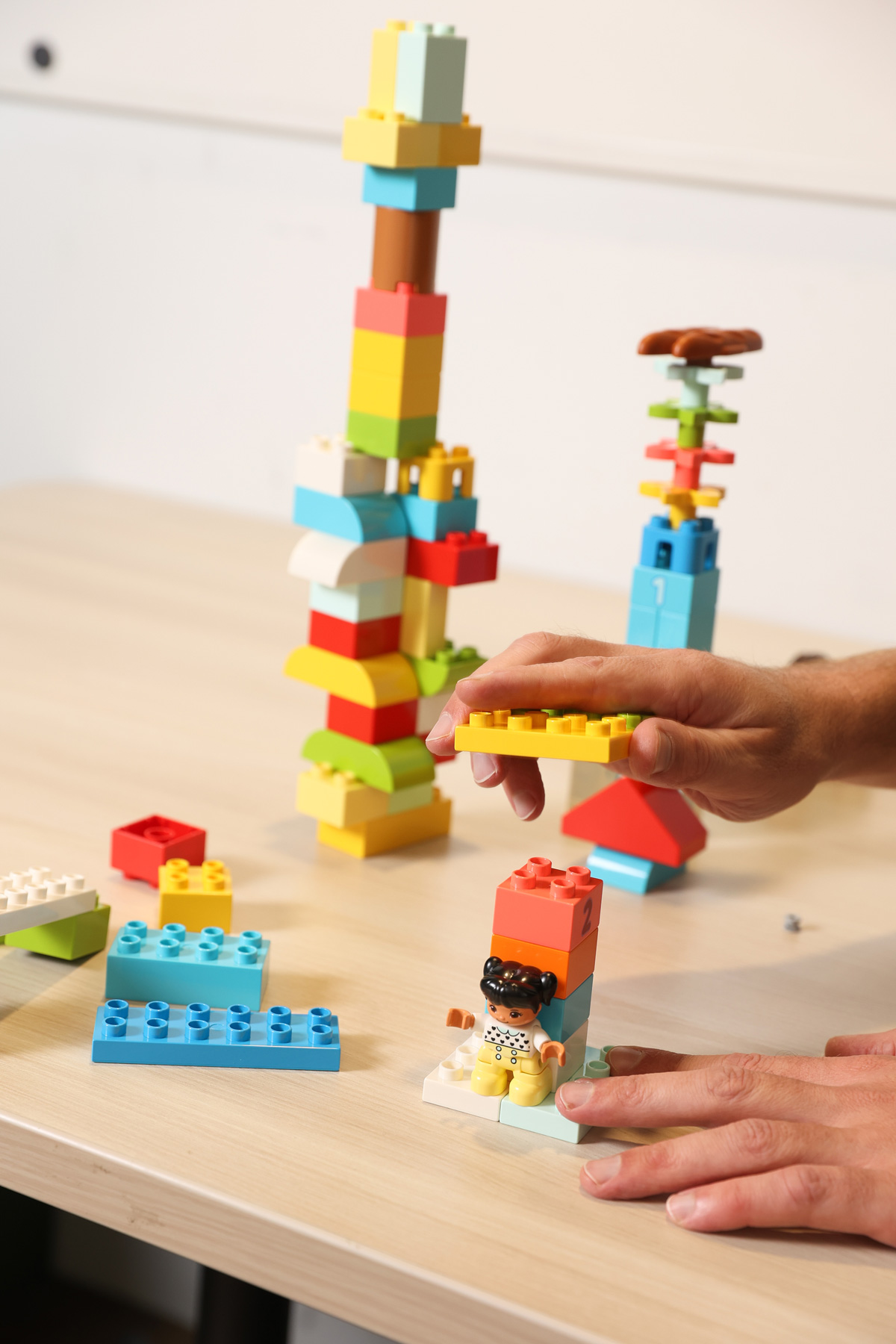
Father and son are building a LEGO Duplo bridge, half-built on the floor. Two columns meant to support a span, one taller than the other. An uneven surface — nothing dramatic, just enough to make the bridge feel unsteady. Leidy Klotz notices it instantly. He turns away to grab another brick, already reaching for the obvious solution: add more. But when he turns back, the bridge is level.
His son Ezra hasn’t extended the shorter column. He’s done the opposite. He’s removed a single block from the taller one. “I turned around,” Klotz recalls, “and when I turned back around, he had removed the block.” That’s it. No flourish. No announcement. Just one brick quietly taken away — and the problem disappears. Ezra doesn’t remember exactly what he was thinking in that moment. Years later, when his father asks him about it, he shrugs. He remembers the action — taking the block off — but not the reasoning behind it. What he does remember is that people talk about it now. That something small he did while playing on the floor somehow traveled outward, into classrooms, conferences, and journals around the world. He likes that part.
At the time, it was just a kid fixing a bridge. In hindsight, it was a hinge moment for Klotz — a subtraction so minor it barely registered, yet powerful enough to reroute how one person would spend the next decade thinking about design, creativity, and how we make things better.
There's more! Continue reading this article by subscribing to BRICKA.
There's more! Continue reading this article by subscribing to BRICKA.

Origin Story of a “Less” Thinker
Klotz is a professor at the University of Virginia, trained as an engineer, and deeply interested in a deceptively simple question: “How do we take things from how they are to how we want them to be?”
He grew up in upstate New York in a family that encouraged curiosity. His father was a professor of biology, and his mother studied computer science, but for much of young Leidy’s life, his identity wasn’t academic — it was athletic — soccer came first.
At home, there was a room simply known as the LEGO room — an entire space dedicated to building. “We got one set a year at Christmas,” Leidy shares, “and the rest of our LEGO play was remixes.” The room still exists. The bricks remain, and now the next generation plays where the last one did. “They are good parents and saw that this was a toy where you’re actually doing something and learning and engaging in the world.”
One family story feels especially relevant: during a renovation, Klotz’s parents paid their kids by the brick to dismantle an old chimney. Leidy wanted a LEGO train set — expensive and beyond his reach on his own — so he persuaded his younger siblings to pool their earnings. It worked, and together they got the motorized LEGO train.
Engineering entered Leidy’s life as a way to hone his problem-solving skills. If you want to change things, engineering gives you tools. “The last thing I wanted to be was a person doing civil engineering drawings,” says Klotz. But he stayed with it because the mindset felt expansive.
Adding & Subtracting
Long before the Duplo bridge, Klotz circled an idea he couldn’t quite articulate. He was drawn to elegant designs — bridges, buildings, systems that felt resolved, almost inevitable. He admired minimalism but couldn’t explain why it was so difficult to reach.
Ezra’s bridge sparked him. “I put the LEGO bridge in my backpack — it’s actually still there so I can show people.” He showed it to Gabe Adams, a professor and behavioral scientist at UVA, and asked her to try the bridge herself. Adams boiled it down to a simple question: “Why don’t people subtract to make things better?” Klotz’s research snapped into focus.
At first, the bias toward addition feels almost trivial. Surely people would consider removing something if it clearly made things better. Klotz and his collaborators found that, more often than not, they don’t.
Across species, the ability to act on the world — to shape it, change it, leave evidence behind — has always mattered. Klotz often points to the bowerbird, “the male bowerbirds will build a ceremonial nest. And then the female bowerbirds go and look at the nest and decide which male to mate with based on which nest they like best. But then the female goes and builds a different nest for her young. The male-built nest is just to show that this bird can move sticks around in the world.”
Humans do the same thing, just with different materials. We add features, layers, steps, and systems. We reinforce. We elaborate. Adding leaves a visible trail of effort. Subtraction, by contrast, has a visibility problem, and people rarely think to do it.
For most of human history, addition really was the right answer. No road between towns? Build one. No shelter? Add structure. No organization? Create hierarchy. Subtraction only becomes powerful once systems mature — once complexity accumulates. Only then does removal turn into leverage. Some of the most transformative design and infrastructure moves of the last century weren’t additions at all. Boston’s Big Dig didn’t create a highway; it buried one. The iPhone removed the physical keyboard, became iconic, and left BlackBerry in the dust.
The LEGO Studies
Klotz’s experiments set out to understand just how deep the additive bias runs — and whether people would still overlook subtraction even when it was clearly the better, cheaper, and more effective solution.
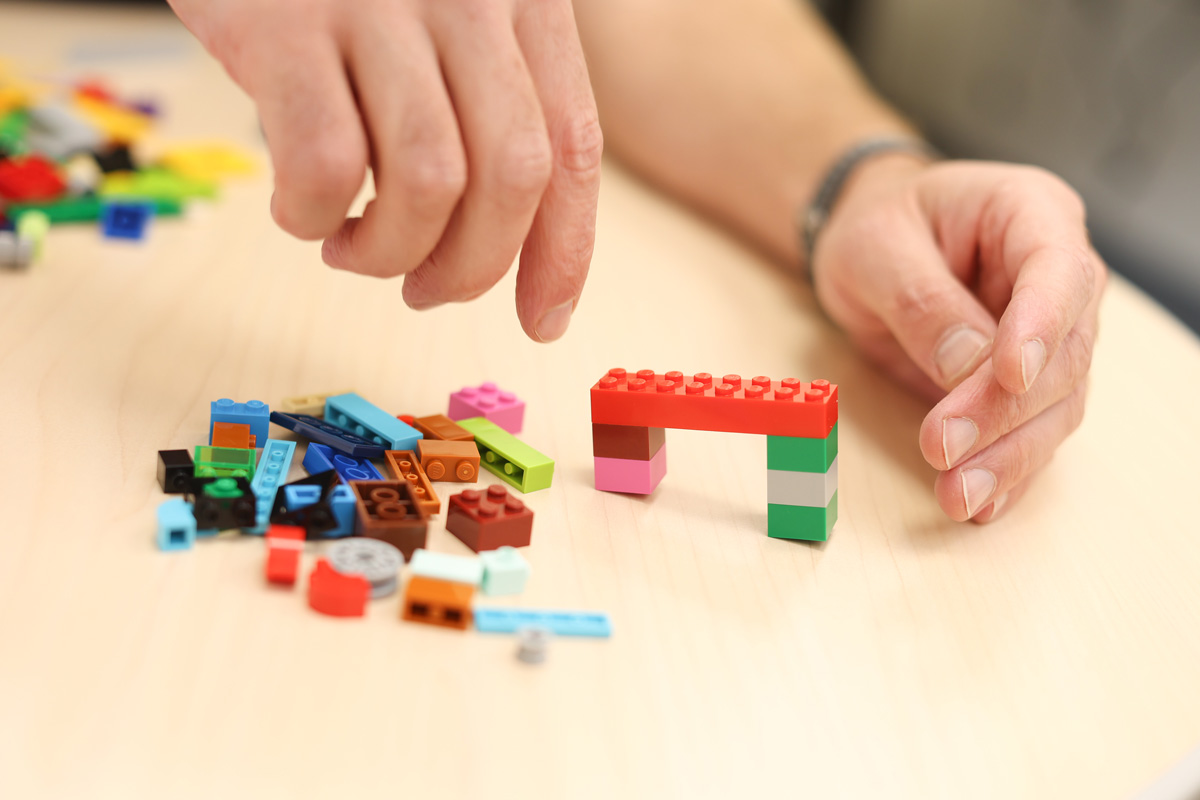
The Duplo bridge sparked the question, and LEGO became the material of choice in the lab. “It’s such a good medium for our work. It’s so vivid. It was fun. It was easy to recruit participants, because we’d say, ‘hey, come play with these LEGOs.’”
In the first experiments, participants were given pre-built LEGO structures and a deceptively open prompt: Make this better. No constraints. No wrong answers. Just bricks and possibility. Every participant reached for more. They reinforced beams, added layers, and extended forms. Across dozens of trials, no one ended up with a structure that had fewer pieces than the original — even when subtraction would have simplified the structure or improved its balance. The option simply didn’t arise.
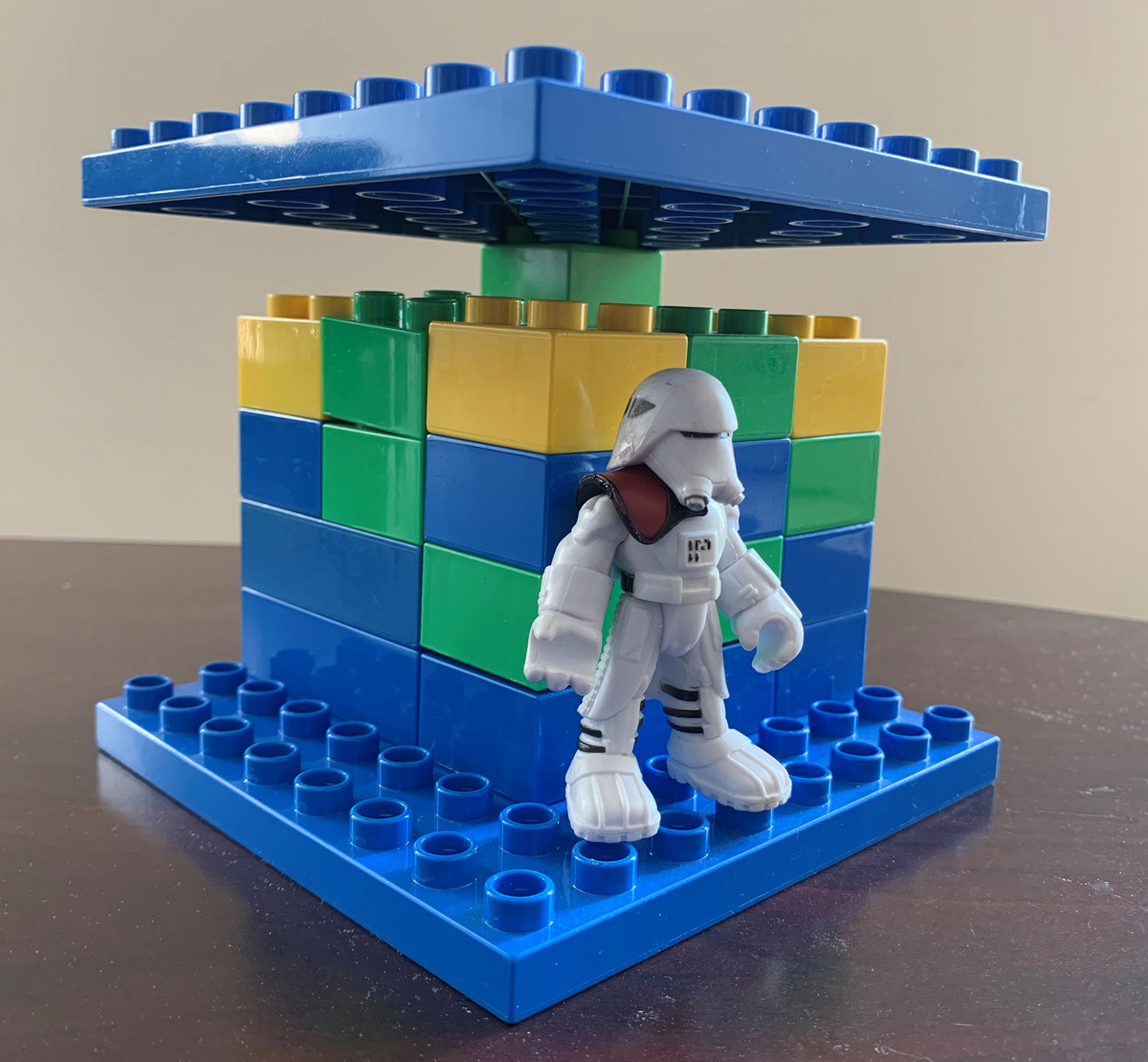
To press the question further, Klotz and his collaborators designed a task where subtraction wasn’t just elegant — it was clearly superior. A LEGO platform hovered above a small figure, supported by a narrowing column. Participants were told to improve the structure using as few bricks as possible so that when a heavy masonry block was added on top, the platform wouldn’t collapse and crush the figure below.
Most participants reinforced the column, stacking brick upon brick. The subtractive solution was almost strikingly simple: remove one piece, lower the platform, stabilize the load. When shown the solution afterward, many participants were surprised. When asked whether they would have chosen subtraction had it occurred to them, most said yes. To Klotz and his team, it was clear, “We’re all overlooking subtraction.”
The pattern held beyond LEGO. In another study, participants were shown grid patterns divided into quadrants and asked to make them symmetrical. Klotz explains, “So one way to make them symmetrical was to add marks to the three quadrants, and another would be to subtract marks from just one. That was the simpler way to do it.” The simpler path was subtraction — and yet participants overwhelmingly added. When distractions were introduced, the tendency intensified.
In a more real-life scenario, an experiment gave participants a packed day-trip itinerary to Washington, D.C. — a breathless schedule crammed with monuments, museums, and meals from morning to night — and asked a simple question: How would you make this day better? They could drag items off the schedule or add new ones. Almost no one removed anything. Instead, they piled more on. “It was already impossible,” Klotz laughs, “and people still added.” The better day was hiding in plain sight—slower, lighter, more humane — but subtraction never quite entered the imagination. Even when rest, focus, or enjoyment are the goals, we instinctively reach for more.
Once subtraction becomes visible as a legitimate option, the solution space expands. Designers begin to see absence as a kind of structure. Leaders begin to see clarity as an intervention. Builders begin to notice that sometimes the strongest move is to take a brick away.
One Brick Less
Once something exists, it tends to persist. Buttons stay on interfaces. Meetings stay on calendars. Features remain long after their usefulness fades. Addition leaves evidence. It looks like work. Removal, by contrast, asks for justification — and often, permission to act at all.
In a culture that rewards more — more features, more content, more urgency — subtraction can feel counterintuitive, even risky. One small subtraction — a LEGO brick lifted from a play bridge — opened a different way of seeing. A reminder that restraint can be a form of improvement.
Importantly, Klotz doesn’t frame our tendency to add as a flaw. “I’m not saying adding is bad,” he says. “We simply need to be more aware of this untapped source of innovation.” Building and adding are necessary to our lives and our future. What he argues for instead is intention — the discipline to ask whether what’s already there is doing the work we think it is. That question sits at the center of his next book, In a Good Place, which turns from individual choices toward the environments that shape how — and whether — those choices ever appear.
Over time, the world fills up with decisions no one actively chose to keep. Spaces accumulate clutter. Products add features. Organizations generate processes. Cities build infrastructure. Complexity grows not by design, but by default — because subtraction rarely enters the room.
Klotz keeps Ezra’s bridge in his backpack. It still works. It always did. One column shorter. One brick set aside. Nothing added. Nothing announced. Just enough removed for the span to hold.