


Photography by Steve Jackson
An archivist’s job is an act of care. To catalog. To preserve. To make sure something fragile survives long enough to be found again. They capture history before it slips out of reach — photographs before they fade, documents before they disappear, stories before no one remembers who told them first. The work is meticulous, often invisible, and deeply necessary.
But what if archiving didn’t stop at documentation? What if memory could take physical form — not sealed away, but held, built, and rebuilt by hand?
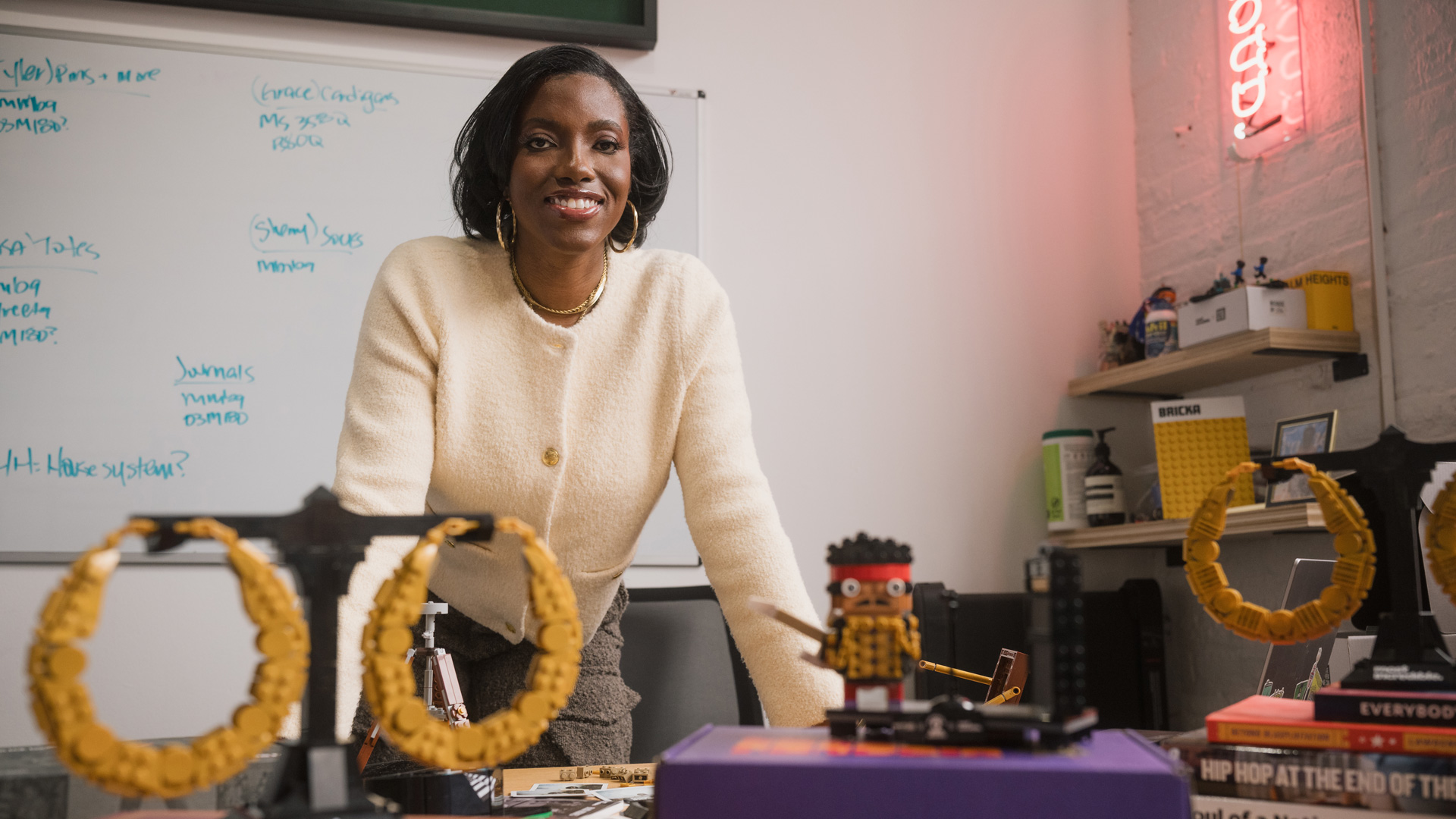
Those questions sit at the center of Most Incredible Studio, and at the heart of its founder, Syreeta Gates. Her answer is something she calls cultural compositions: objects built from LEGO bricks that function as vessels for lived experience. They are memories you assemble yourself. Histories you participate in preserving.
Roller Rink Remembered
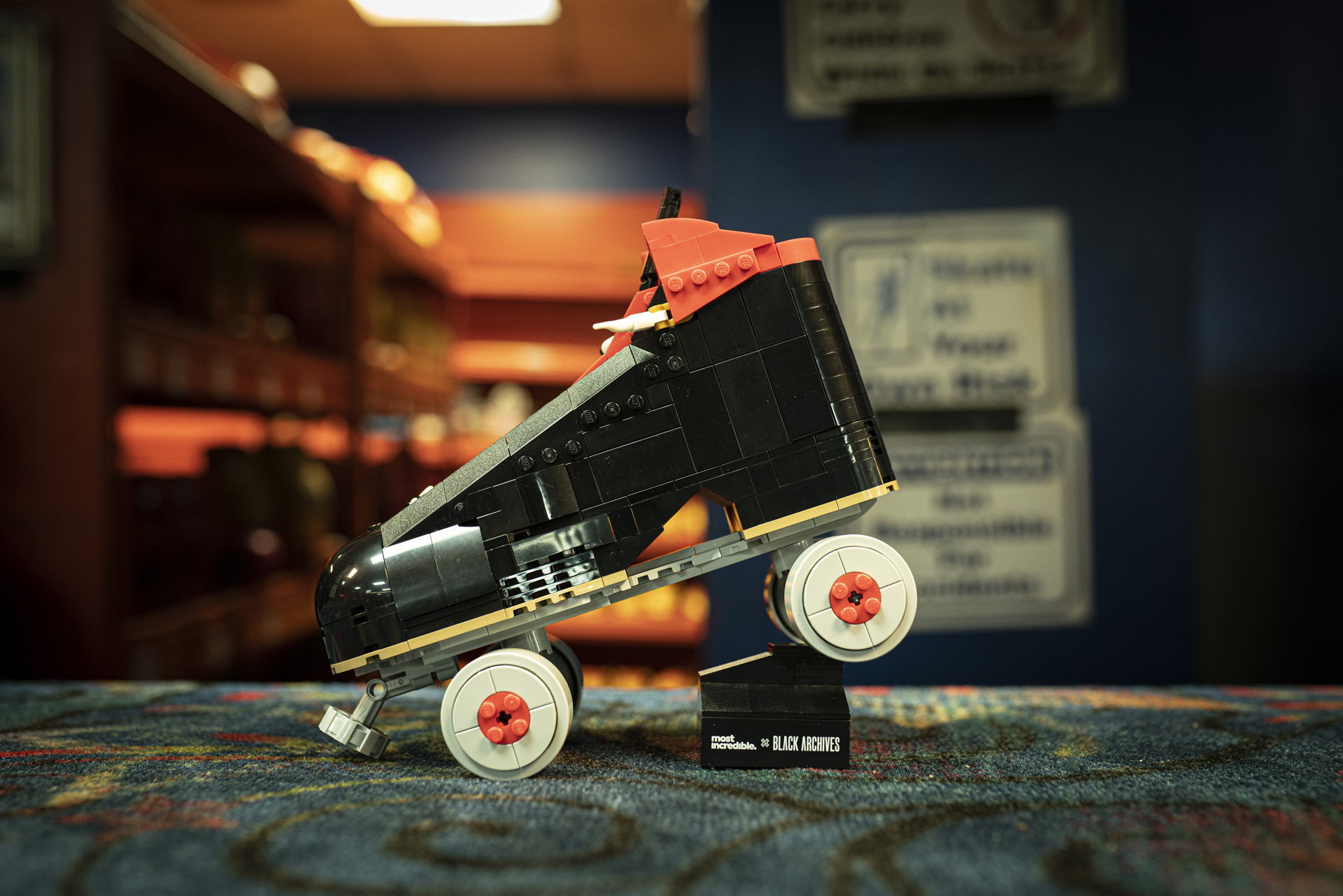
One of those cultural compositions looks, at first glance, disarmingly simple: a black and red roller skate.
Sleek, minimalist, and iconic, this brick-built roller skate is grounded and specific — thick-soled, high-tongued, unapologetically classic. The piece is called How We Roll, created in collaboration with Black Archives — a living archive dedicated to preserving and celebrating Black history through photography, ephemera, and community storytelling. Together with Most Incredible Studio, the roller skates become a portal to the past.
There's more! Continue reading this article by subscribing to BRICKA.
There's more! Continue reading this article by subscribing to BRICKA.
It worked on me. I spent many teenage days and nights at Evan’s Skate Land in my hometown — skating, playing at the arcade, and eating junk food. For anyone who grew up going to the rink, the memory comes back immediately. Being dropped off with friends. Learning how to balance by holding onto someone else’s arm. The DJ calling out couples skate. The slow mastery of speed and control. The rink as social space, as rite of passage, as sanctuary from parental supervision.
Roller skating has deep roots in Black culture — from Chicago’s JB skating to Southern rink traditions, from family nights to competitive crews. But those histories rarely live in museums. They live in minds and muscle memory — in stories passed casually, until they’re not passed at all. How We Roll interrupts that disappearance.
Black Archives founder Renata Cherlise sourced historical images and references — photographs from the 1920s onward: documentation of rinks that served as community anchors, visual records of style and movement. Gates and her team translated that archive into form with LEGO. Every curve, every proportion is intentional. It’s memory, engineered.
When people encounter the piece, they smile, they tell stories about their first time skating. About meeting someone at the rink. About falling, laughing, trying again.
Enter Syreeta Gates
Most Incredible Studio is the brainchild of Syreeta Cassandra Gates — archivist, storyteller, and cultural composer.
She grew up in Queens — surrounded by family, narrative, and a particular New York cadence of remembering. Stories were everywhere; they were told and performed. Passed down. Repeated until they stuck. Her values — integrity, gratitude, community, culture — were practiced daily, embedded in how people showed up for one another.
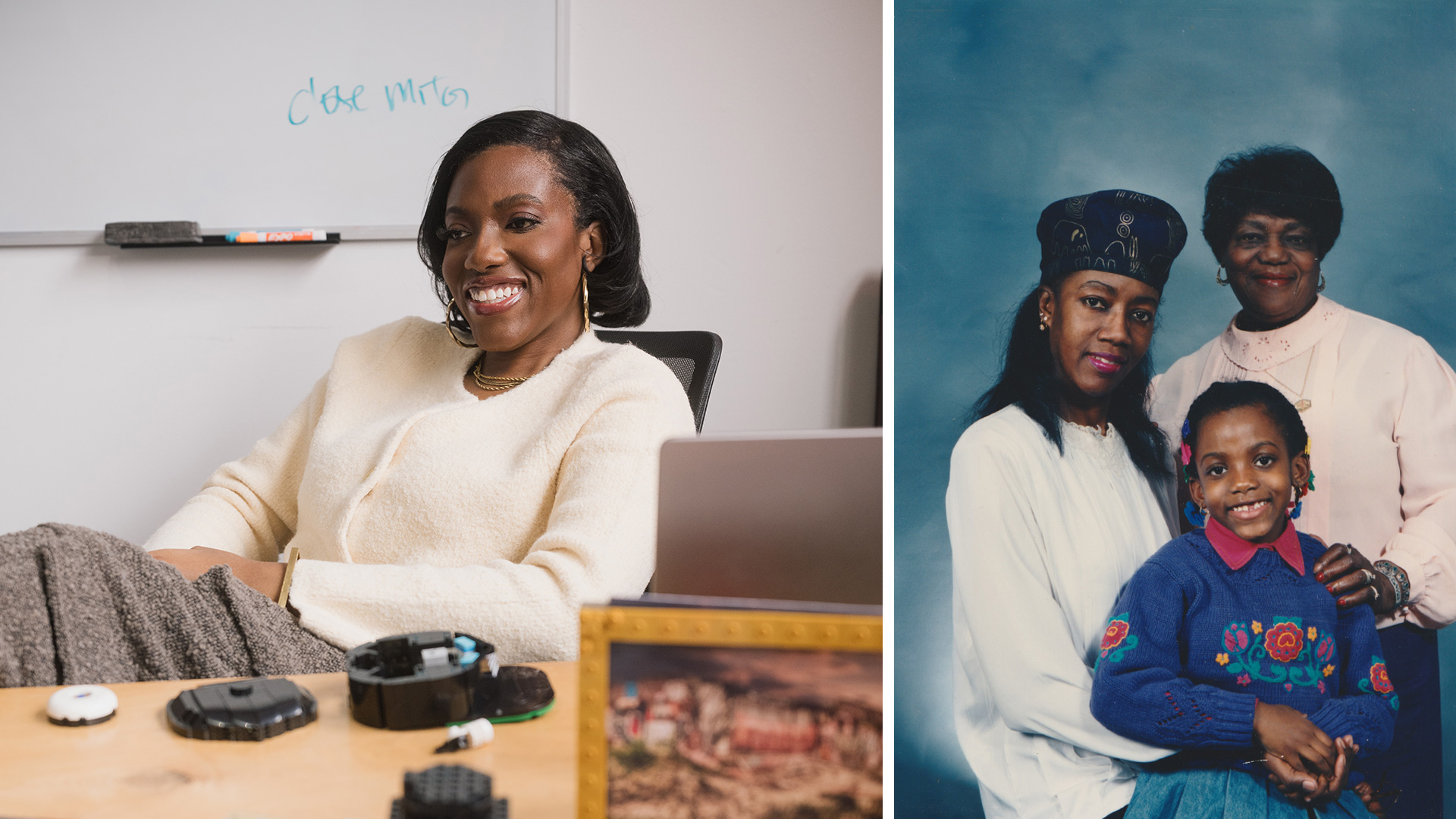
Gates describes herself through lineage, “I am Brenda’s daughter. Jessie’s granddaughter. A product of Southside Jamaica, Queens. I am an aunt, I am a friend, I am a sister.” Her identity is her creative infrastructure.
As a kid, Gates spent countless hours playing The Sims, for fun, yes, but also as rehearsal for bigger things. “The Sims came out 25 years ago, and I think it’s no coincidence that I’ve been playing it for 25 years — it kind of gave me permission to world-build.” In the game, she got to decide who connected, what mattered, and how systems worked together. It taught her a pattern she still follows today: notice what’s missing, then design it into existence. That mindset eventually led her to archiving.
The Gates Preserve
When Gates turned 21, her grandmother, Jessie Mae Jones Doherty, passed away just three days later. “My grandmother is from North Carolina. She was one of millions of Black folks who participated in The Great Migration. She was born in 1926, so my grandmother wouldn’t necessarily be on Google.”
Gates felt the weight of those lost memories. “If she’s not on Google,” she realized, “how do I make sure she lasts forever?” That question became The Gates Preserve — a living archive project rooted in love, memory, and refusal to accept that a life could be meaningful yet unrecorded.
That logic expanded outward. As Gates moved deeper into culture and media, she became obsessed with what she calls “number twos” — the people behind the people. Stylists. Designers. Journalists. Editors. Archivists. The ones shaping narratives without being centered in them.
Her focus sharpened on Hip Hop journalism. While writing for an online Hip Hop publication, she realized something unsettling: she didn’t know the journalists whose work had shaped generations. And when she tried to find them, the internet came up short. Their legacies were at risk.
So she started collecting. Every issue of The Source. Vibe. Ego Trip. Honey. She digitized them. Preserved them. “The same way that people talk about Joan Didion, or Gay Talese, or Hunter S. Thompson — I think people should absolutely be talking about Greg Tate, Mimi Valdez, and Bönz Malone in the same way.” Gates built an archive that treats Hip Hop journalism as cultural infrastructure and essential American storytelling.
Still, something was missing. Gates wondered what it would mean to feel these histories again.
LEGO as Ritual
Gates didn’t grow up playing with LEGO bricks. Her introduction came much later, as an adult — almost by accident. At the time, she was working in a school, passing a Barnes & Noble on her way home. By the elevator sat a display of LEGO Architecture sets. The buildings were familiar — landmarks, cities, monuments — rendered small, orderly, complete.
“It was a Friday night,” she remembers. “I was very grown at this point.” She bought one. Then a bottle of wine. Then she went home, put on music, lit a candle, and started building. Something shifted.
“It felt like a vibe, like my brain got to go on cruise control,” Gates says. “I was like, ‘this is magical.’”
The ritual stuck. Building became a form of wellness — a way to slow time, quiet the noise, and focus the mind through repetition and touch. “I think part of my personality is obsessive, that’s probably why I’m a collector. And so I bought every set in the architecture collection.”
Soon, she started buying sets for her nephew, too. They built together — and then traveled to the places they’d assembled in miniature. Architecture became a bridge between object and experience, between imagination and the real world. Her nephew would later go on to study architectural engineering, a trajectory Gates traces directly back to those moments on the floor, bricks spread out between them.
But even as LEGO became ritual, a familiar tension emerged. She noticed what was missing. The architecture was global, yes — but the culture she loved wasn’t there. The memories that shaped her life, her community, her history, had no form in brick. “A lot of the culture that I care about is not necessarily represented through LEGO.” The realization landed slowly, then all at once: what if LEGO could hold those stories?
Making Memory Tangible
Most Incredible Studio emerged from that question. Its mission is simple but profound: make memory tangible.
Most Incredible creates cultural compositions: brick-built objects that sit somewhere between archive, artifact, and artwork. They arrive as bricks and instructions, then become an object you built that sits on your shelf like a small monument.
That archival foundation shapes everything. With Most Incredible Studio, Gates says, “I’m wearing my archival hat in this work. The memories we have are ephemeral. Unless somebody is telling the same story over and over and over again, that story is not necessarily going to last.” Each composition begins with a relationship, collaboration, or shared story — not a product brief. Who is this for? What memory does it hold? What does it mean to give this moment form?
Gates describes her role not as builder-in-chief, but as a composer, citing Quincy Jones. “Most Incredible is like a record label; we get to partner with really genius LEGO artists around the world.” She assembles dream teams of LEGO artists, visual designers, storytellers, photographers, and researchers. Each drop brings together 10, 15, sometimes 20 people, all working toward a single, unified, emotional outcome.
The goal is never speed. Nothing about Most Incredible is “real quick.” There are permissions to secure. Archives to access. Relationships to build. Histories to honor. The process itself becomes a form of respect.
The process behind the How We Roll roller skate started with Gates’ relationship to Black Archives founder Renata Cherlise. “I texted Renata and was like, ‘So you want to cook on something magical? What are we doing?’” Cherlise was an immediate “Yes”.
Another cultural composition came together from Gates’ relationship with the Museum of Pop Culture. Gates is a guest curator for the museum’s Beats + Rhymes: A Collective Narrative of Hip-Hop exhibition, on view through September 2026.
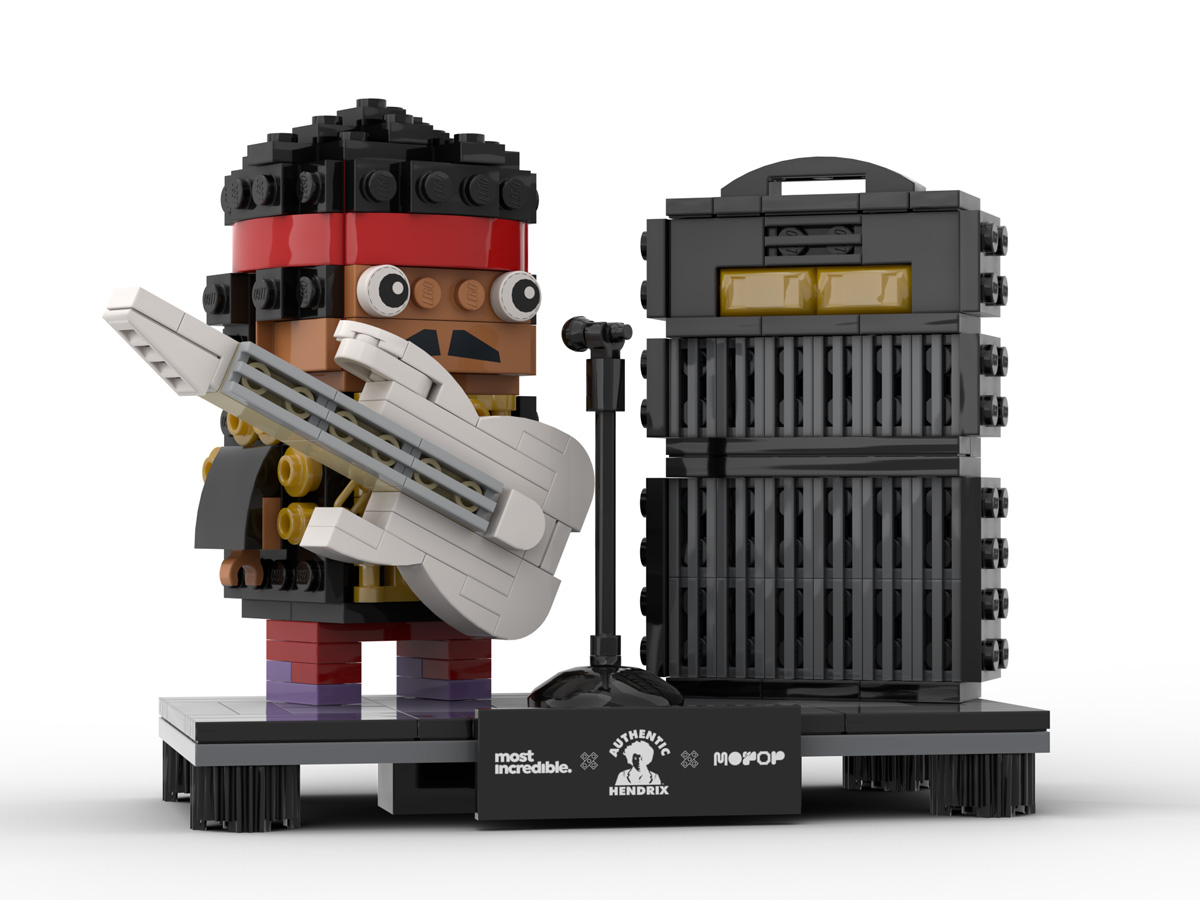
The Museum of Pop Culture has a longstanding partnership with the Jimi Hendrix Estate. Together, they invited Most Incredible in to create a cultural composition centered on Hendrix — one that redefines what a collectible can hold. Through direct collaboration with the estate, including Hendrix’s sister Janine, Gates gained access to materials rarely seen by the public.
What emerged is a sculptural portrait of Hendrix rendered in LEGO. He stands grounded and alert, eyes wide, head wrapped in a red bandana, hair built upward in dense black geometry. His guitar cuts diagonally across his body, frozen mid-performance, while a towering amplifier rises beside him like a monument. The palette stays disciplined: black, red, brown, gold, and muted purple, each carrying symbolic weight.
And then there’s the box. Inside, Hendrix’s own artwork is embedded directly into the interior surfaces, turning the act of opening into discovery. “There’s nowhere else in the world you’re going to get that,” Gates says, speaking of Hendrix’s art. The archive doesn’t sit beside the work — it is the work.
At ComplexCon, Most Incredible went monumental. In collaboration with adidas and LEGO, Gates and her team built what would become the largest sneaker build in history — a towering form composed of roughly 300,000 bricks, paired with a smaller, encased brick-built counterpart. The build honored the moment when Hip Hop and streetwear reshaped American culture.
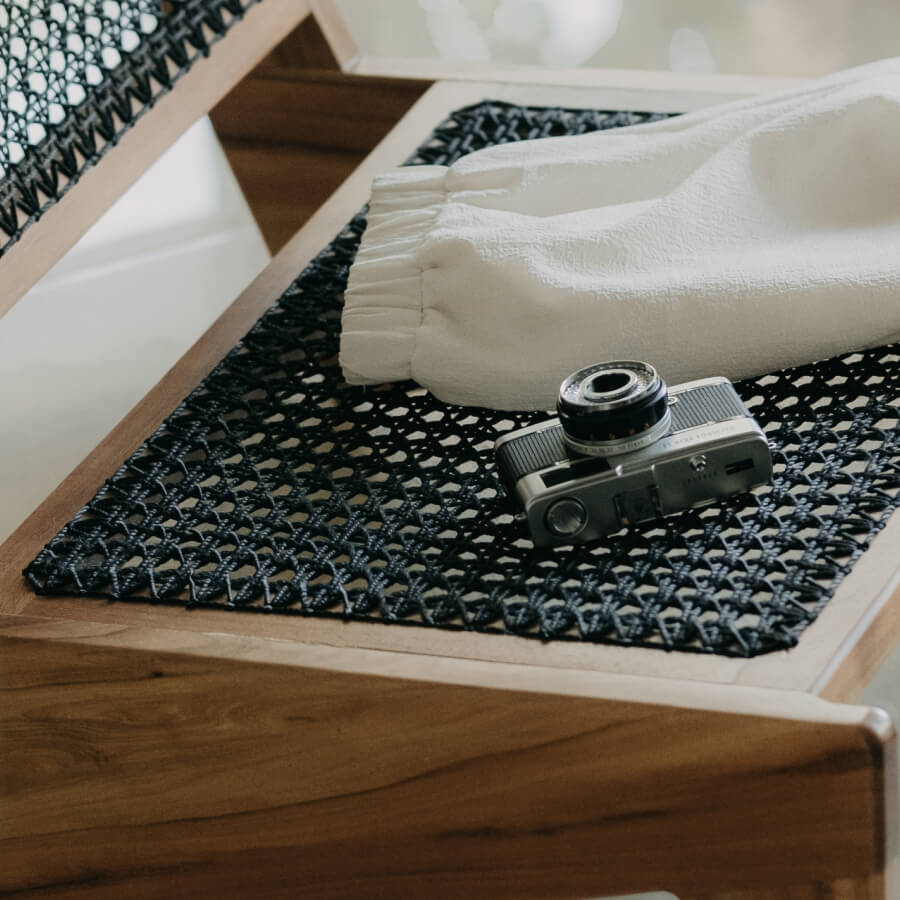
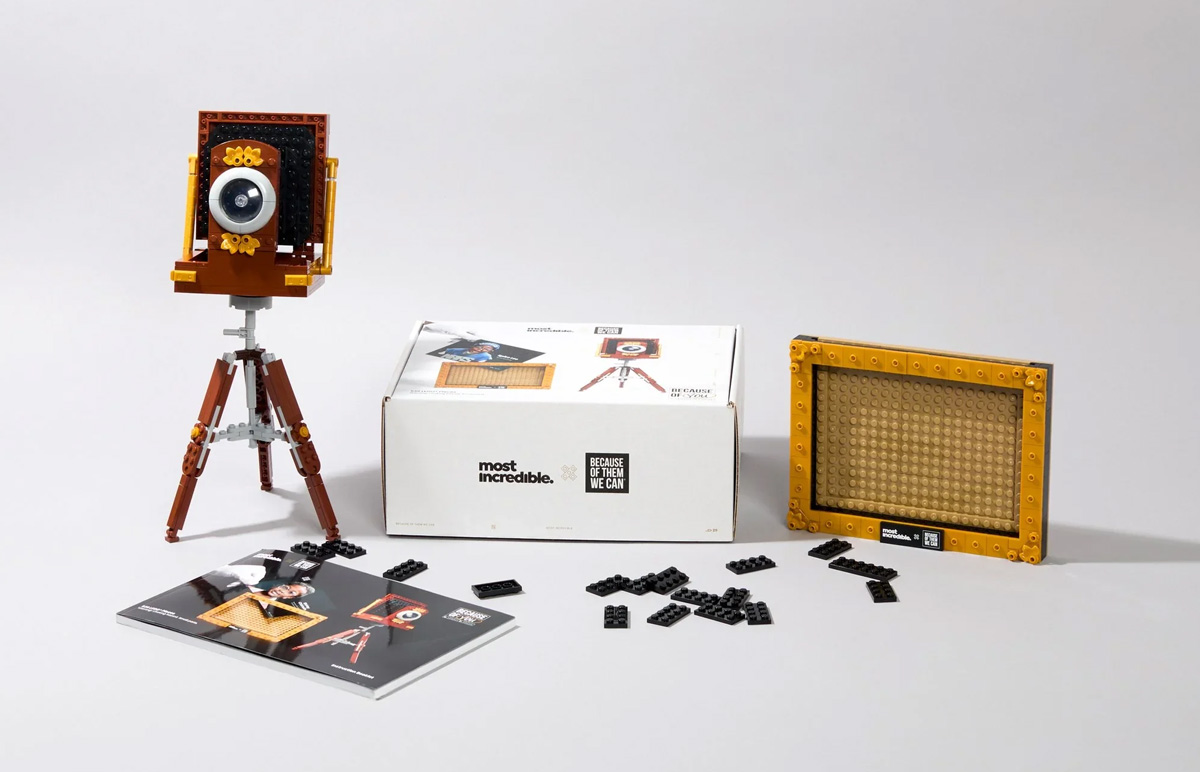
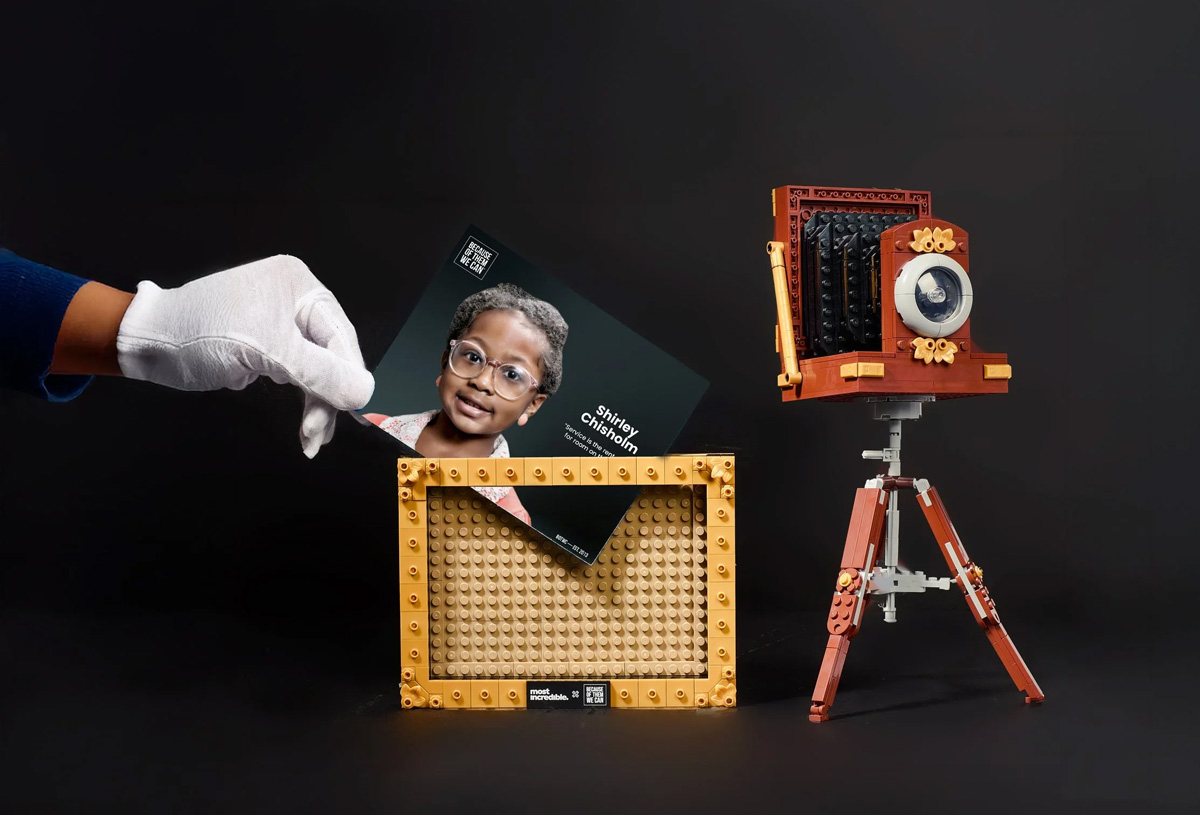
A collaboration with Because of Them We Can generated a functional sculpture — camera and frame — titled Because of You: Legacy in Focus. The composition honors Black photographers — the people who made memory visible long before algorithms did. For Gates, whose parents met in a camera shop and whose mother ran a camera club, the piece collapsed personal history and collective legacy into a single object.
The camera stands upright on an articulated tripod, its boxy form recalling early large-format cameras used to document everyday life with care and intention. A rotating lens, removable flash, and exposed mechanical details make the object feel ready for use, alive with purpose. Beside it, the frame is weighty and deliberate, scaled to hold images that carry meaning rather than decoration. Its studded surface reinforces the idea of construction: memory assembled, preserved, and protected.
Together, camera and frame operate as a single system — one to capture, one to hold. Like all of Most Incredible’s work, they remind the viewer that Black history was not accidental or incidental — it was witnessed, framed, and made visible.
When the Memory Hits
The reaction to Gates’ and her collaborators’ work is immediate and emotional. People don’t send reviews. “They send voice notes,” Gates shares. Messages saying they bought two, sometimes three: one to build, one to keep pristine, one “just in case.”
“I remember my first camera.” “I remember learning how to skate at the rink.” “I remember being with my family when…”
Gates sees these responses as confirmation. The objects are acting as designed: touching the bricks unlocks stories people didn’t realize they were holding.
For Gates, the medium had to be LEGO. “LEGO bricks are a smart tool. LEGO is a brilliant medium to knock down boundaries, to have the tough conversations, to make a new friend, to share an experience, share a memory, to archive culture.”
“Preserving memory requires participation,” Gates continues. With LEGO, people participate by actually building these cultural compositions themselves — absorbing and connecting them into their lived experience.
Gates also feels a responsibility to use LEGO in a way that speaks to and elevates Black culture. As the first Black woman to compete on LEGO Masters, Gates entered a space where many viewers had never seen themselves reflected. She entered it fully herself — bringing her grandmother’s photo with her, speaking openly about where she came from, and refusing to flatten her identity to fit the format.
What followed was incredible. LEGO Masters introduced Gates to a vast, international community of builders — people from middle America, rural towns, global cities — all bonded by the same medium. The network effects were immediate. New collaborators. New friendships. New pathways into a world that had often felt closed or opaque.
For viewers watching at home, especially those who looked like her, the message was clear: “There’s space for all of us.”
Building What’s Missing
Everything Gates does returns to service. Archiving is service. Design is service. Collaboration is service. Even joy, in her framework, is infrastructural — something that must be intentionally built and maintained. Her work continues to expand and connect.
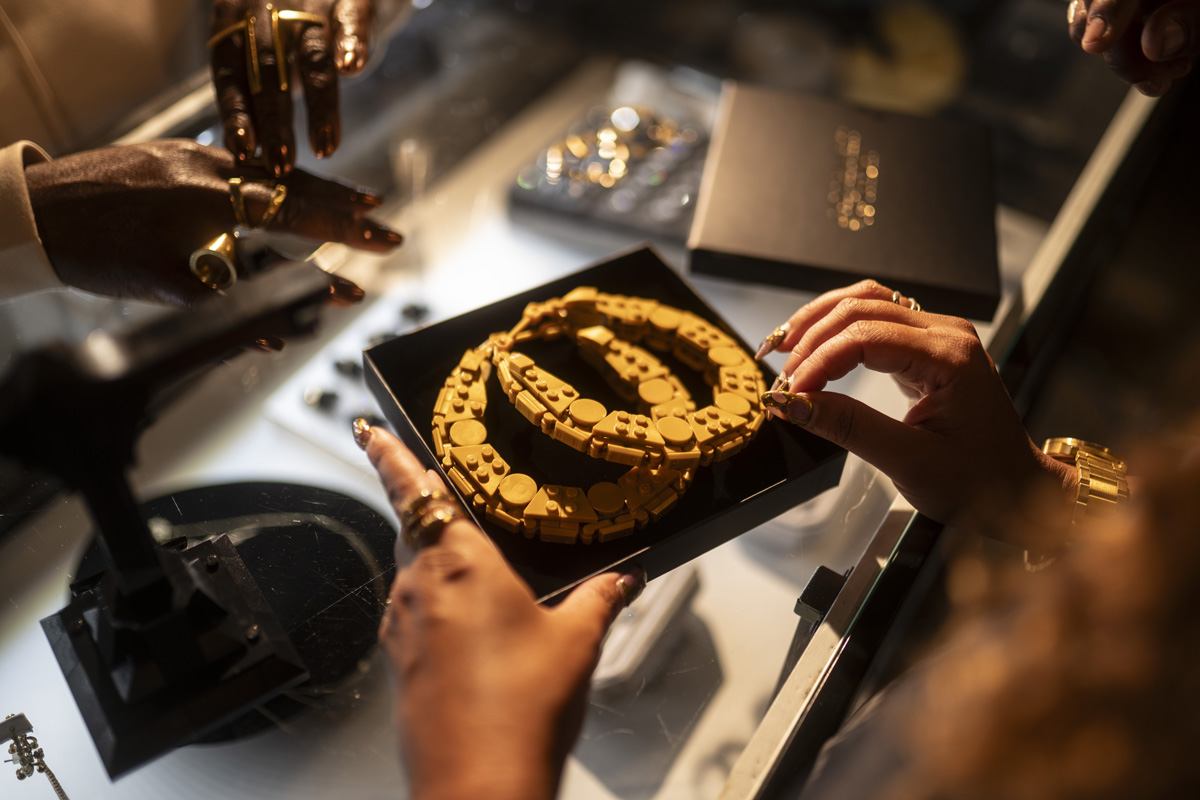
The latest cultural composition comes from Most Incredible’s artist-in-residence program, beginning with Dr. Yaba Blay of Professional Black Girl, a digital community that celebrates the everyday culture of Black women and girls. Their first drop together — a pair of bamboo earrings rendered as a cultural composition — arrives with the same emotional charge as the studio’s earlier works. People don’t just see earrings. They remember the first pair they wore. The weight. The confidence. The way adornment became declaration.
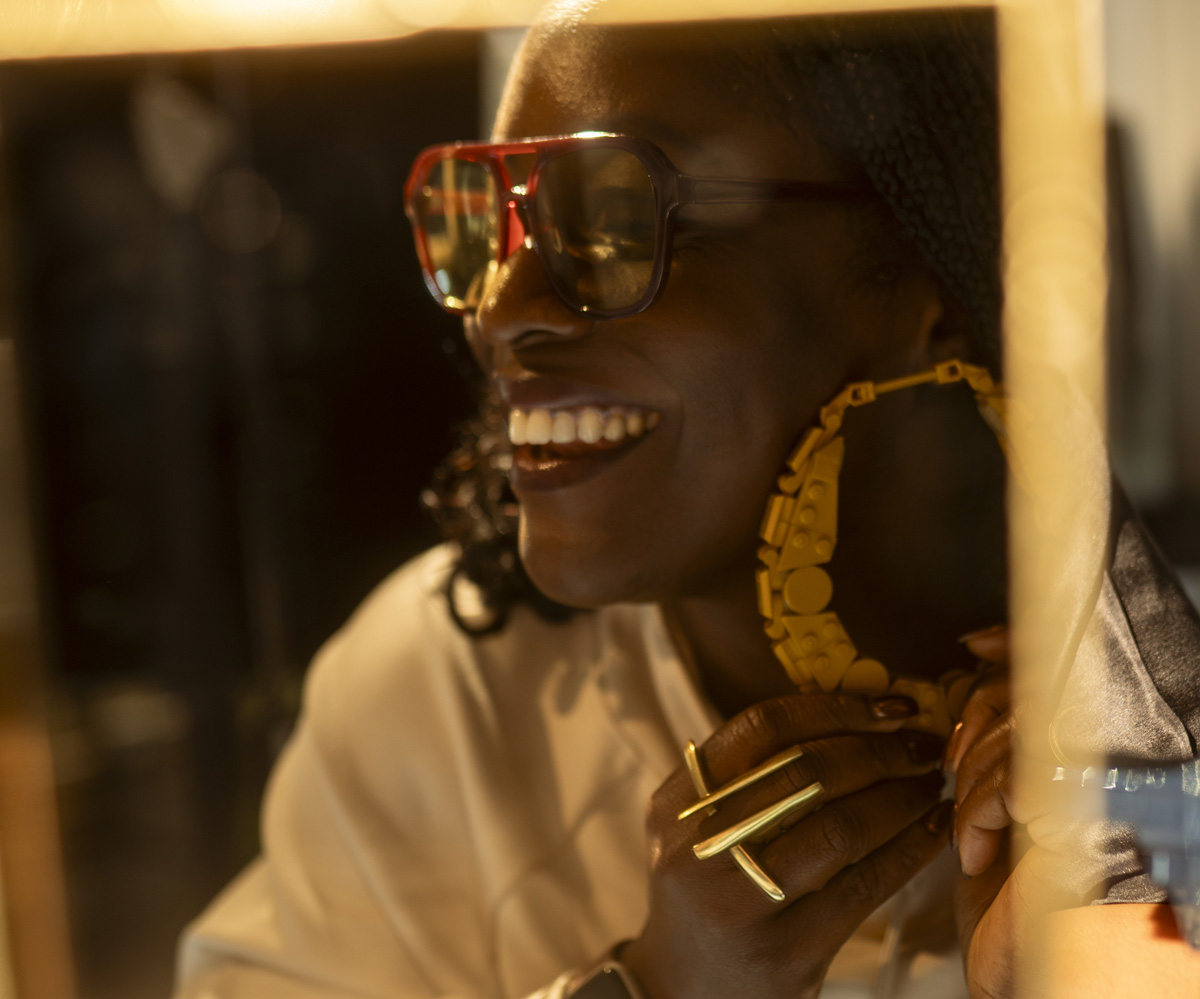
Gates smiles when she talks about the reaction. Group chats light up. People want multiples. “It’s bringing so much joy,” Gates shares, “so that’s the reason to wake up in the morning, the reason to do this work. It’s like ‘alright, cool, ya’ll get the energy and what we’re trying to do.”
This fall, Gates will release Word Is Bond, a book dedicated to Hip Hop journalism, and to the writers, editors, designers, and publishers who built the cultural infrastructure that shaped how America understands music, politics, fashion, and itself. It’s a continuation of the same project she began years earlier when she couldn’t find information about the journalists she admired. Preserving the preservers. Elevating the number twos. Refusing to let foundational work disappear.
Looking forward, her ambitions scale outward. She dreams of collaborating at the scale of the city with the New York City Housing Authority, and perhaps at the scale of a country, envisioning massive installations that communicate entire histories and cultural depth.
She knows memory is fragile. She knows how easily stories vanish when they aren’t given form. “You know, people want to be a part of something bigger than themselves,” she says. “And so hopefully we give folks space to join us in this quest to create the things that are missing in the world.”