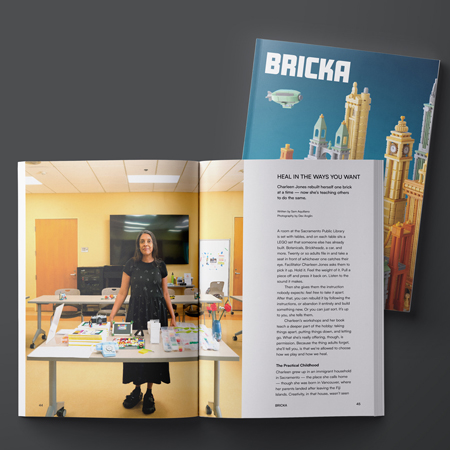



Photography by Dev Anglin
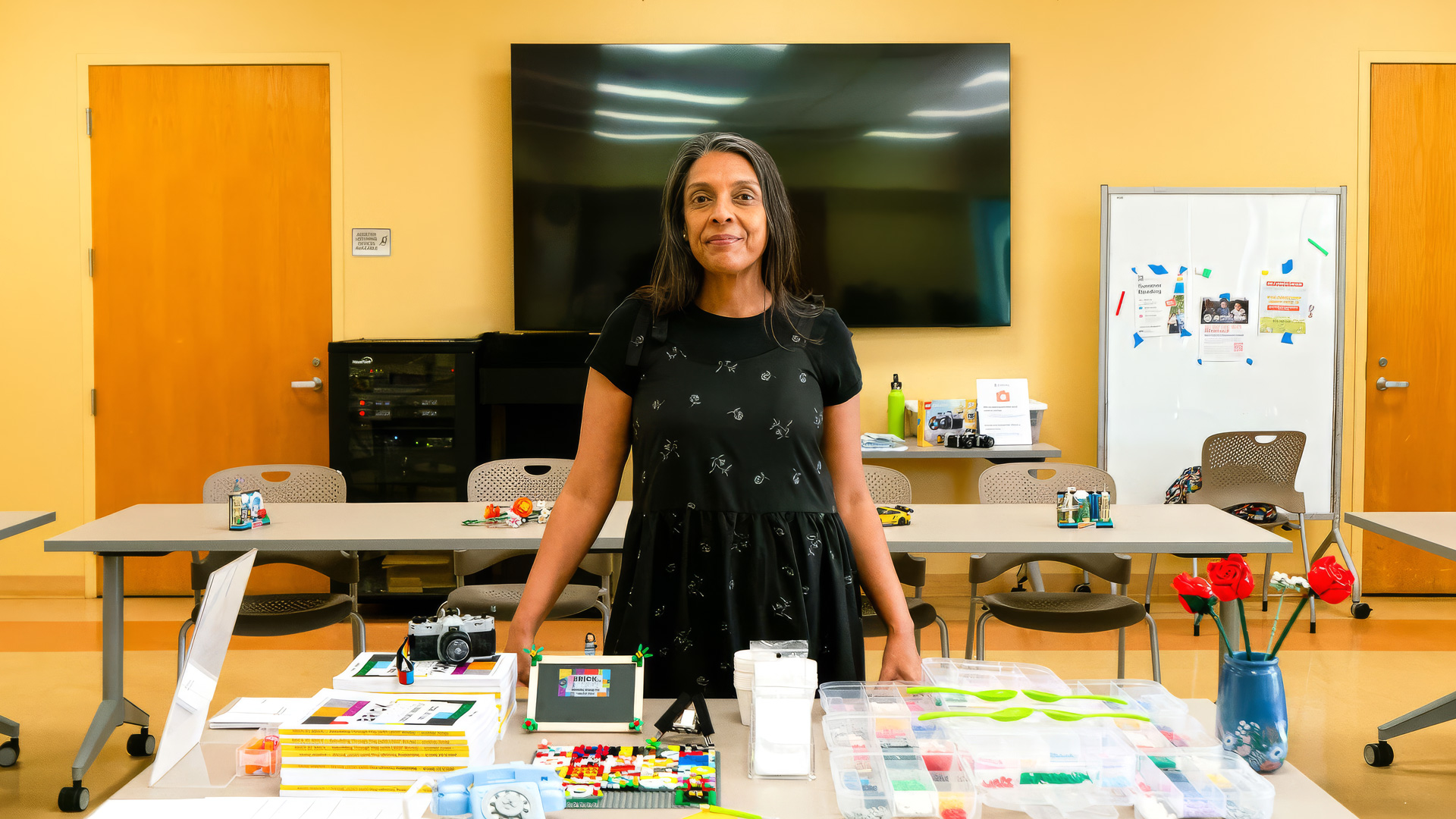
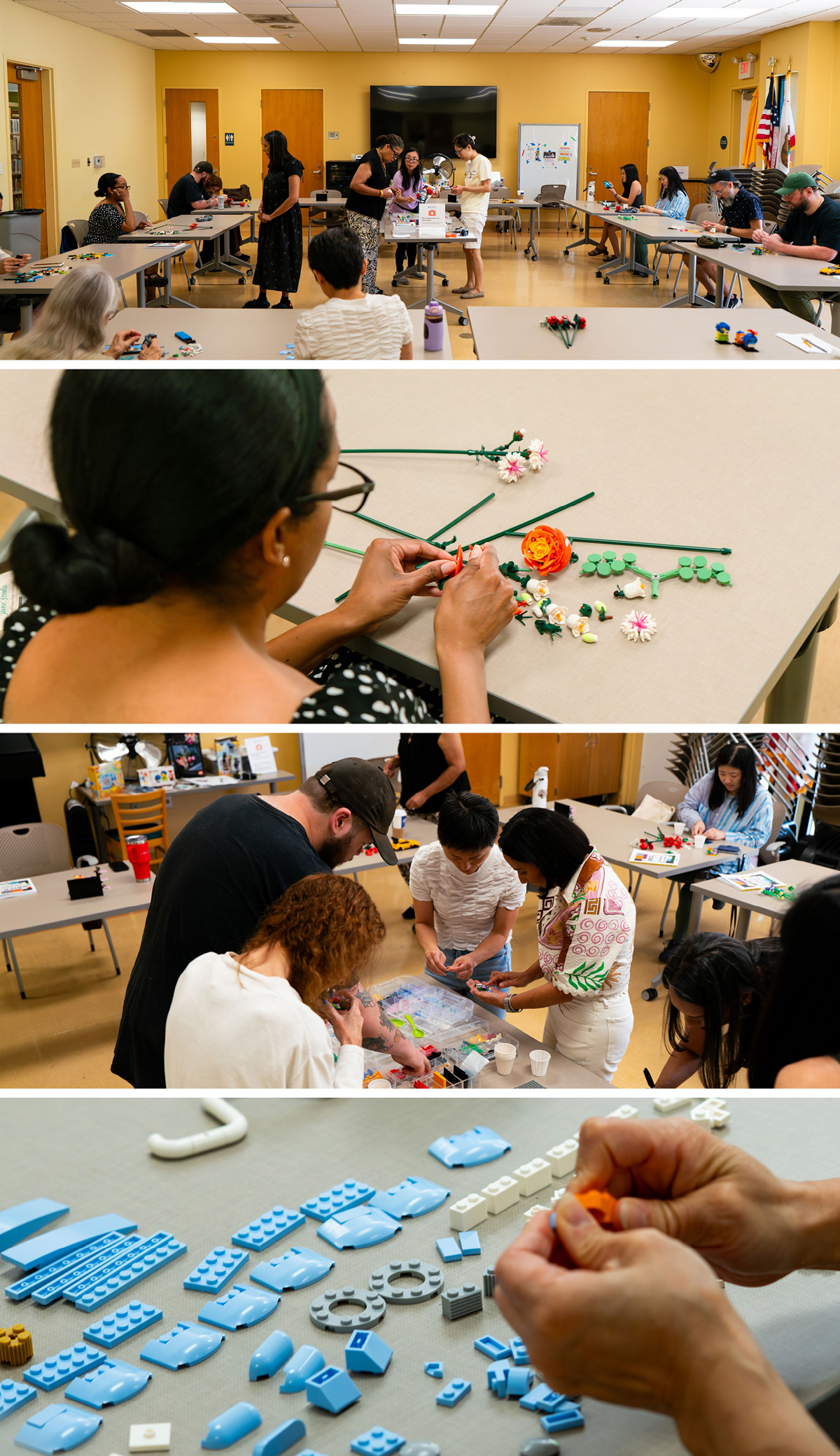
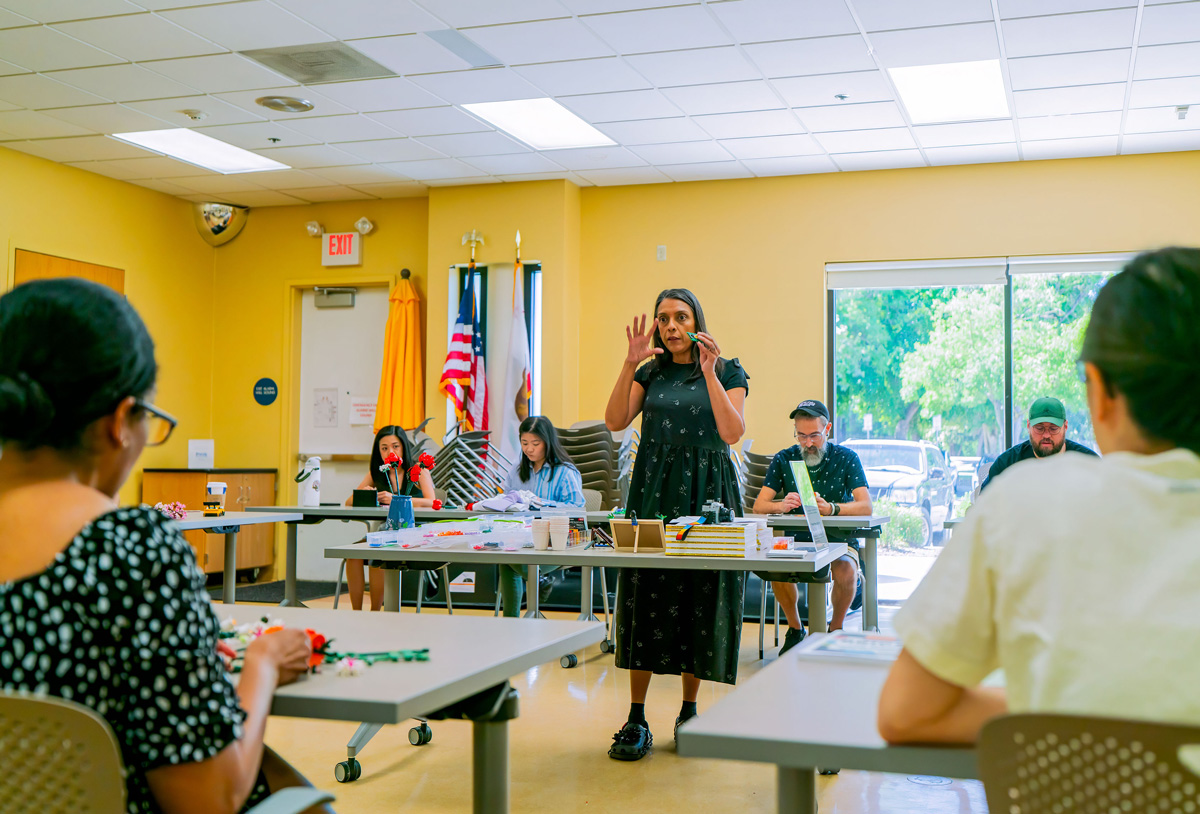
A room at the Sacramento Public Library is set with tables, and on each table sits a LEGO set that someone else has already built. Botanicals, Brickheadz, a car, and more. Twenty or so adults file in and take a seat in front of whichever one catches their eye. Facilitator Charleen Jones asks them to pick it up. Hold it. Feel the weight of it. Pull a piece off and press it back on. Listen to the sound it makes.
Then she gives them the instruction nobody expects: feel free to take it apart. After that, you can rebuild it by following the instructions, or abandon it entirely and build something new. Or you can just sort. It’s up to you, she tells them.
Charleen’s workshops and her book teach a deeper part of the hobby: taking things apart, putting things down, and letting go. What she’s really offering, though, is permission. Because the thing adults forget, she’ll tell you, is that we’re allowed to choose how we play and how we heal.
There's more! Continue reading this article by subscribing to BRICKA.
There's more! Continue reading this article by subscribing to BRICKA.
The Practical Childhood
Charleen grew up in an immigrant household in Sacramento — the place she calls home — though she was born in Vancouver, where her parents landed after leaving the Fiji Islands. Creativity, in that house, wasn’t seen as a career. It was a detour. “My career path choices were doctor, lawyer, engineer,” she says, counting with her fingers. “And if I’m not on that trajectory, what are you doing with your time?” Her activities as a child were things like spelling bees, she laughs.
What creativity did exist at home lived in the hands: cooking, making clothes, and assembling scrapbooks — before scrapbooking was a word. And it existed in community: her mother’s table was always full, she was always cooking for whoever her church brought around. Creativity had utility; it was something you did for other people in service of the group. The idea that it could be a thing you did for yourself — for a career — would take Charleen the better part of four decades to discover.
The Work
She met her husband — someone she says was very different from her culture — and called it love at first sight. She ran toward everything her upbringing had ruled out. Together they left Sacramento for Los Angeles and threw themselves into creative careers. Charleen fell into branding and advertising, working alongside creative directors on projects like Harry Potter and The Lord of the Rings. Her first project was a skeleton version of Heisenberg for a Breaking Bad campaign — sourcing materials, making the figure, all the while in awe that childhood dreams could become work that actually paid.
Storytelling was the through-line. “Everyone has a story,” she says, “and that story is your brand.” She loved the adrenaline of it — the idea becoming a thing in someone else’s hands. But agency life runs on output, and there was never a moment to reflect on what you’d made before the next thing landed. “What’s next? We have to beat what we just did.”
Then she became a mom and stepped off the Hollywood track, moving back to Sacramento. But the chasing didn’t stop. She dove into independent work, then a corporate design job at a global company. Eventually she got an offer that would have moved her whole family to Miami. On paper it was everything. Underneath, her creative engine was seizing up. “I was stressed out. I couldn’t put my mind to sleep.” She was solving problems that didn’t exist, hunting chaos in a life she’d built exactly the way she wanted it. “It caused a mania. I couldn’t turn it off.”
Traditional Therapy
So she tried to turn it off the only way she could find. She went to therapy — which was foreign territory for her, and for her culture. “You don’t go to therapy,” she says. “What do you mean you turned down a six-figure job from your ideas? Are you insane? And I was. I literally was.”
Therapy, at first, stayed frustratingly abstract. She’d sit in sessions and hear advice that sounded impossibly simple — just turn the thoughts off — with nothing concrete to actually hold onto. “It just seemed too plain to me.” She once argued with a therapist who told her to stop the thoughts: “You say that so nonchalantly, but you think I’d be sitting in this chair if it was that easy?” she remembers saying. “And he goes, ‘It is, Charleen.’” That stuck with her, and not well. She didn’t feel like she belonged in those rooms, and she still didn’t have a single tool she could put in her hands.
Then, six weeks in, the question that pushed her: what’s your plan? What are you going to do to stay well? She didn’t have a plan or an answer.
The Inheritance
The bricks were already at home. Her two sons had grown up on LEGO — she’d started her older boy, Jai, at around two — and somewhere in the family’s moves the collection had been bubble-wrapped, boxed, and half-forgotten. During COVID they’d pull out the mismatched bin and have a “Lego-off,” everyone building for hours. But Jai was fifteen now, past it, and one day, cleaning up, she asked what he wanted to do with all of it. He shrugged. Whatever.
She couldn’t throw it away. “I’d like to say it was my Lego inheritance.” So on a hard day, mid-cleanup, heavy thoughts crowding in, she opened the bin. Well — this one’s cute. She unwrapped it, put it together. This one’s cute too. An hour probably went by. And the heavy thoughts, for that hour, to her surprise, were gone.
She didn’t have words for it yet. “Either my thoughts went away,” she says, “or I was able to process what I went through today and just be calmer when I was done.” She’d come home from therapy with all these discoveries and nowhere to put them, and here, bricks in her hands, was that somewhere.
The Book in the Mess
Most people would have waited and written the book about their healing journey afterward, once the story had a tidy ending. Charleen wrote it in three weeks, in the middle of the mess, on purpose.
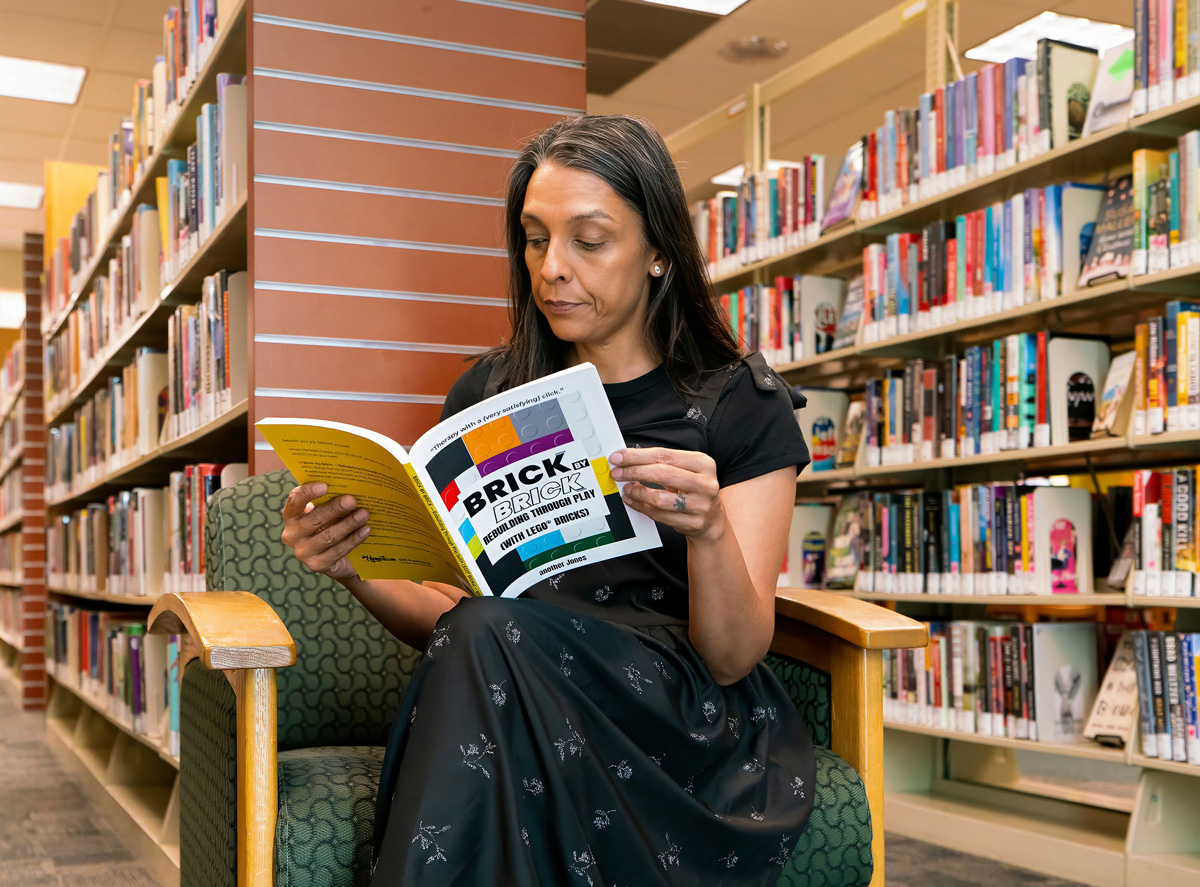
“I would have loved to write this after everything was figured out, to be packaged up neatly,” she says. “To be honest, that’s not me right now. I’m not packaged up.” Her book — Brick by Brick: Rebuilding Through Play — is part memoir, part guide, part activity book, and it’s written from inside the burnout rather than safely on the far side of it. Being vulnerable was very foreign to her. “Charleen on paper is A1,” she says. “But Charleen right now is a failing big F with a red marker.”
She made a deliberate choice about tone. The feelings were already heavy; the book couldn’t be. It’s not clinical, and definitely not preachy — “someone just sitting alongside with you, like, oh my God, I’m going through this too.” She self-published, and she did it alone, because alone was the only way she could be that honest. And she let the humor stay in, because the humor was true, and it’s very her. “Grief and anxiety exist,” she says, “but so does humor. And sometimes all at the same time.”
The Practices
The heart of the book is a set of practices — small and repeatable, a little strange in all the best ways. They start with sorting, because sorting gave Charleen immediate results and total control. There was no permission required, no one’s feedback to wait for: all the grays here, the purples there. “I needed to regulate,” she says, “without escaping to something.” Just her hands, deciding.
From there came the brick reset — “permission just for me,” she calls it. She keeps bricks at her desk. After a bad phone call or an angry email, she can turn to her bricks, place a single piece, and shift her thinking. The world shrinks to the pieces in front of her. And petal meditation, born because sitting still with her eyes closed was never going to happen — but her hands on the curved, fiddly flower pieces, focusing on the little connection points, that was something she could do every day.
Then the harder ones: the grief garden is a botanical build she returns to with leftover pieces, assembling the difficult things and setting them on a shelf. “It gave my thoughts a place to land.” If she wants to think about something again, she takes it down — adds to it, or dismantles it and never sees it again. Her parents, lost when she was in her thirties, live quietly somewhere in that garden. And minifig journaling, where the anger goes somewhere it can’t survive intact. “I can’t be mad at a minifig,” she says. “I can give her a name. This is Dirty Diana and her bad deeds.” The little figure sits on her desk through a conference call, and she giggles to herself, and the seriousness loses its grip.
She started sharing her ideas and the practices from the book, and was buoyed by the response. Charleen shares stories of messages on social media, like the one from a person who messaged her one evening asking about the book and, upon hearing the premise, replied, “It feels like you crawled into my head.” He’d been building on Sundays for years, he said, and never knew he was grief building until he read her words for it.
That was the whole return, right there. One woman bought twelve copies to pass around her book club. Charleen’s sister-in-law, her editor, immediately knew someone who needed it. And there was the friend she’d met online — a woman whose face she has never seen, whose entire presence is a pair of hands and a LEGO set, who talks to her every day and roots for her the way her own parents, gone now, no longer can. “If I’m helping one person,” Charleen says, “that’s enough.”
The Workshop
Which is how she ended up at the library. She pitched a workshop; the librarian said, “Let’s do it.” The newsletter went out, and within a week all four sessions were full.
She’d braced for hesitation. When she told folks to take the sets apart, they had permission, so they did it. One man looked over the set options, then asked if he could bring his own set in — he went out to his car and returned with a brand-new LEGO Millennium Falcon with thirteen bags, and worked through four of them before time was up. Someone turned a Brickheadz into a spaceship. A woman who had never touched LEGO in her life couldn’t bring herself to dismantle the flowers in front of her, so she arranged them into a little altar instead. A young man brought his mother, who is in the early stages of losing her sight; he sat beside her and guided her through the sunflower set, telling her where the yellow pieces went. Afterward she asked Charleen to record an audiobook.
They all built a mosaic together, each person a single tile. Adults on the other side of the fishbowl glass watched in fascination. When it was over, the one universal note was that sixty minutes wasn’t enough. Charleen says she’ll keep learning and building to help more people.
Brick by Beautiful Brick
I ask her what she’d tell someone still sitting in the middle of their own mess, and the answer is the whole approach distilled: “You’re allowed to heal in the weirdest ways you want,” she says. “Slow down. Don’t take it so seriously. You’re not alone. You’ve got to find your people, and literally take it brick by brick.”
There’s a radicalism in what she’s teaching, and it runs exactly counter to the culture around her. This is a community that builds — that prizes the finished thing, the sprawling display, the set completed and kept. Charleen’s contribution is to walk into that room and give people permission to take it apart. Or simply sort.
By now it’s hard to tell whether she’s talking about bricks, life, or both. For her, there’s no difference. You are allowed to pull it down to the studs and build it again, as many times as you need to, in whatever weird way works.