


Photography by Samuel Engelking
He didn’t belong in this room. His palms were slick with sweat. He’d have bolted out the door if his feet didn’t feel like they were encased in a thousand pounds of concrete.
His classmates were painters, illustrators, and printmakers. Leo Chan was “a computer guy.” When he finished, the room went silent. Everyone stared at their professor.
The professor looked at Leo’s work. Studied it. Stood up. Moved closer to it. Took it in his hands. Held it closer to examine the details. Then tore it up.
Not metaphorically with a blistering verbal critique. But literally. Into tiny shards of paper that cascaded onto the studio floor.
“I died inside,” Leo recalls. “I almost started bawling.”
The silence of his commute home couldn’t drown out the noise inside his own head. The inner critic screaming at him that he didn’t belong. That he should give up. That he was a fraud.
There's more! Continue reading this article by subscribing to BRICKA.
There's more! Continue reading this article by subscribing to BRICKA.
The Conference
Standing in the cavernous Boston World Trade Center, it was easy to get overwhelmed by the 2015 Front End of Innovation Conference. Thousands of innovators flocked to the annual event, and even though he had been with State Farm for six years, Leo never really felt like a corporate person. “I’ve always gravitated towards things that are fun and playful.” And he hadn’t found that in the coporate world, yet.
One session cut through the noise. “I remember that I was curious. I don’t remember the actual session; I don’t even remember who led it. But it was a three-to-four-hour deep dive where we just spent the entire time using LEGO Serious Play (LSP). We had the kits and everything, and I was just mesmerized by how powerful it was.”
When he returned to Bloomington-Normal, Illinois, he went straight to leadership. Begging them to let him get trained in LSP. Their silence felt the same as it had years ago in the studio. “I couldn’t sell it to them. Maybe I wasn’t convincing enough, or I hadn’t learned how to make the case. I was so excited for this, and it just sat in my brain for years.” His leaders weren’t ready for it. But Leo was.
Executive Discovery
LEGO Serious Play traces its origins to the mid-1990s, when Johan Roos and Bart Victor, professors at IMD business school in Switzerland, began developing a strategic thinking methodology grounded in the idea of “learning through making.”
They tested their LEGO-focused method with leadership teams across Europe. LEGO’s own CEO, Kjeld Kirk Kristiansen, was skeptical at first, but after putting 300 of his senior leaders through a LEGO Serious Play workshop, he became such a fervent believer that he founded a separate entity, Executive Discovery LLC, to develop and expand the method.
When LEGO’s bankruptcy crisis hit in 2003 and 2004, LSP survived only because it existed in a separate entity funded by the grandson of LEGO’s founder. But in 2010, LEGO shut down Executive Discovery and released the LSP name and method under a Creative Commons license. Today, anyone can access the open-source methodology document and learn the method.
“The methodology was designed to be innovated. LEGO open-sourced it because they wanted to release it to the world and see what people do with it. The use cases are limited only by our imagination.”
Hatch
Leo moved to Atlanta as a member of Chick-fil-A’s innovation team. He still believed in LSP, but he knew better than to bring it up.
But everything at Chick-fil-A was different.
“The founder of Chick-fil-A, Truett Cathy, had a quote I love: ‘If you’re not having fun at work, you’re not doing it right.’ He was a playful personality. He bought the Batmobile because he loved cars, and one day he drove it to Chick-fil-A’s headquarters dressed as Batman, just for fun. At Chick-fil-A, there were a lot of playful leaders, and seeing them lean into that set a different tone: we can enjoy our work, be playful, still get amazing results.”
The unfinished warehouse space he and the innovation team worked in, Hatch, symbolized that belief.
Plans were already approved for Hatch 2.0 when Leo joined the company. But, for Leo, something felt off. For months, he stayed quiet, but his sense of unease never faded. Eventually, he couldn’t stay quiet anymore.
“When I pitched the Hatch redesign to my boss at Chick-fil-A, I had the same unease [as the critique], this is disruptive, I’ve never done this, they already have plans for next year. But my boss was very open. He said, ‘This is great! Let’s explore this, present it to the VP.’ He was the exact opposite of my professor.
“When I pitched the redesign to my VP, he could imagine the possibility. And that allowed me to do something I never dreamed possible: redesign Chick-fil-A’s 30,000 square foot innovation center.”
Hatch’s redesign was radical, as was its success. Shortly after the ribbon-cutting, Leo seized his moment. He asked leadership to support him in becoming a trained facilitator in LSP methods.
They didn’t rip up his proposal. They didn’t meet his request with silence. “They said, ‘Leo, we trust you to do whatever you want.’ I was like, yes, finally.”
He created an Innovation Coaching program and trained dozens of Chick-fil-A employees in how to think more creatively. He honed his facilitator skills and found the courage to be his naturally open, playful, curious self.
“I wanted to work for Chick-fil-A until I retired. I love the company. I loved the work I was doing. It was incredible.”
Then the pandemic struck.
Leo had been traveling to Toronto from Atlanta twice a month to spend time with and care for his mother. When the world shut down in 2020, Leo knew it was time to move back to Toronto.
“I told my boss about the situation, and he actually pitched me on the idea of starting a company. We both knew it was risky, but he said, ‘If you’re willing to do it, so are we.’”
The arrangement required Leo to serve a variety of clients, not just Chick-fil-A. In doing so, he quickly re-learned that not everyone was as open to his ideas as his former employer.
The Strategy Session
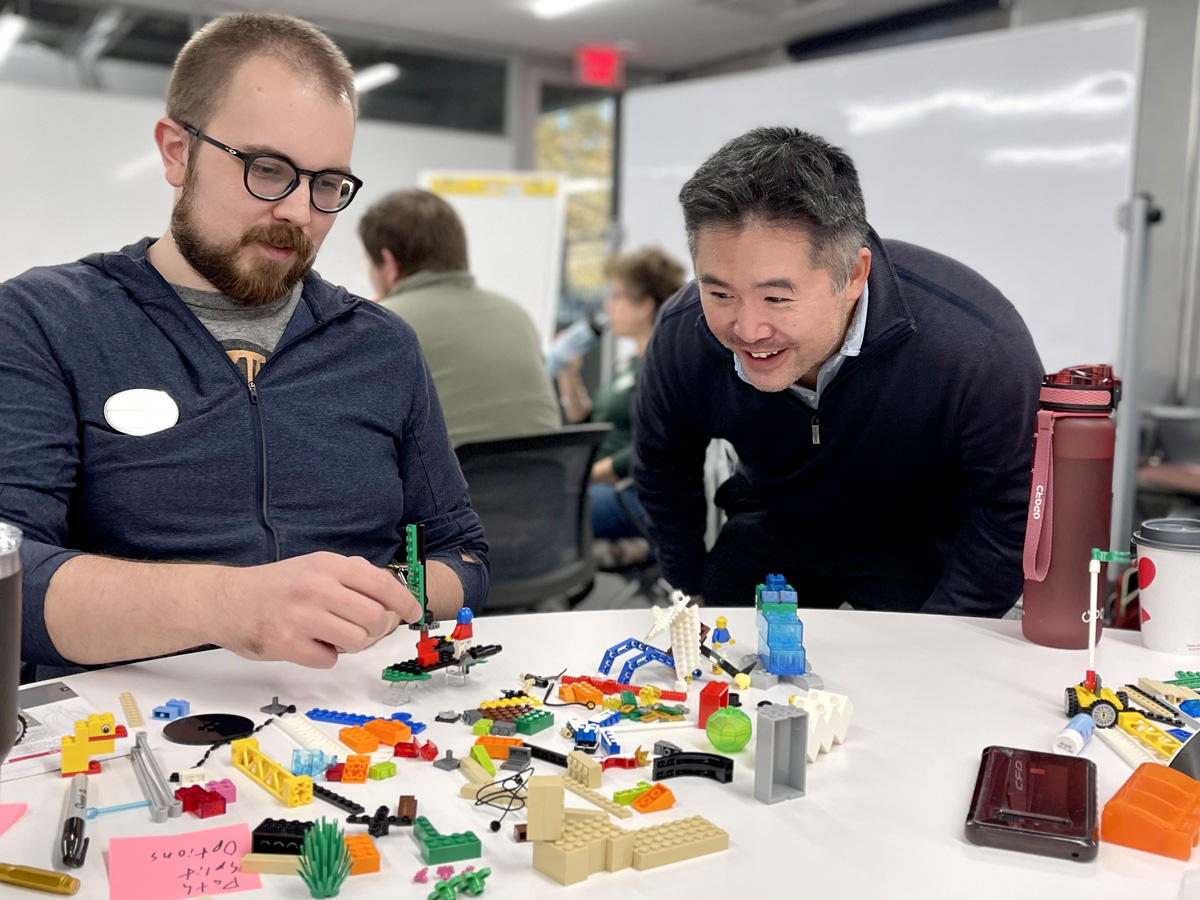
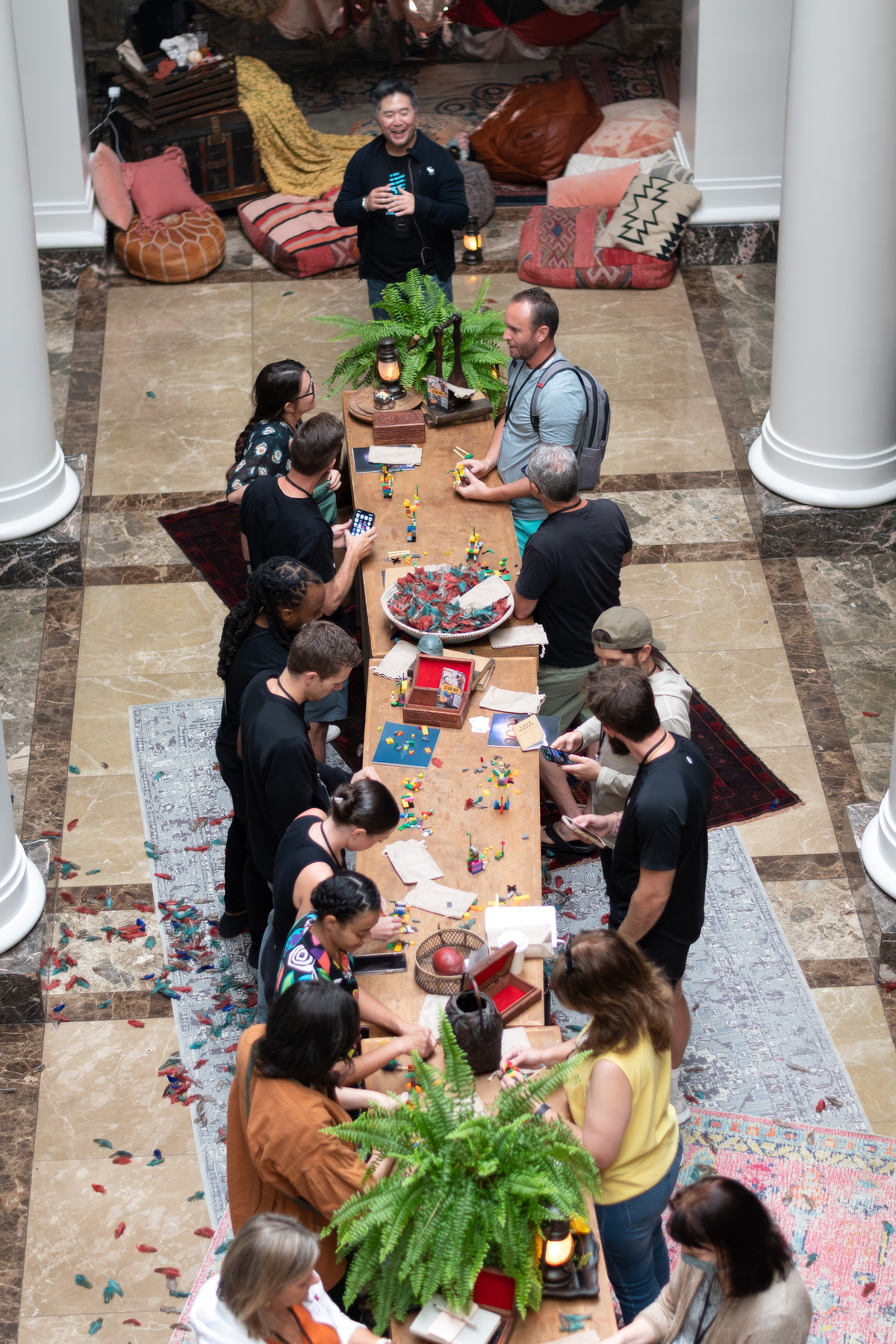
Every LEGO Serious Play session runs on the same principle: 100 percent of the people participate 100 percent of the time. No one checks their phone or wanders to the bathroom. Everyone builds, shares, reflects, and contributes.
The session begins with a question. Each person builds a model in response, then shares what it means. The group reflects, pulling meaning from the models and their creators.
“The pieces are almost like a search engine for your brain,” Leo says. “The kit is curated in a way that allows you to think in metaphor. You might not know why you reached for a particular piece. But when you look at what you’ve built and realize your entire model is full of trees, something in you knows: I want growth.”
When the leaders of a major North American industry council hired Leo to run a two-day strategy session with their board of directors, he was nervous. The board was comprised of the CEOs of billion-dollar global titans, and his job was to use LEGO Serious Play to help them define the council’s strategy for the coming year.
He assumed attendees would be told about the plan and the tools prior to the daylong working session.
They were not.
As Leo excitedly unpacked his LEGO kits and set up the room, he felt the energy shift. The silence that descended felt too familiar.
“People were blindsided. I could see the questions on their faces. ‘What the heck is this? What is happening here?’ There were a lot of raised eyebrows.”
One woman in particular caught his attention. He could see her skepticism, the specific look of a very busy, very senior executive who just realized she was signed up for something she did not agree to.
“What changes the eyebrow raise is the outcomes. You cannot deny the output. The quality of ideas, the decisions made, the collaboration, the engagement. And then people think: we just did all of this? With this?”
The session worked. The eyebrows came down. At the end of the day, the woman Leo had been watching, the one with the look of skeptical calculation, told him it was crazy and amazing.
Eighteen months later, she emailed him. Her company faced a serious competitive threat. She needed help. “We need our next billion-dollar idea,” she told him. “Will you come?”
Build Your Future
The outcomes aren’t always strategies or billion-dollar products. Sometimes, the outcomes are more profound and deeply human.
When you build a model, you create an object that exists outside yourself, that you can point to and talk about. When someone questions or challenges your model, it doesn’t feel personal.
“When feedback comes, it’s about the model,” Leo says. “Not you. Psychologically, that separation creates an added layer of safety.”
When five strangers gathered in a room, they thought they were there to become certified LSP facilitators. The experience became something else when Leo gave them their first prompt: build a model of a dream you have for the future.
It was time for the first person to share. A woman held up her model and, through tears, said, “I want to be a mother.”
“For someone to share something that deeply personal would normally take months, maybe even years,” Leo says. “You have to get to a level of closeness, of trust, before something like that comes out. With LSP, it happened in hours.”
The next person spoke. “I want to be a better father to my children,” the man whispered.
“We all lost it,” Leo says.
The Unveiling
Strategic planning is an annual rite in the business world. Teams spend months analyzing data, debating options, and revising budgets, seeking executive approval. Too often, it’s out of date before it goes into effect. And these plans are usually the opposite of fun, playful, or enjoyable.
The CFO of Trench Group — a leading manufacturer of high-voltage electrical components — was tired of the usual approach. He wanted something different.
He called Leo.
“I could immediately tell he was a massive LEGO fan. A lot of my clients are LEGO fans, that’s often why they come.”
“The focus of our day and a half was: what are the strategic bets for the following year? What are the pillars our leadership team should be focusing on? What are the strategies and actions that will get us there? The output was their strategic pillars for the year, built in LEGO vignettes.”
Then one day, an email. The CFO said they had assembled the LEGO City and asked if Leo would like to come see it.
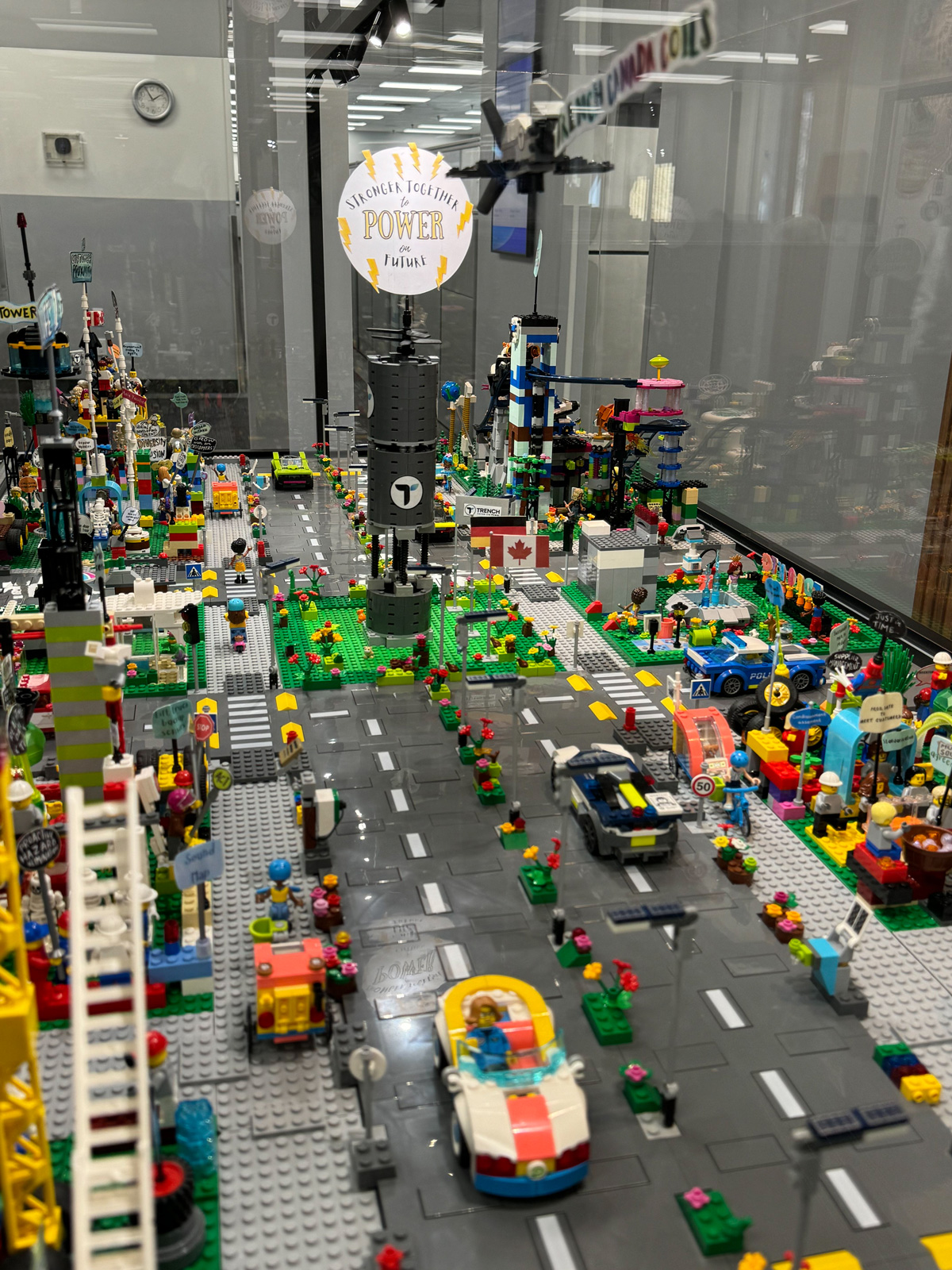
Slowly, the lights rose in intensity. The CFO inched closer to a covered table. In an instant, with a sudden flick of his wrist, the sheet whisked away, fluttered to the floor, and revealed a city.
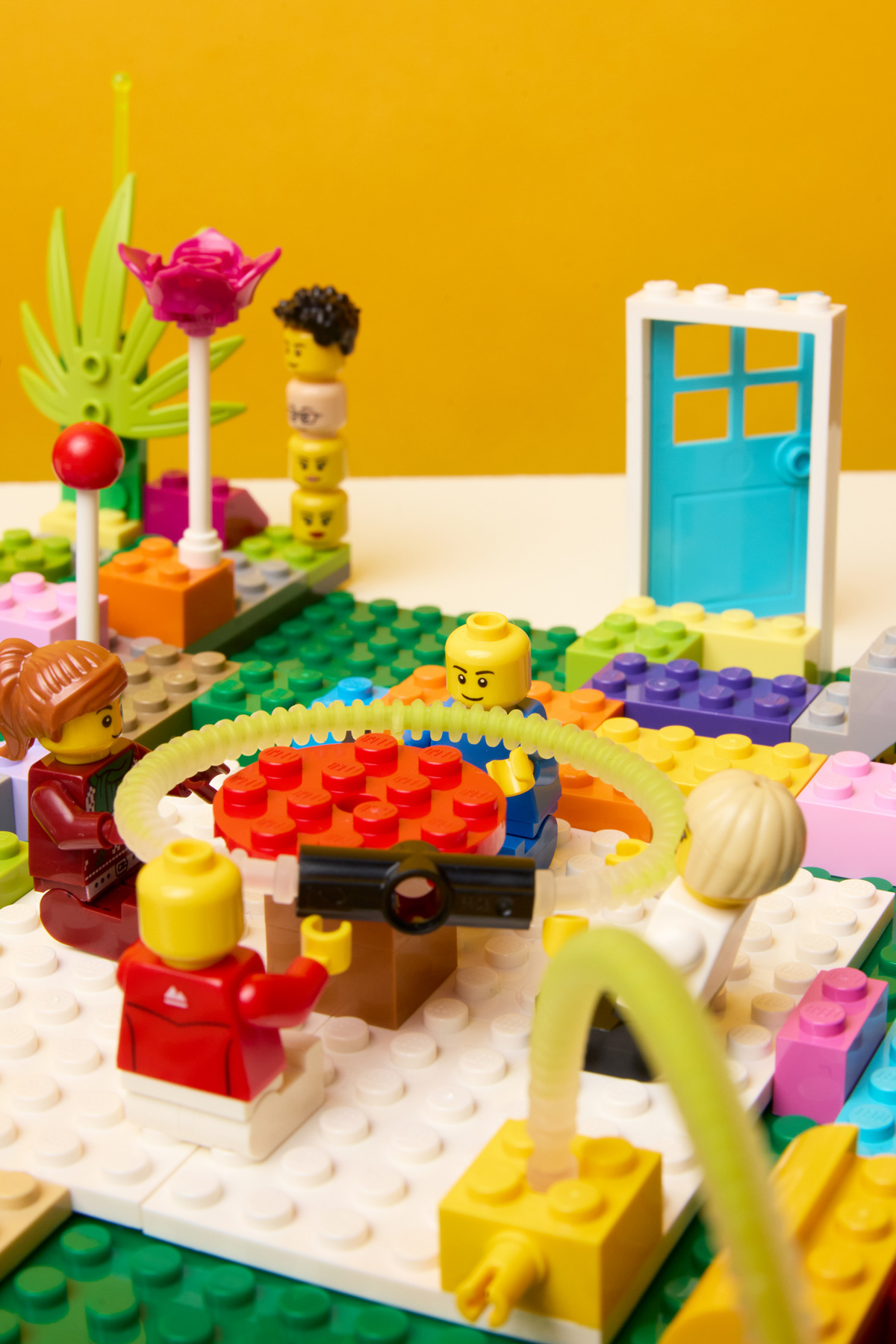
Roads with landscaped medians, futuristic cars, and well-behaved pedestrians defined a three-by-three grid. A roller coaster in one corner. A cacophony of color and minifigs in another. A combination oil rig/helipad anchored the third, while a flurry of wheels, vehicles, buildings, and trees filled the fourth. Down the middle, three green plates, one with a fountain and coffee shop, one with the CN Tower, and, in the middle, a towering electrical coil symbolizing the company itself. Integrated throughout, all of the strategic pillars that were built during the strategy session with Leo.
Leo stood there, taking it in.
“We were all just stunned,” Leo says, shaking his head in wonderment. “I was breathless. Who does this?”
It was the company’s strategic plan. Built from LEGO.
Building Belonging
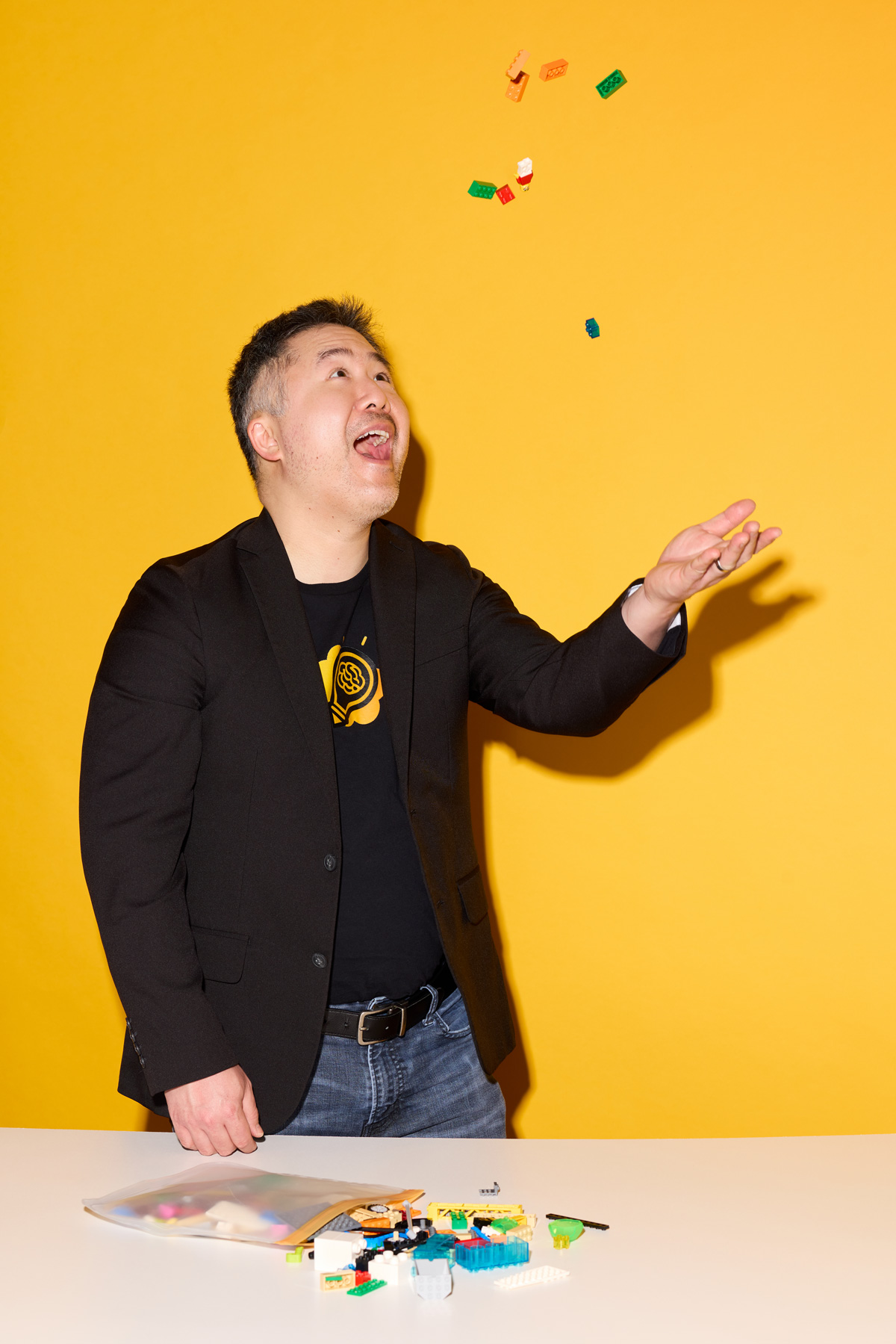
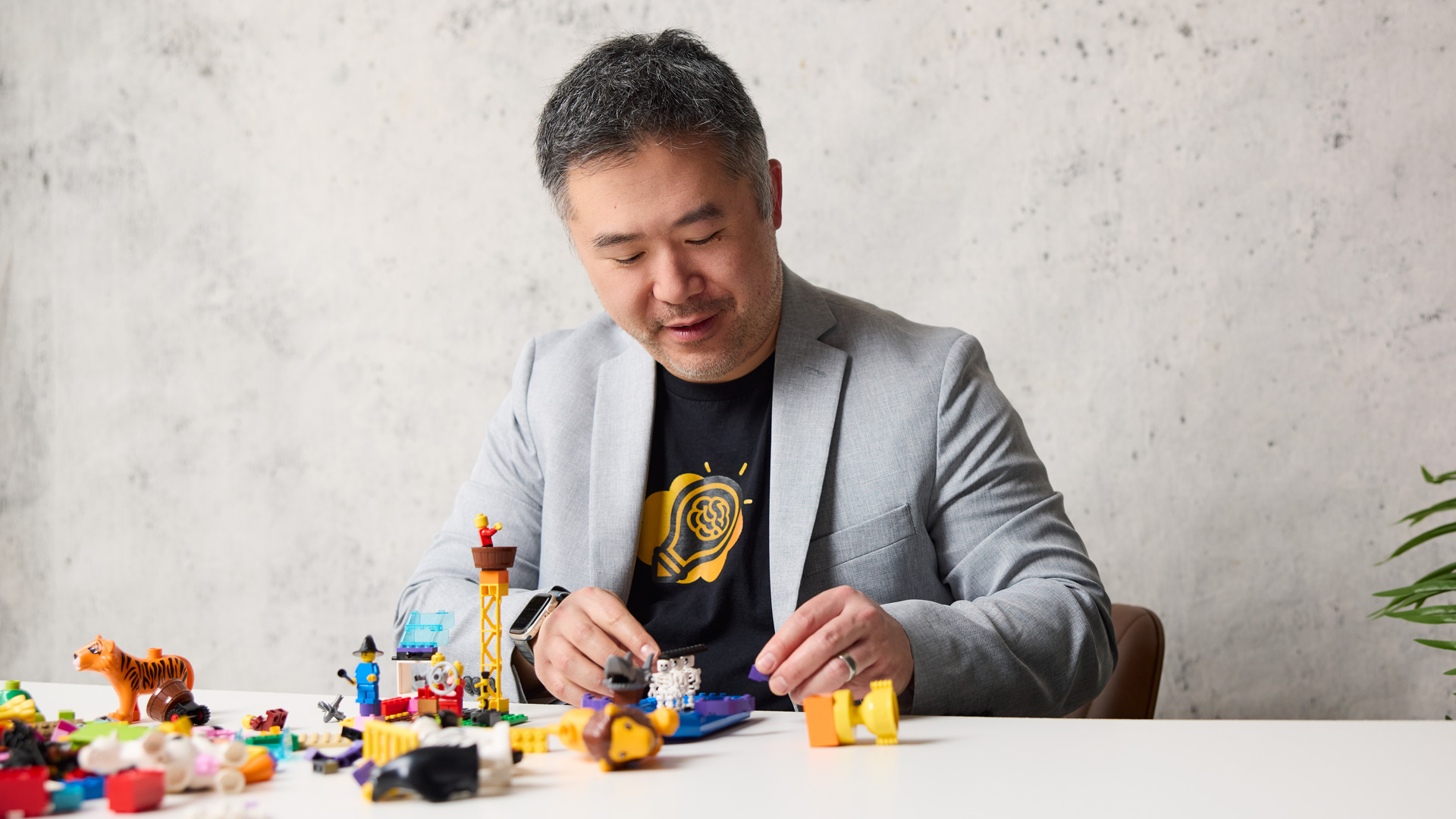
Leo belongs in this room. Jeans and a t-shirt amongst dozens of suits. A table filled with LEGO where a podium should be. His palms are dry. His feet tap playfully to muzak. Whether it’s five or eight hundred faces staring back at him, he smiles as he takes in the full spectrum of human emotion: joy, excitement, anticipation, skepticism, resistance, and fear.
“Many of us, as adults, have lost our sense of childlike play and curiosity and wonder. LEGO, through Serious Play, brings it back.”
As professors and bosses dismissed him, teaching innovation gave him a voice. A way to overcome his shyness, to communicate before he could find the words, to connect with others as an equal. LEGO Serious Play gave him a method to help others make their future.
You don’t need a special kit or training to experience LSP.
Grab a handful of bricks and at least one minifig. Collect whatever you find, any color, shape, or size works.
Now, build a model of a dream you have for the future.
Don’t think too hard. Just build. Reach for pieces without knowing why. Put things together until something feels right.
When you’re done, look at what you made. Share its story with whoever is close by.
When it unlocks something you didn’t expect, you’ll understand why Leo has dedicated the rest of his working life to putting bricks in the hands of people who thought they had nothing left to build.