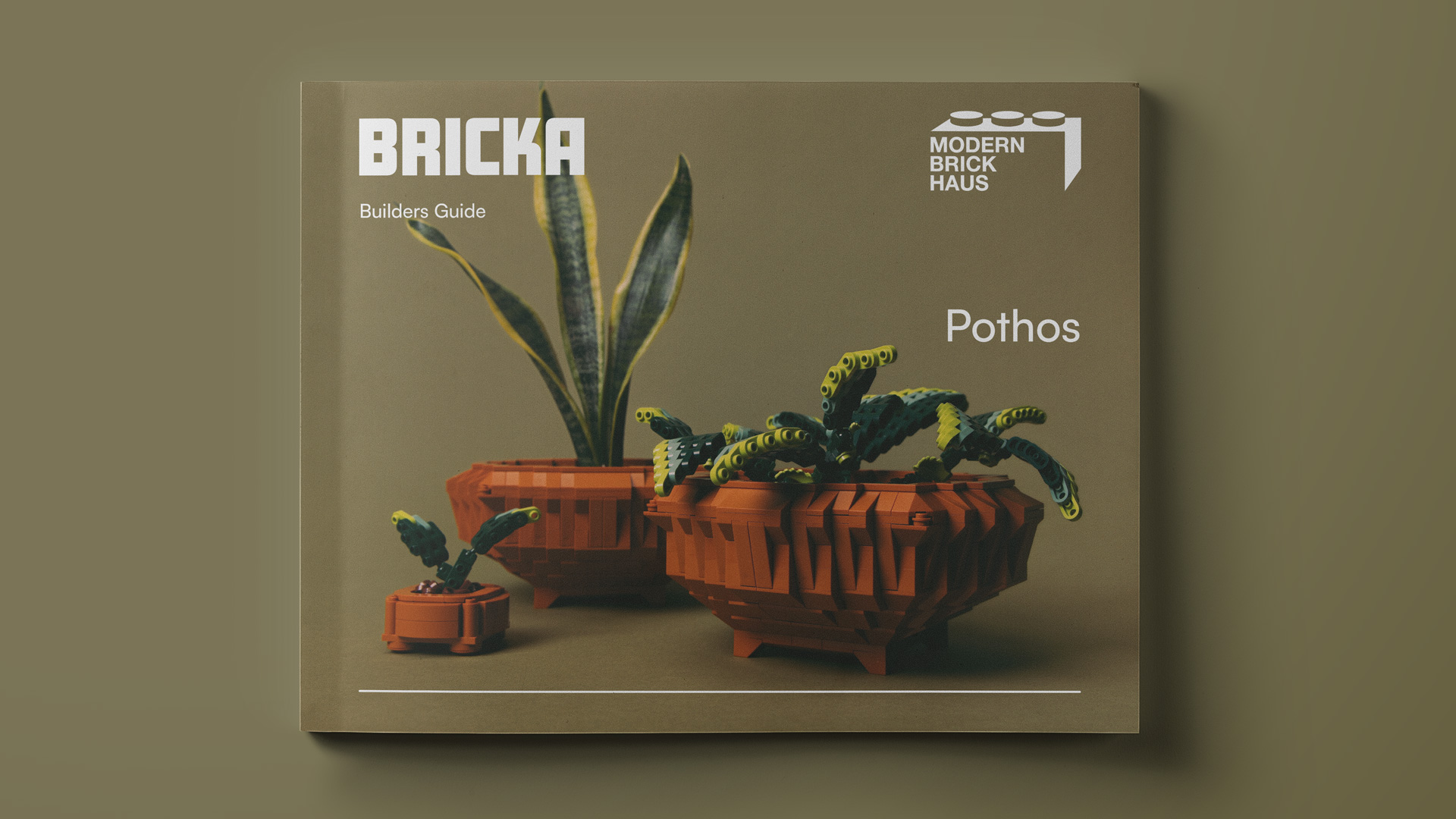



This article is part of a partnership with Modern Brick Haus. BRICKA wrote and produced the Builders Guide included with Pothos.
Photography by Hannah Dimmitt
At first, everything feels precise. Bricks stack methodically into place as the terracotta pot begins to take shape — slopes locking together, edges aligning, the structure rising steadily layer by layer. Soon, the process settles into a quiet rhythm, the kind of repetition that makes brick building so absorbing.
Once the pot is finished and the plant begins to emerge, the experience changes.
A vine bends outward from the rim. A leaf spreads open. Another sprouts from the stem’s side. The plant begins to evolve in the builder’s hands, shaped by their decisions about how long a vine should stretch, where a leaf should grow, or how the colors of the foliage should mix.
By the time the final pieces click into place on , the process has shifted from assembling an object to cultivating natural creativity.
Modern Brick Haus
Pothos offers a natural introduction to the philosophy behind Modern Brick Haus. The studio was founded by designer Oliver Parr and creative entrepreneur Gabe Villani to explore how brick building can become a creative experience. Rather than designing sets meant to be assembled once and placed on a shelf, Modern Brick Haus focuses on objects that invite ongoing interaction — pieces that feel equally at home as design objects and as personal expressions.
The goal is to create an experience that sparks experimentation. Modern Brick Haus provides builders with enough guidance to get started, while leaving space for their own ideas to take shape. As Parr puts it simply: “We’re giving people permission to be creative.”
When Bricks Met Plants
The idea for Pothos began at home. “I loved the idea of having a house that was full of greenery,” Parr recalls. “But I always heard people say they killed their plants. So I figured, why not just buy a good fake one?”
A gift from his fiancée, Hannah, changed that assumption almost immediately. “When she got me my first real plant,” Parr says, “that’s when I realized that I actually did have a green thumb.”
Parr shows me around his first floor, and the inspiration for Pothos is immediately clear. What began as a single plant quickly multiplied. Over time, their home filled with trailing vines, leafy clusters, and pots of greenery placed in windows and corners.
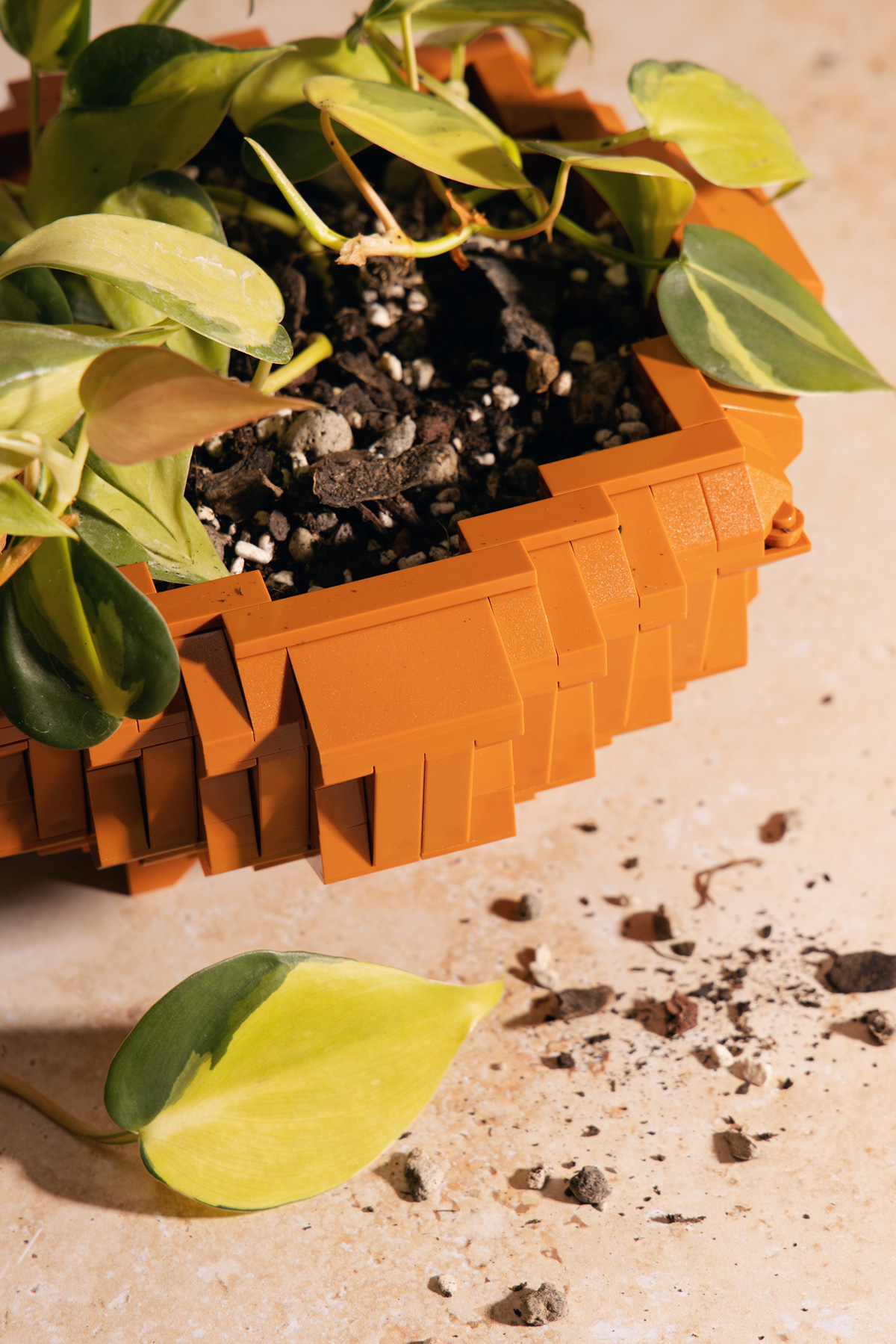
Naturally, Parr began experimenting with building a plant pot out of bricks. Could a brick-built planter hold soil? Could it support a real plant? Would the structure be durable enough to function like a traditional pot?
He built one and placed a plant inside.
Then he waited.
A few weeks passed. Then, a few months. The plant continued to grow.
“After a full year of a plant thriving inside of that pot,” Parr says, “I was like, ‘you know what, this actually is something.’”
That realization — that prototype — became the seed for Pothos: a set inspired by the intersection between design, gardening, and creativity.
Structure, Rhythm, and Texture
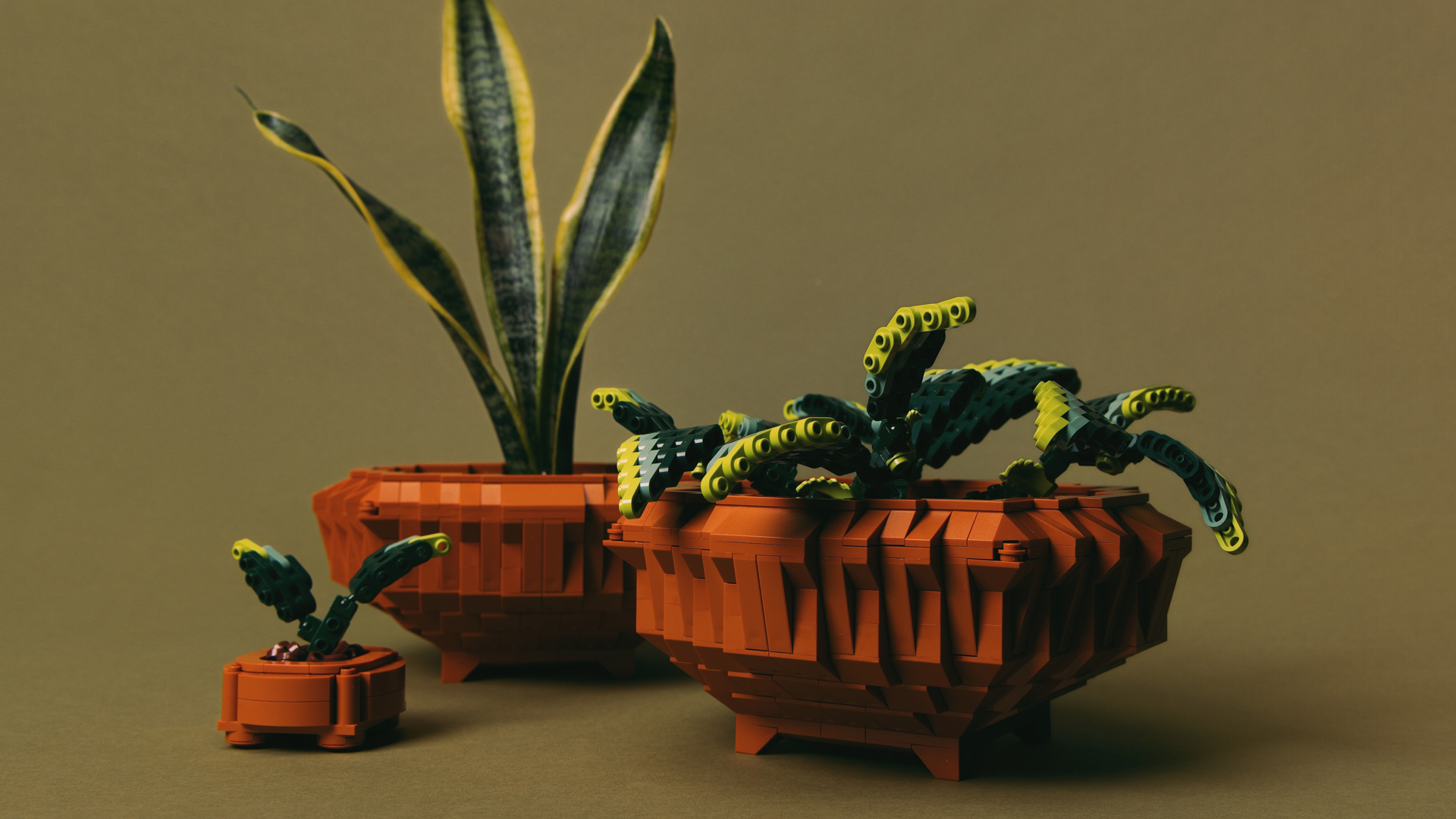
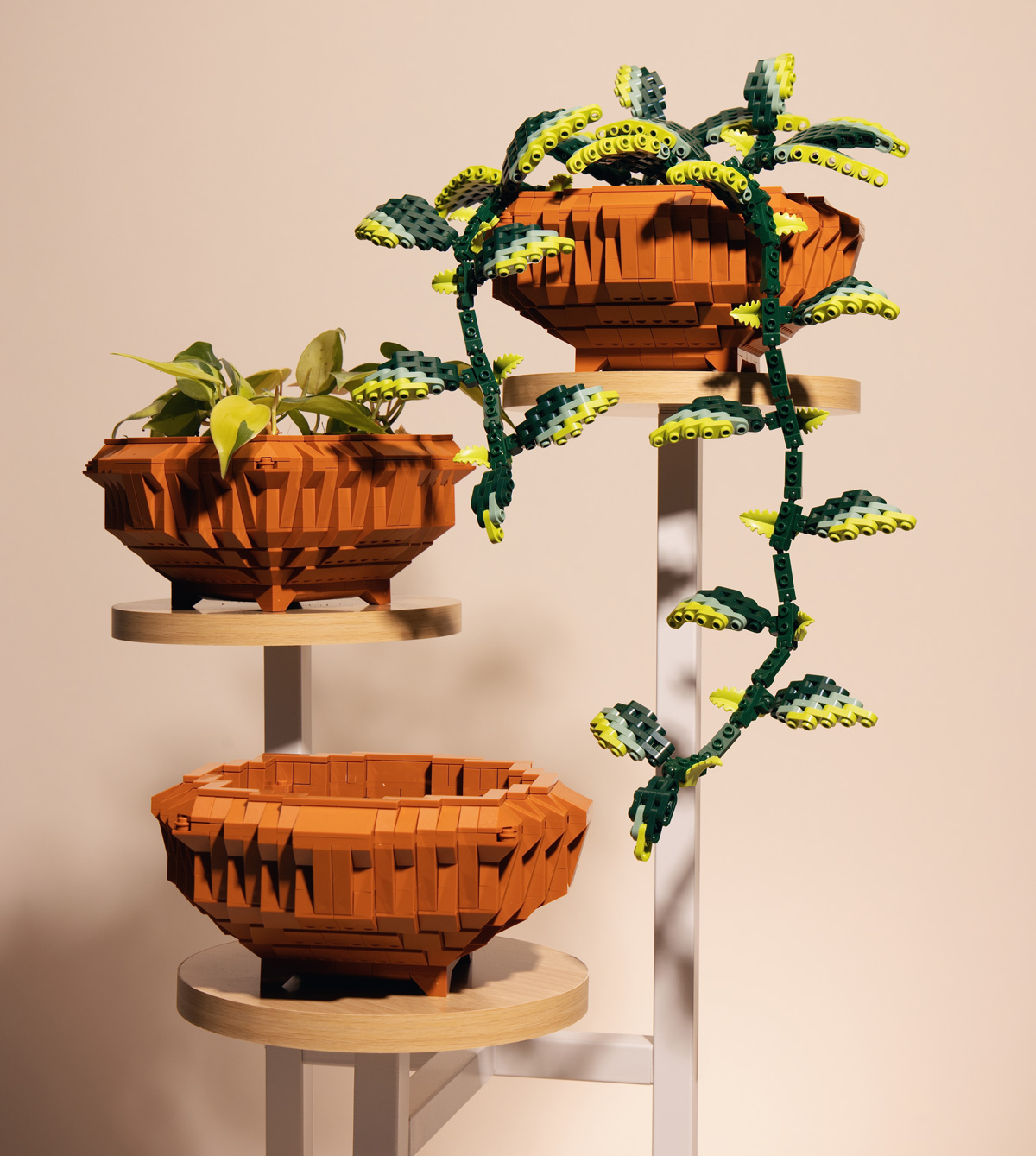
Every Pothos set build begins with the pot. Builders construct the terracotta vessel that anchors the entire design. It’s a familiar form — the classic planter shape that appears in gardens and windowsills everywhere — but recreated through a careful arrangement of bricks and slopes. From a distance, it reads as a simple terracotta pot. Up close, the geometry reveals itself through the subtle alignment of angled pieces working together in a pattern to create the illusion of a curve.
Building it is quietly satisfying. Layer by layer, the pot rises from the base upward, each ring reinforcing the one beneath it. It quickly becomes meditative.
“I wanted the pot to be a relaxing experience while also at the same time feel like a true accomplishment,” he says.
As the structure grows taller, the geometry gradually resolves into the recognizable shape of a planter. During my own build, I found myself picking it up repeatedly, turning it slowly in my hands to study how the slopes interact from different angles. What initially appears slightly angular begins to soften as the eye adjusts to the pattern, the offset slopes creating a rounded form through repetition.
Inside the pot, another surprise appears during construction. Beneath the terracotta exterior lies a bright interior palette — flashes of yellow, red, and other colors that appear briefly between layers before disappearing under the final shell. The colors remain hidden in the finished model, visible only to the person building it, like a private detail embedded within the structure.
The pot is also designed to be remarkably sturdy. Built densely from interlocking bricks and slopes, it has a weight and solidity that feel reassuring in the hand — much like the traditional terracotta pot it mimics. With the structure complete, the stage is set for what grows from it.
Where Creativity Takes Root
“The pot is the canvas,” Parr says. At this point, the builder could simply plant a real plant. The 8x8 modified plate with grill at the bottom even allows water to drain through the soil. Or you can build the plant yourself using bricks. The process becomes more exploratory, almost playful, as the builder begins shaping the plant.
The mechanism that makes this possible is surprisingly small. At the center of the system is a green modified plate with a tiny toe-ball joint — a piece that allows the vines to bend, extend, and branch in multiple directions. Connected together, these joints form flexible chains that behave less like rigid structures and more like stems or vines responding to gravity.
“The toe ball joint is the star of the Pothos,” Parr says. “We’re using it in a way that it’s never really been used before.”
The joints establish the structure of the vines, but the leaves are where the plant truly comes alive. Using small 1x2 rounded plates in varying shades of green, builders assemble layered leaf shapes that attach to nodes along the vine. The pieces overlap slightly, forming the recognizable heart-shaped silhouette of a pothos leaf while still maintaining the visible geometry of brick building.
While building them, I began thinking about the pieces in biological terms. Each small brick started to resemble a cell — a repeating unit that combines with others to create a larger organism. Slowly, one plastic cell at a time, the plant grows outward from the pot.
“If you want to close the instructions right now,” Parr says with a laugh, “go for it.” Leaves widen or narrow depending on how the plates are arranged. Vines stretch farther across a shelf or remain clustered near the pot. Different shades of green shift the visual rhythm of the plant. You, the builder, decide how the plant grows.
The final step — add the soil. Parr refers playfully to the loose 1x1 elements inside as “builder’s soil” — a reminder that the set sits somewhere between gardening and construction.
Living With Pothos
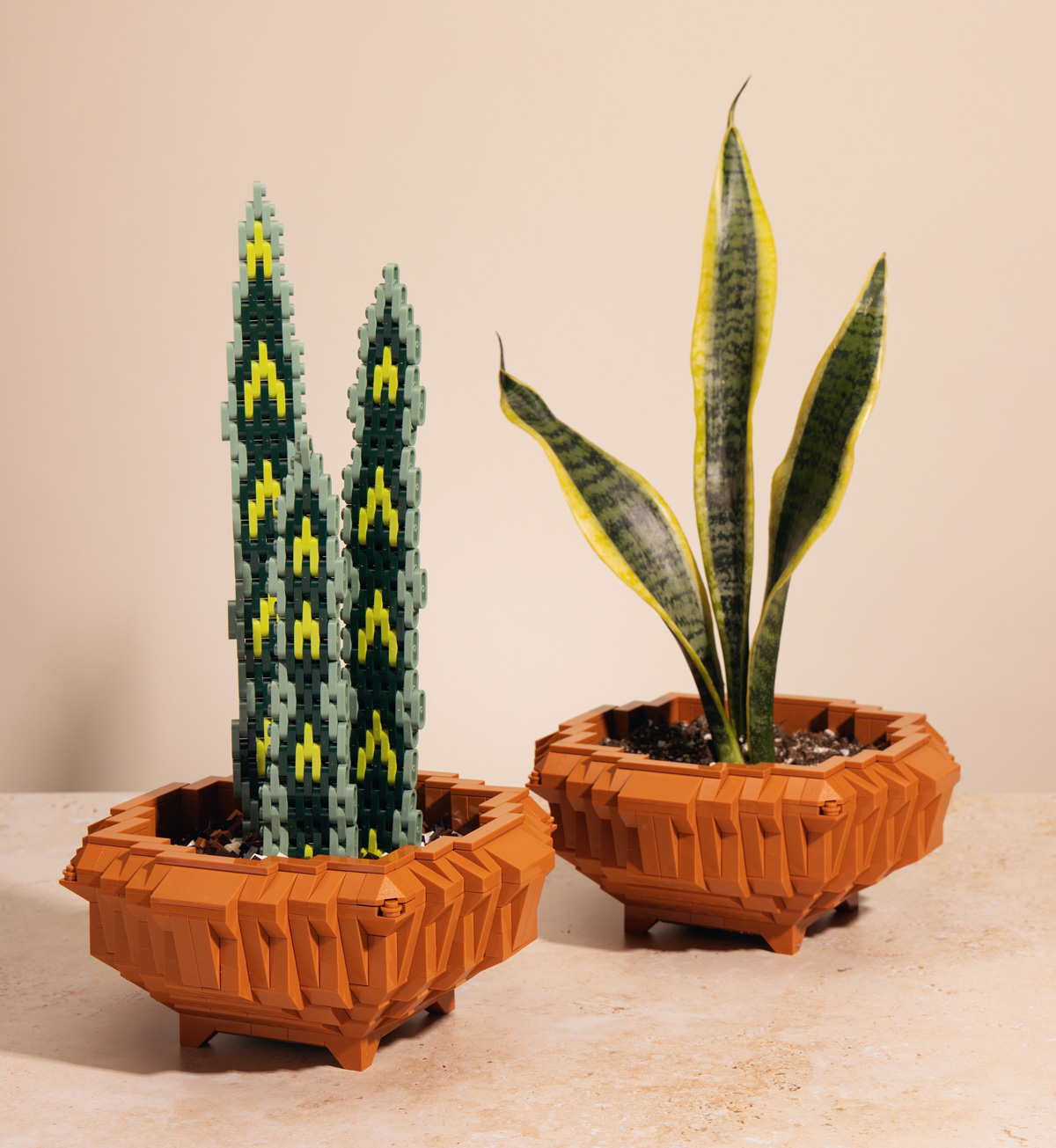
Once the last leaf is attached and the vines are arranged, Pothos settles into its final place — a shelf, a tabletop, perhaps the corner of a desk where a real houseplant might normally live. At that moment, it looks finished, complete, as most LEGO models do once the final piece clicks into place.
But living with the plant reveals something different.
The vines are flexible, the leaves are adjustable, and the stems are free to stretch outward or curl back toward the pot. A small nudge changes the plant’s shape. A curious hand rotates a leaf. A vine grows longer across the surface of a table, or gets tucked back into a tighter cluster.
Over time, the object becomes less like a completed model and more like a small sculpture that invites interaction and change.
Parr imagines this kind of ongoing relationship as part of the design. Unlike its living counterpart, the brick version doesn’t require sunlight or careful watering.
“It doesn’t require sunlight,” Parr jokes. “It requires spotlight.”
Pothos isn’t trying to imitate nature so much as translate its rhythms — growth, variation, care — into the language of brick building. Though Parr does hope it inspires you to visit your local plant nursery. Pothos invites builders to think about plants, creativity, and the spaces we live in from a slightly different perspective.
Because once the plant is built and placed in a room, something interesting happens. It doesn’t feel finished. It feels like the beginning of something that can continue to grow.
Yes, it was built. But it’s also still changing.
Curate to Create
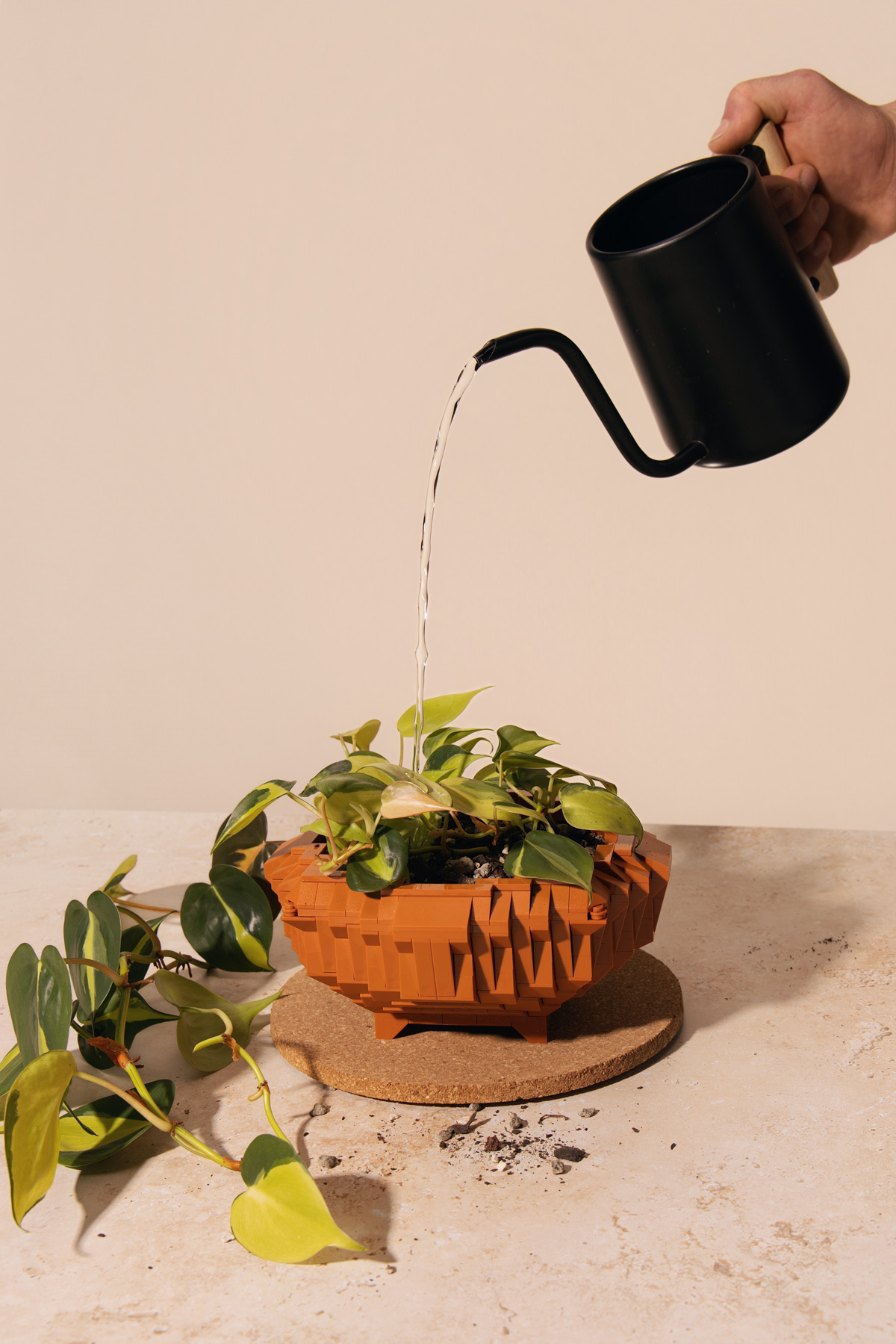
For Modern Brick Haus, it’s all about the experience. It’s setting the stage for creativity to happen, or as Parr calls it, “Curate to create.”
The builder begins with a carefully designed framework — the pot, the vine structure, the techniques for building leaves — and then steps into a more open space where interpretation and their own creative choices become part of the experience.
It mirrors something familiar from both gardening and design. Structure creates the conditions for growth, but it cannot predict exactly how that growth will unfold.
That’s why the finished object never quite feels finished — and that’s by design.
A leaf gets adjusted. A vine stretches across the shelf. A new cluster appears where there was once empty space. The plant evolves quietly in the background of everyday life.
In that sense, Pothos is a reminder that creativity often works the same way real plants do — slowly, organically, and always open to change.