


Photography by Hannah Dimmitt
Images courtesy of Modern Brick Haus
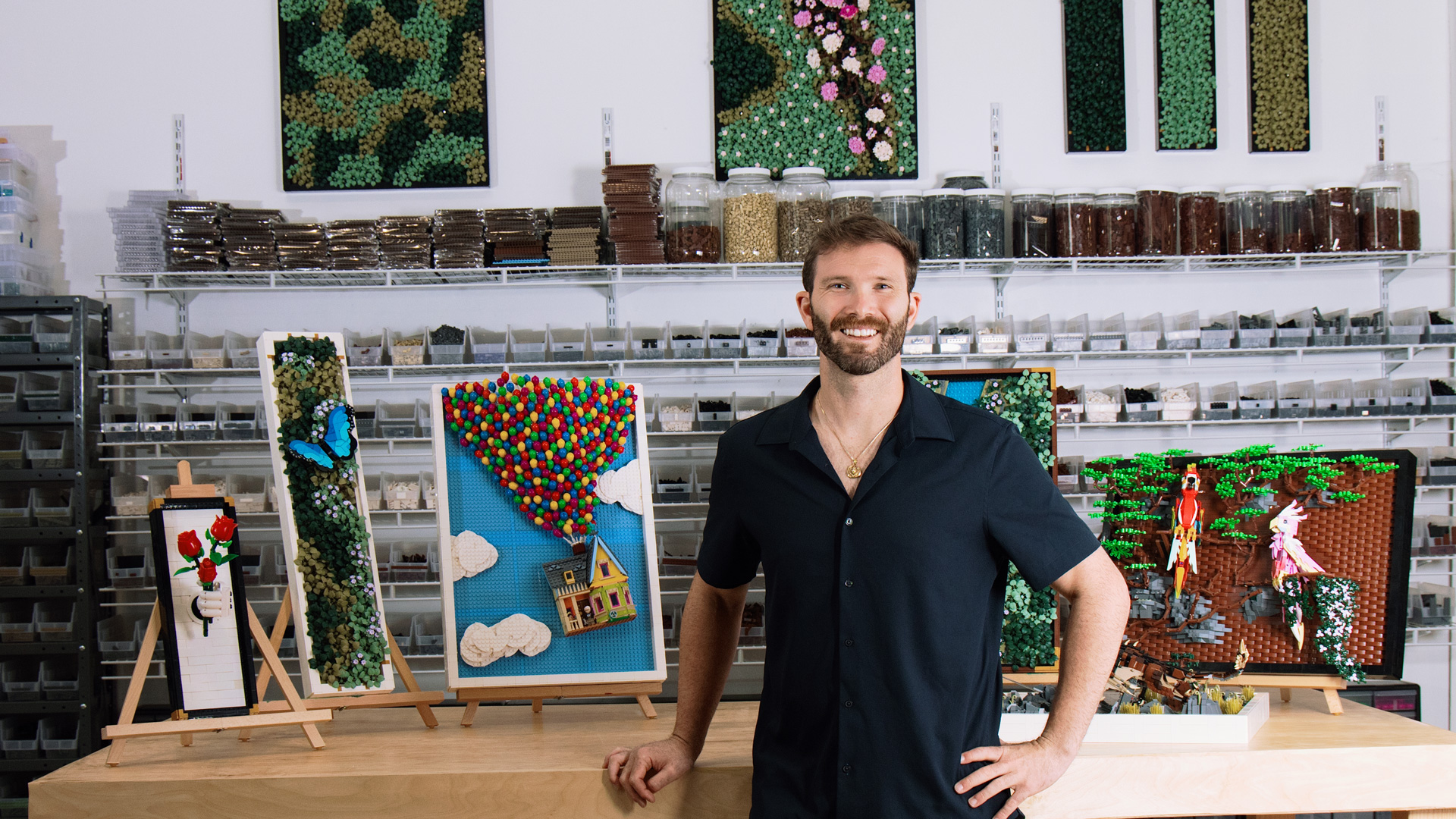
In the Tin District of Dallas, tucked among warehouses turned creative spaces, there’s a space that hums with quiet energy. Light pours through tall windows, glinting off walls of sorted bricks — millions of them. The sound is energetic joy but also calm — pieces being turned over, considered, chosen. At the center of it all is Oliver Parr, founder of Modern Brick Haus, who is turning the world’s most iconic toy into a platform for design, art, and reflection.
Parr’s vision is about possibility — taking bricks beyond playroom shelves and into the spaces where we live, gather, and think. What began as a creative experiment has become something much larger: a design brand, a studio, and a movement in adult brick culture.
There's more! Continue reading this article by signing in or become a BRICKA subscriber.
Or sign-up to get digital access to Issue 1 for free.
The Spark of Imagination
Parr was born in Dallas but grew up in California, where his earliest creative influences weren’t galleries or museums — it was Disneyland. He and his family were season pass holders for 15 years and visited a few times a year. “It was a huge part of my childhood. I had a book on Disneyland that had every single ride in it with all the details and the reasons they did certain things,” recalls Parr. “It hit me that people created this experience for others to enjoy.” The park’s ability to make engineered design feel effortless, emotional, and human left a deep impression. It taught him that design could choreograph wonder, that experiences could be built. “I decided early on, I wanted to be an Imagineer.”
But his first real audience wasn’t at Disneyland — it was in his parents’ basement. Parr is the older brother of twin girls and jokes that his parents needed him occupied for long stretches when he was younger.
One Christmas, while a party filled the house upstairs, young Oliver was quietly constructing the massive LEGO Harry Potter castle in the basement. Hours passed. When he finally finished, the castle stood topped with rising spires, a world within a world. One by one, the adults came downstairs — drinks in hand, in pure awe of what he had built — they couldn’t believe it was LEGO. That moment stayed with him. It revealed that the brick had power far beyond play — it could draw people in, cross generations, and blur the lines between art and craft.
The Birth of an Idea
Parr followed his father’s advice and his own enterprising instincts into a business degree and a career at Yelp. There, his job was to sell digital solutions and advertising to restaurants and small businesses — but instead of pitching packages, he listened. He built trust by helping owners solve problems first, understanding their pain points, and learning how experiences create loyalty. “Instead of selling a product, I was finding out their problems and solving those, the ask came later.”
Between business trips and new cities, one constant grounded him: LEGO. Wherever he went, the bricks came too — boxed, labeled, carried from state to state. His prized Disney Castle survived multiple moves, though it often broke apart in transit. “The things that mattered most were always the ones I built myself,” he said. That realization marked a shift. He began designing his own creations — pieces with both function and form — and slowly envisioned a different kind of LEGO experience.
Back in Texas, Oliver turned part of his home into a makeshift studio. In a landscape filled with official LEGO sets and playful MOCs, he wanted to build something else entirely: brick designs that were as functional as they were beautiful. The first prototype? A series of candleholders — sculptural, minimalist, and unexpectedly elegant. Friends loved them. It was the first hint that brick-built design could belong in the home, not just on a shelf.
Then came a fateful flight to Seattle. “I have this rule,” Oliver laughed, “that when I get on a plane, I talk to the person next to me for five minutes to see if I’m putting my headphones in or not.” He never did. The man in the next seat was Gabe Villani, a creative entrepreneur who claimed he could build any business. Oliver replied, “Well, I might have something...” Two weeks later, Gabe was spending nights sleeping on Parr’s couch while they built the idea that would become Modern Brick Haus.
Another fateful meeting followed. At that point, Parr had never used BrickLink or attended a LEGO User Group meeting. When he finally did, he met a builder who showed him a stunning framed build of a tiger’s face. The builder’s only complaint: he’d had to mount it in a wooden frame. “I made him a promise that day,” Oliver said. “I told him, ‘I’m going to build you a frame made entirely of bricks.’”
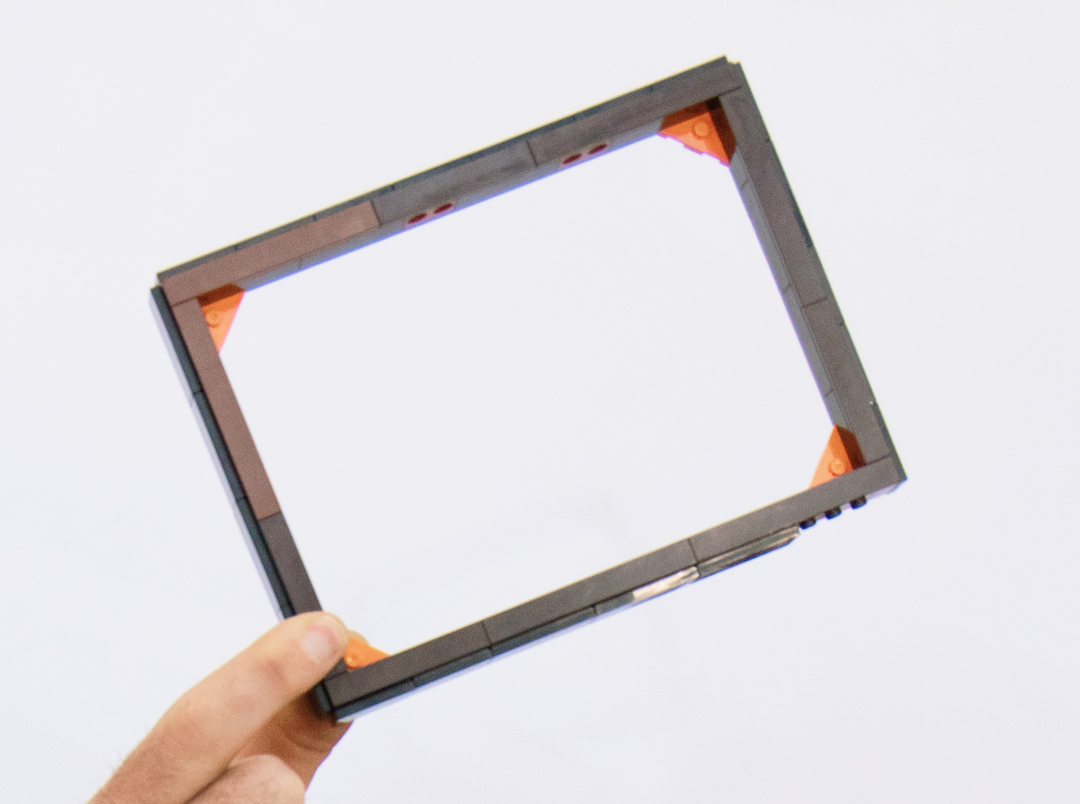
That promise became a breakthrough. Back home, Parr prototyped the first brick-built frame — fully structural, sleek, and functional — and realized it could serve as a canvas for limitless creation. It became the cornerstone of Modern Brick Haus. But as he and Gabe quickly realized, “You can’t just sell a frame. People want something inside it.”
Around the same time, Oliver’s fiancée gently laid down a boundary: his growing collection of bricks couldn’t take over their shared living room. His response? A question: “What if I designed something beautiful enough to belong there?” She smiled.
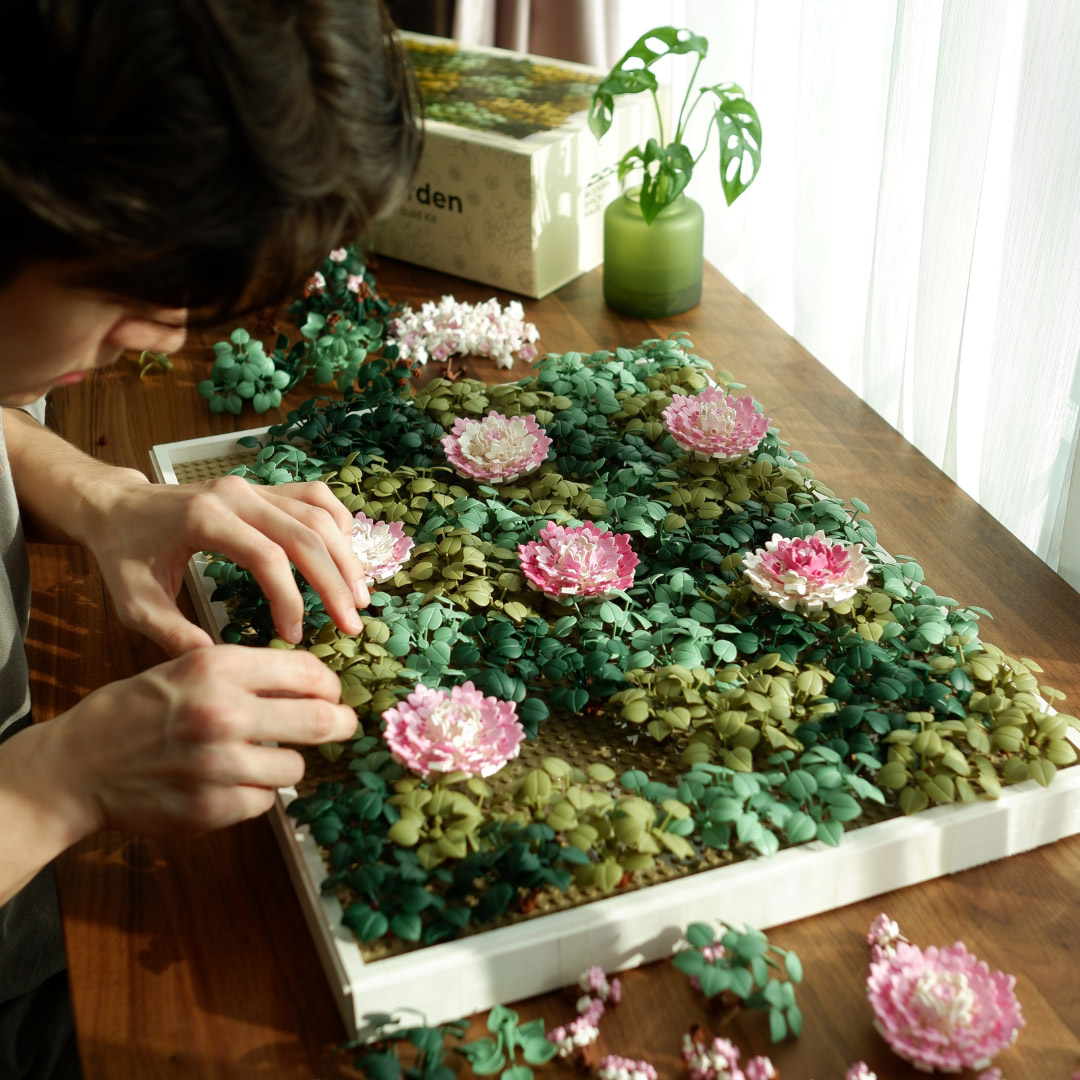
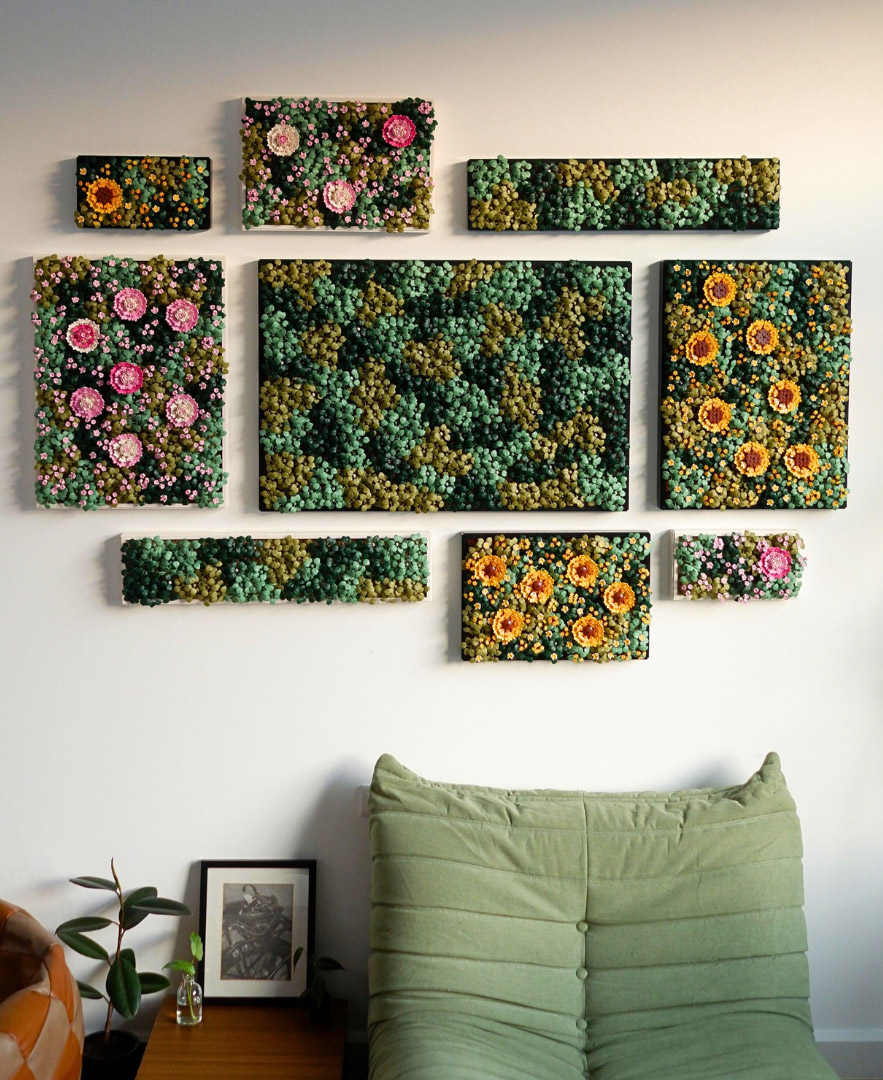
That challenge became the seed of the Moss Garden — a blend of sculpture, flora, and bricks. Inspired by living walls and biophilic design, he began layering bricks like brushstrokes, creating lush, textured compositions that felt alive. These weren’t toys or sets; they were expressions of beauty and calm.
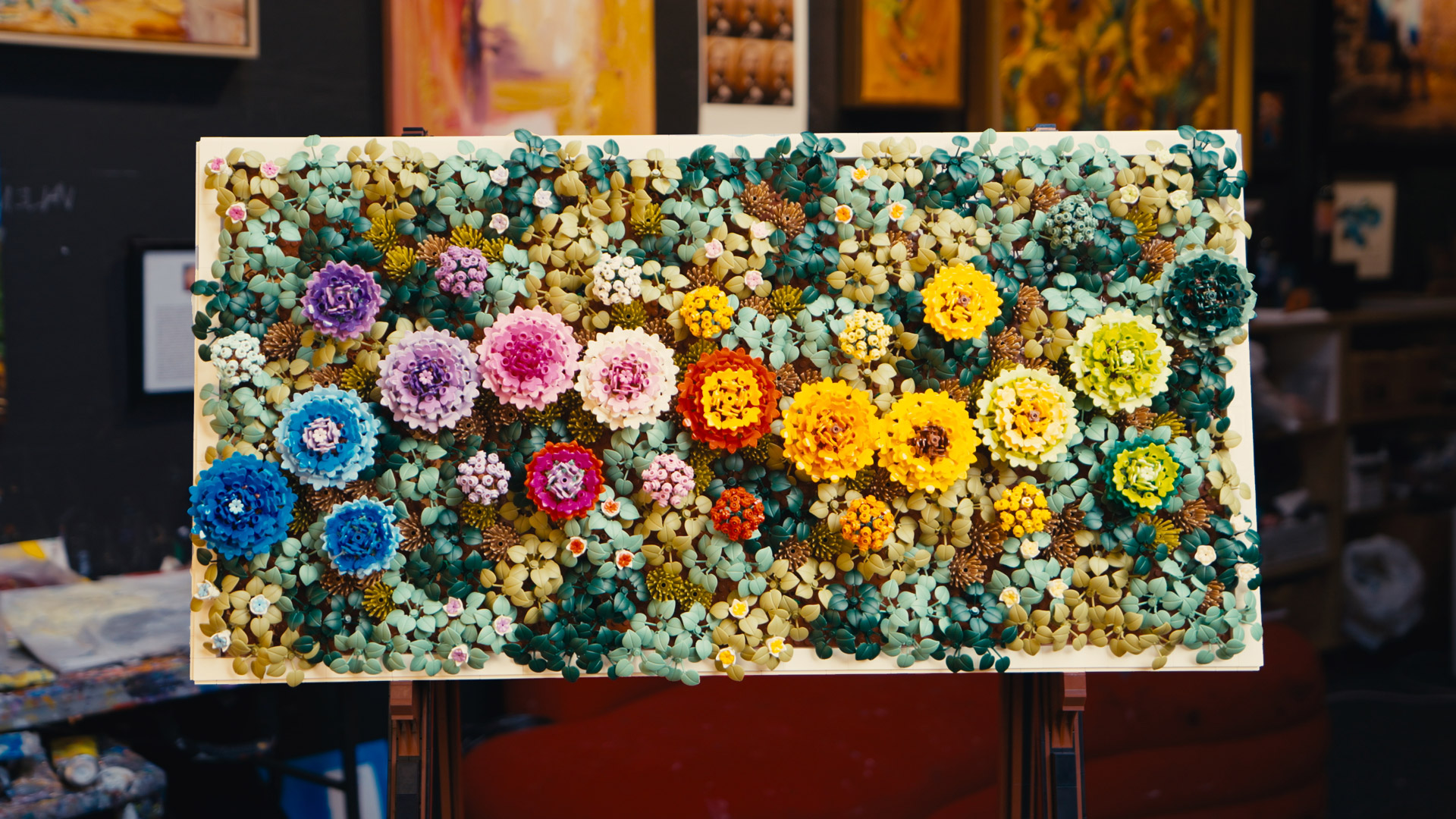
Then came a breakthrough moment — in May 2023, a nonprofit art auction at the Samuel Lynne Gallery in Dallas. Parr built an early version of their first product — an elaborate, large-scale moss garden piece complete with a rainbow of flowers. He even crafted its display easel entirely out of bricks. It sold for well above its asking price. More importantly, it proved the concept: adults didn’t just appreciate the craftsmanship — they felt something.
Modern Brick Haus was no longer an idea. It was a calling — a new way to build beauty from bricks.
Making it Real at Scale
Modern Brick Haus didn’t emerge fully formed. It was a journey of stumbles, exploration, and learning. The team had to learn manufacturing, operations, and distribution fast.
Early on, issues piled up — quite literally. When the moss pieces first arrived from the manufacturer, they still had the thin, small plastic frame, which helps stabilize the piece during the injection molding process. Oliver couldn’t imagine a world where his customers had to remove hundreds of moss pieces from their little frames — so he did it himself, with some help from his family and friends, for thousands upon thousands of individual moss pieces.
Shipments arrived with incorrect parts, missing pieces, or mismatched colors — one shipment of kits had the bags completely misnumbered. Oliver, his fiancée Hannah, and his sister Maxine spent nights hand-sorting, re-bagging, and quality checking thousands of kits.
“It’s not fine,” became a mantra — a gentle rebellion against good-enough culture. Every fix made the brand stronger, every kit a little better. When the first Moss Gardens launched officially, they sold out in six weeks.
That obsessive care built loyalty. Customers were buying into a philosophy: that design, when done with care, becomes a form of respect. Respect for the object, for the process, and for the person who will build it.
Parr often says his goal isn’t to create masterpieces — it’s to create experiences for creativity. His motto, Curate to Create, captures that perfectly.
Each Modern Brick Haus set teaches technique without dictating outcome. The instructions are a starting point — not an end. Builders can improvise, remix, and reimagine. The beauty lies in the slight variations — the differences in how someone places a flower or layers a color gradient.
This design philosophy reframes bricks from a product into a practice. It’s mindfulness through making. A way to slow down, focus, and feel your hands think. That shift from replication to creation is what sets Modern Brick Haus apart. It’s not about just following directions; it’s about rediscovering expression.
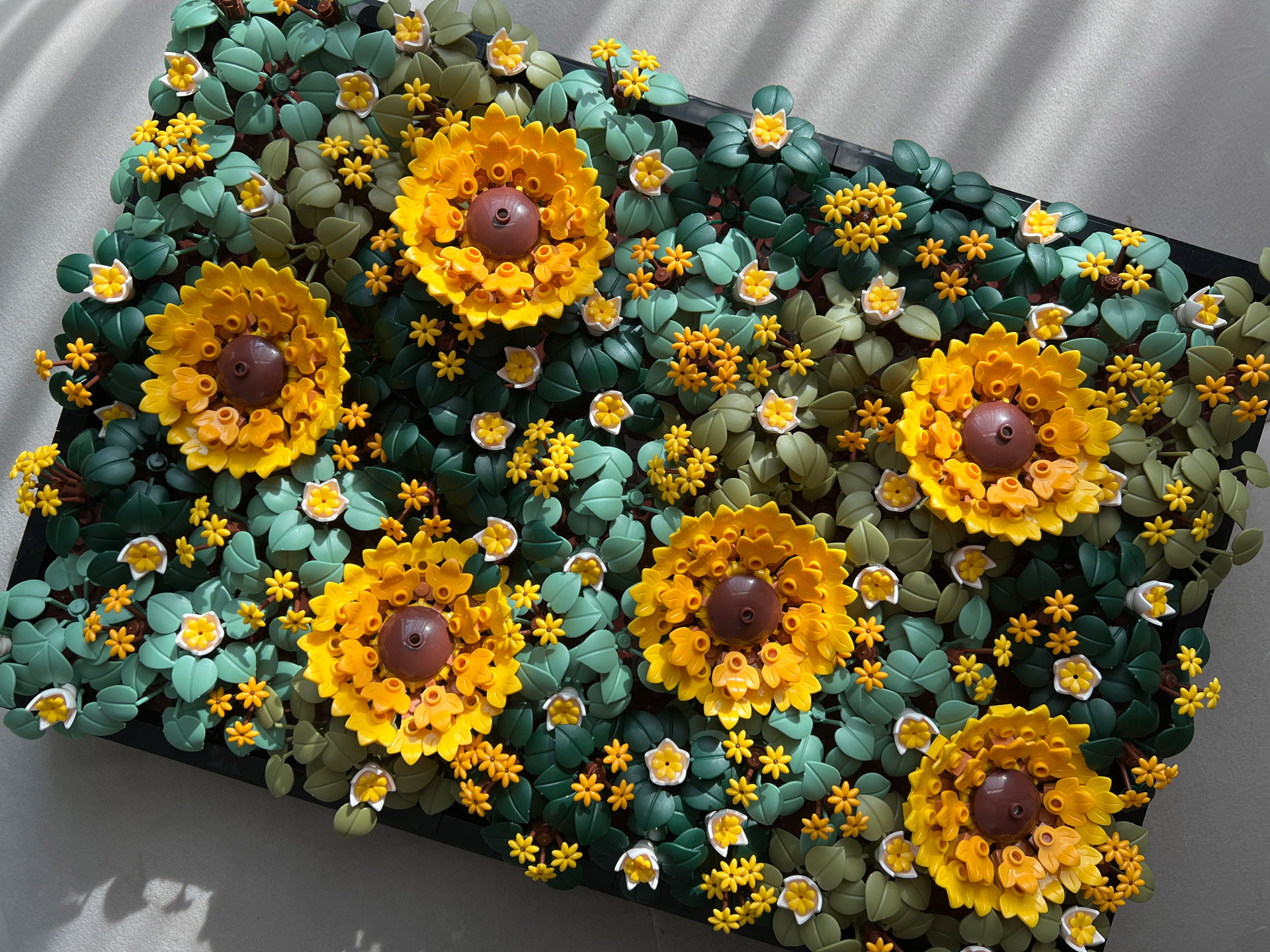
The process of building my own large Sunflower Moss Garden was delightfully rewarding. The frame, a build focused on structure, put me in a satisfying rhythmic ritual of constructing something rigid but straightforward. I often found myself picking up the frame to test its rigidity and marvel at its scale. Building the frame also built anticipation for the moss and flowers —the real magic. If the canvas is the structure, the moss is the soul.
These compositions layer olive, light green, and dark green bricks into fields of depth and life, accented by bursts of floral color. Each one is unique — part instruction, part improvisation. There was no “right” pattern. No perfect composition. I arranged and rearranged, tilting stems, layering greens, experimenting with density and texture.
It felt less like assembly and more like painting. The constraints of the frame became liberating; every brick was a brushstroke. By the time I placed the final sunflower, the piece felt mine — familiar yet surprising. That’s the quiet genius of Modern Brick Haus: it teaches you to trust your creative instincts again.
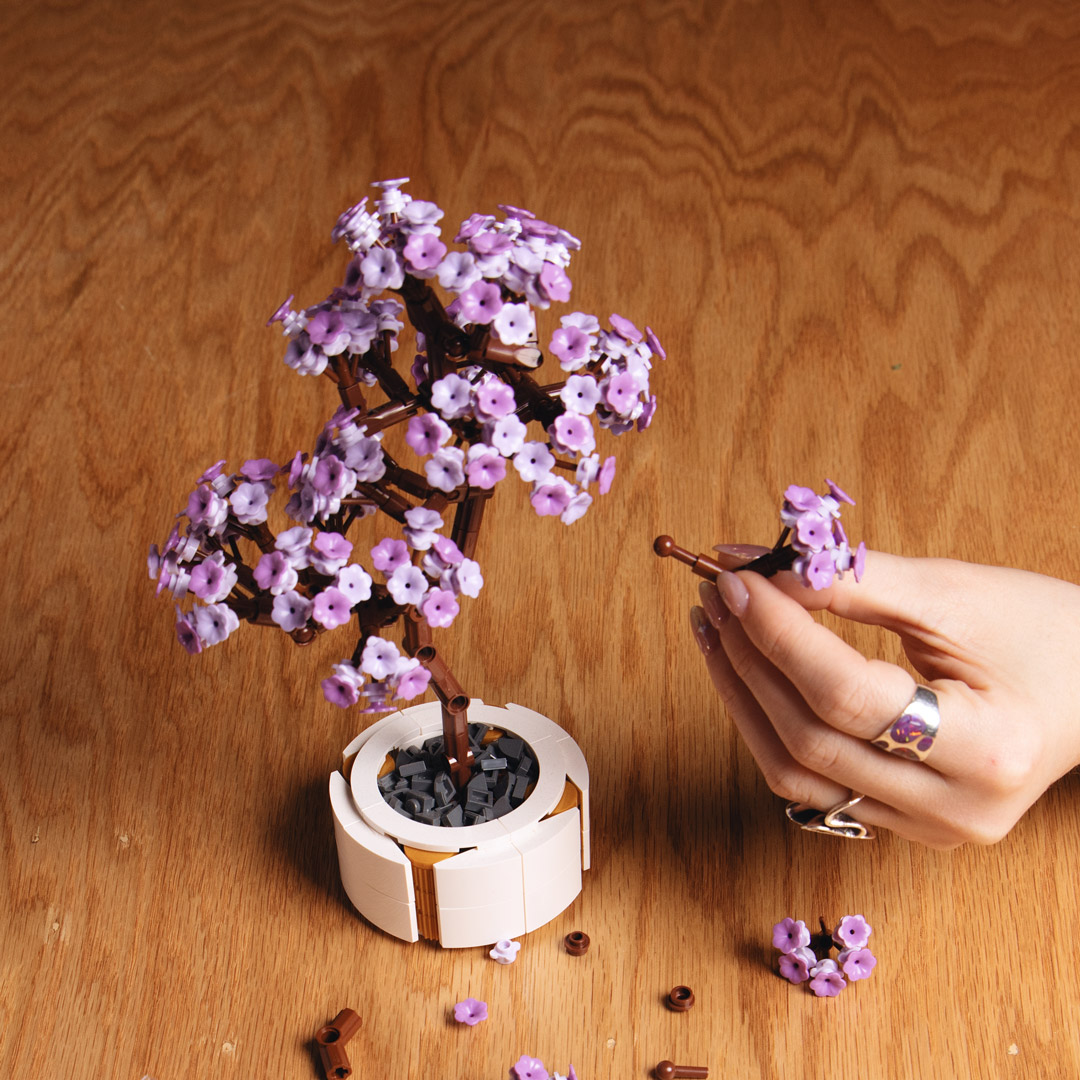
Oliver and team expanded their product portfolio by introducing the Bonsai Series — sculptural tabletop pieces that reinterpret the classic LEGO bonsai with a Modern Brick Haus twist. Their canopies can shift with different moods and seasons; their trunks, built from intricate brown assemblies, feel carved rather than constructed.
Together, the Moss Gardens and Bonsai formed the foundation of Modern Brick Haus’s design language — calm, meditative, architectural. They’re not toys, not kits, not quite sculptures either. They’re systems for self-expression.
The Dallas Studio
Even as the business scaled and systems improved, Parr found himself craving something the spreadsheets couldn’t capture: the shared joy of building. “There were times,” he admits, “where I was just like, am I going to get back to actually doing the thing that I love?”
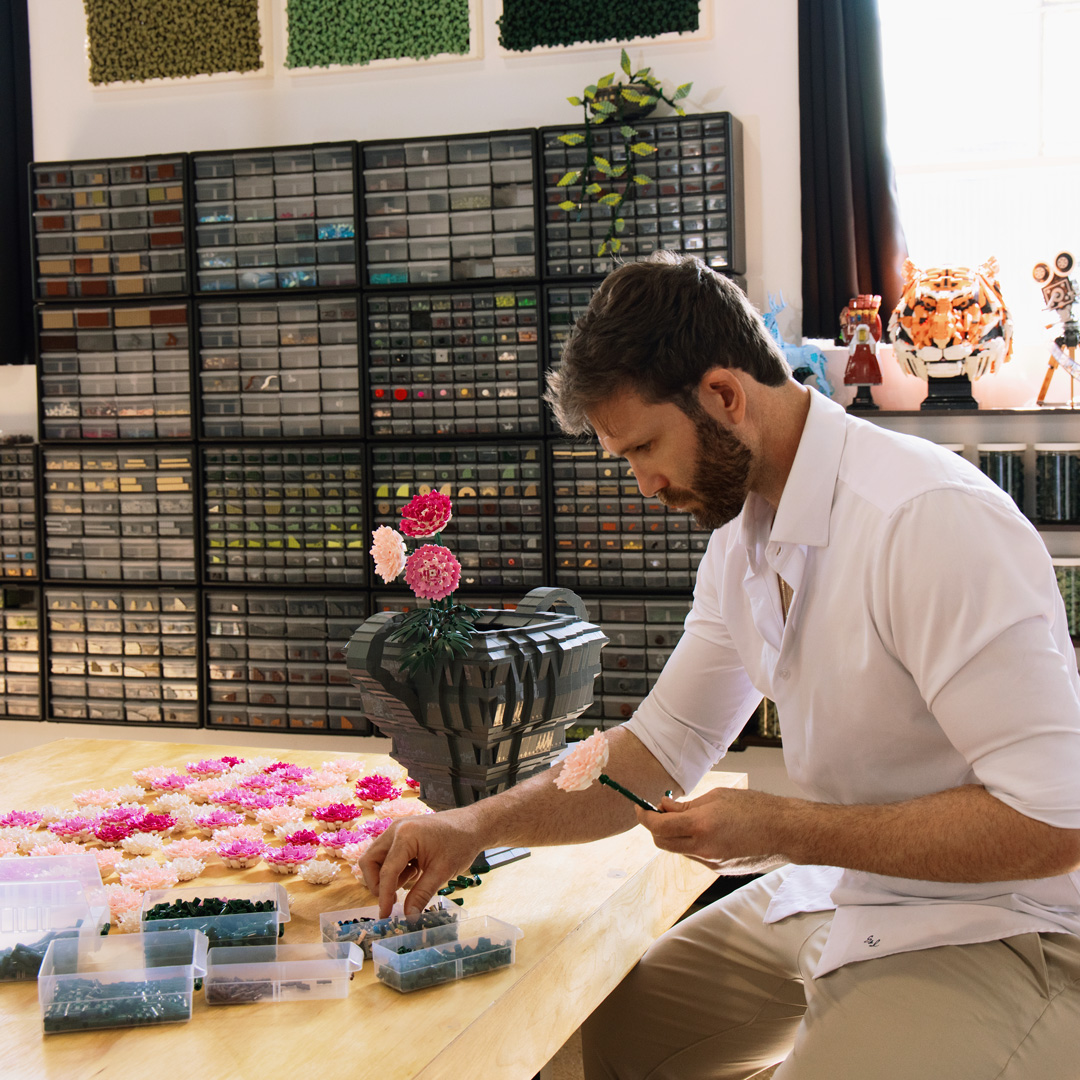
That longing led him back to building — and to a space where others could build too. When the opportunity arose to lease a space in Dallas’s Tin District, the stars aligned. With the help of family and friends, Parr transformed a raw warehouse into a 3,000-square-foot cathedral of creativity — part workshop, part gallery, part sanctuary.
He created an experience. White walls display framed brick artworks like a museum of modular art. Other areas are lined floor-to-ceiling with color-coded brick bins, each drawer labeled and waiting. Long communal tables stretch through the center of the space, bathed in warm light that makes everything — even a simple 2x4 brick — glow with possibility. The atmosphere feels part makerspace, part meditation retreat. In a way, Parr has built his own kind of Disneyland — one centered on imagination through bricks.
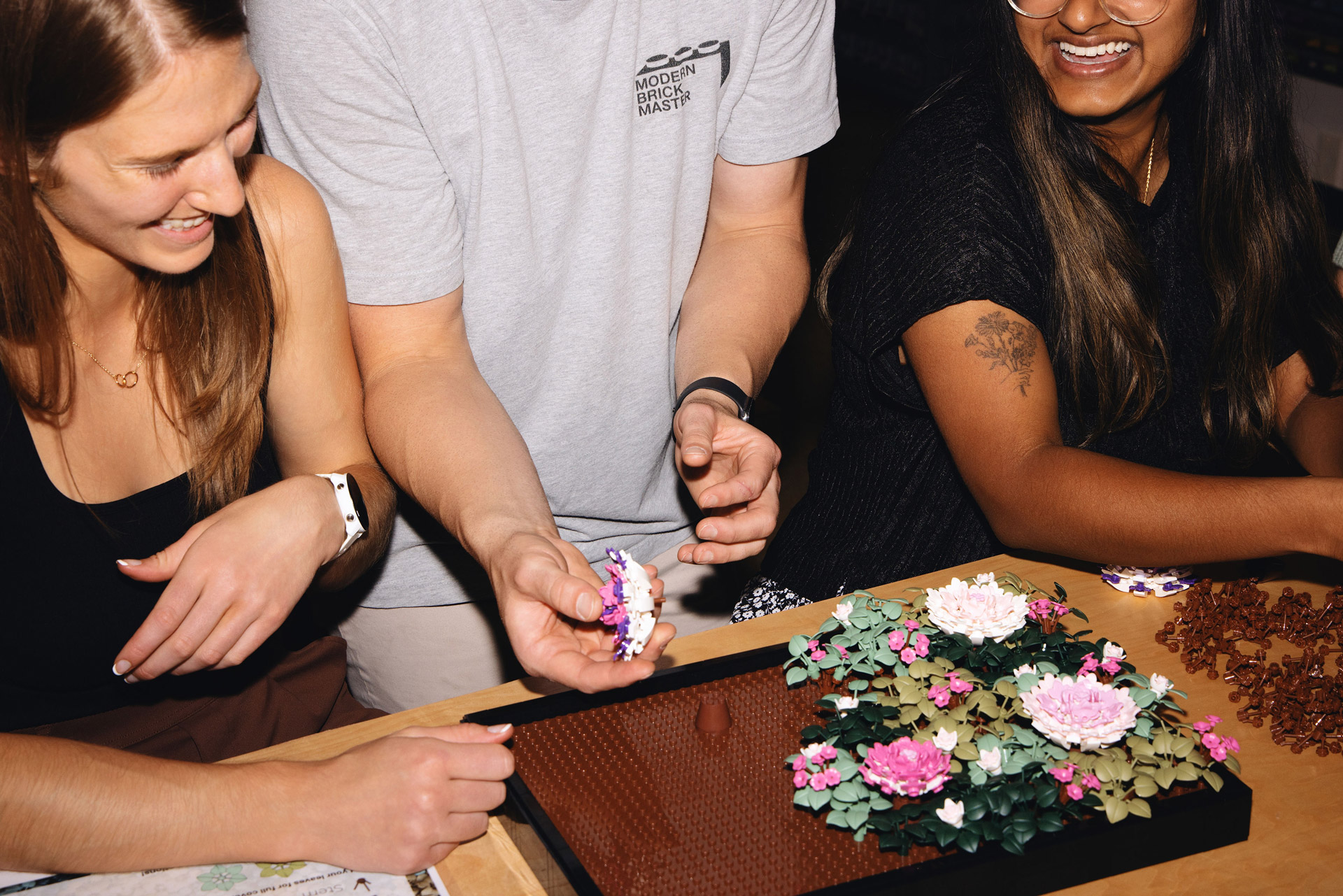
The studio now hosts open builds, private events, and corporate workshops where teams learn collaboration through co-creation. Parr acts as designer, teacher, and host — the quiet showman at the center of his creative world. “Yesterday I hosted members of the Chamber of Commerce,” he recalls. “They had their meeting, I served them coffee, and helped them build flowers. They loved it.”
There’s no clock in the space — only the rhythm of clicking bricks and the occasional burst of laughter. Over five million pieces are organized across the room, waiting to be transformed into something new. “I let folks know they can use anything they want — this is your playground,” Parr says. “After about ten minutes, you start to see people pull open the drawers, discover a piece they’ve never seen, and suddenly they’re standing, moving, creating.”
What begins as curiosity turns into flow. Guests leave the studio lighter, clearer, and more inspired. For Parr, that’s the point. “I think we’ve forgotten what it feels like to lose track of time in a creative act,” he says. “That’s what I’m trying to rebuild.” In a world obsessed with outcomes, Parr is quietly bringing people back to the joy of process.
Setting the Stage for Creativity
Modern Brick Haus sits at a fascinating intersection of culture: where art, design, and play collide. Its success reflects a growing appetite for tactile, mindful, analog creative experiences — especially in an increasingly digital world.
Parr sees his work less as art and more as facilitation. “I don’t want to be the artist,” he says. “I want to set the stage so you can be.” In that sense, he’s more conductor than creator — orchestrating materials, color, and environment into harmony.
That philosophy echoes in every detail — from the modular geometry of the products to the way people interact with them. Modern Brick Haus is creating the chance to feel something elemental again: curiosity, flow, delight.
At its core, Modern Brick Haus is about more than products or bricks — it’s about what happens through them, how the simple act of building becomes a mirror for creativity, patience, and care.
As I finished my Sunflower Moss Garden, I realized what Oliver’s really designing: permission. Permission to play again. To experiment without a goal. To rediscover the small, satisfying joy of creation for its own sake.
Each piece in the collection — every brick, every petal — is a reminder that creativity isn’t a talent. It’s a practice. And when we slow down long enough to build something with our hands, we remember the simplest truth: making is meaning.
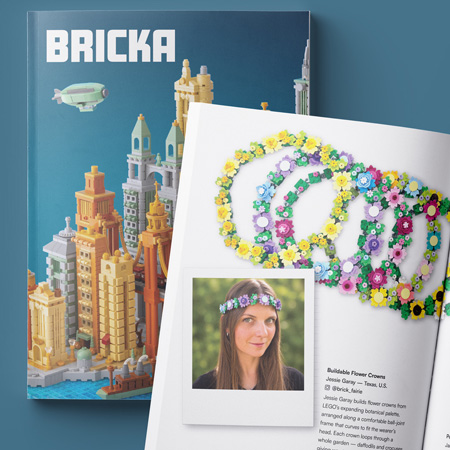
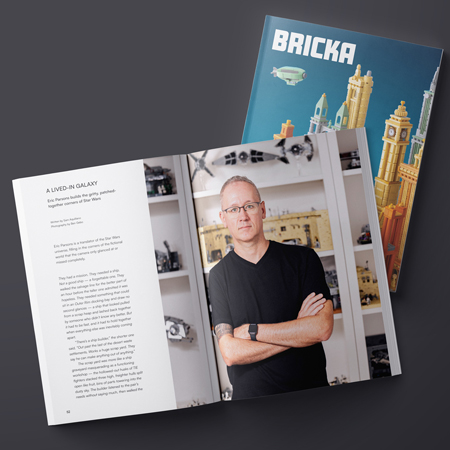
You’re reading the BRICKA Issue 1 preview.
Subscribe to unlock the full magazine archive and future issues.