


Featuring Photography by Hue Hughes
Hue Hughes didn’t set out to make cinematic toy photography. He just wanted something cool for his son’s wall. A longtime toy collector who first bought a camera for “family stuff,” he moved from macro bugs and flowers into LEGO when his oldest picked out a snow speeder at the Orlando LEGO Store. They built the set, Hue staged it, and — crucially — decided he wanted to “capture everything in camera,” avoiding Photoshop because, as a graphic designer, that was his day job.
He may have started this adventure to take photos for his son’s room, but now the mini-scale world-building is unleashed.
There's more! Continue reading this article by signing in or become a BRICKA subscriber.
Or sign-up to get digital access to Issue 1 for free.
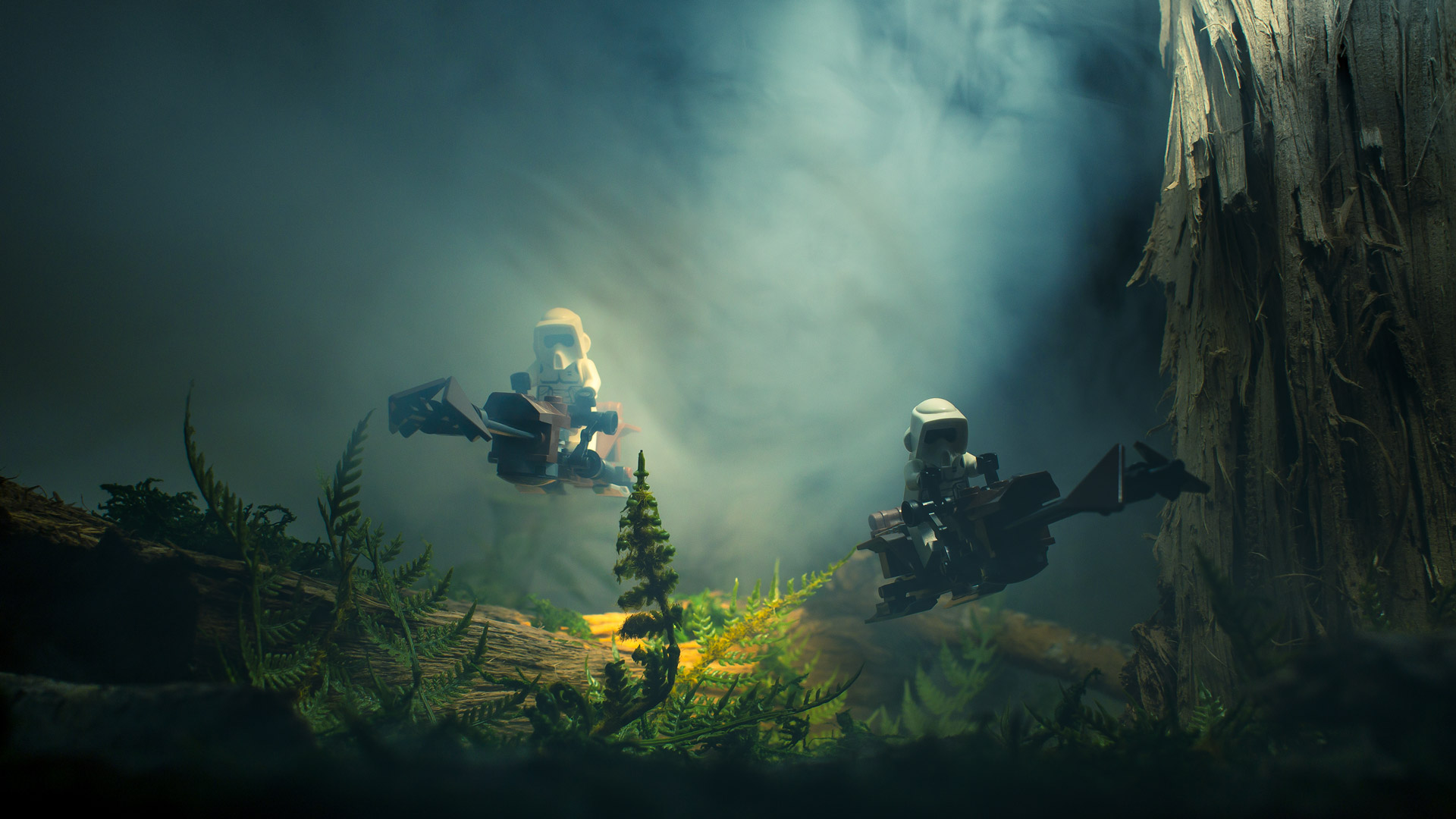
Hughes’ pictures are small narratives you can feel. He rarely storyboards. “About 90% of the time, I don’t have a plan when I go into it.” Instead, he chooses a setting — desert, forest, snowfield — builds the small world on a tabletop in his garage studio, and then lets the figures find their moment.
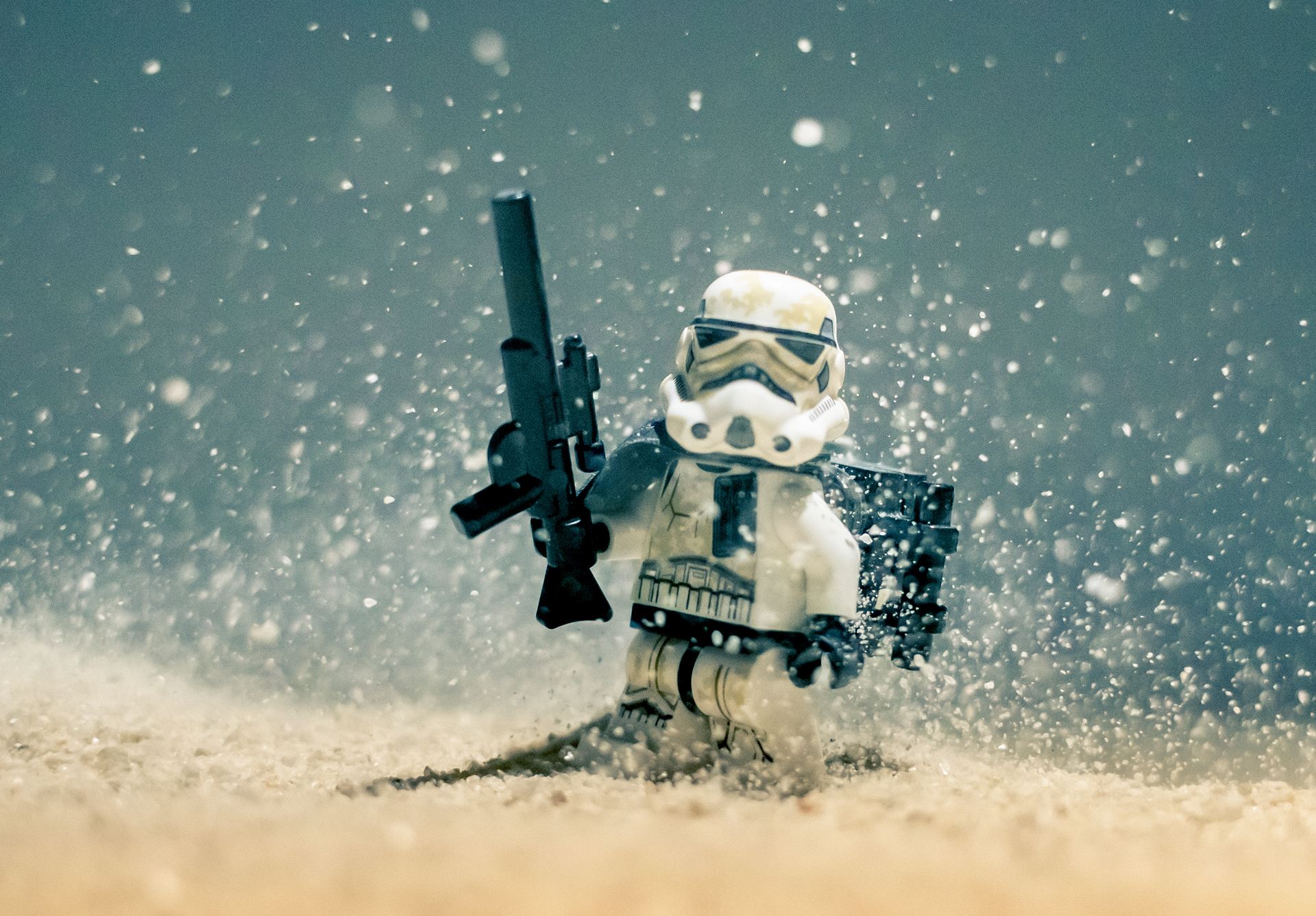
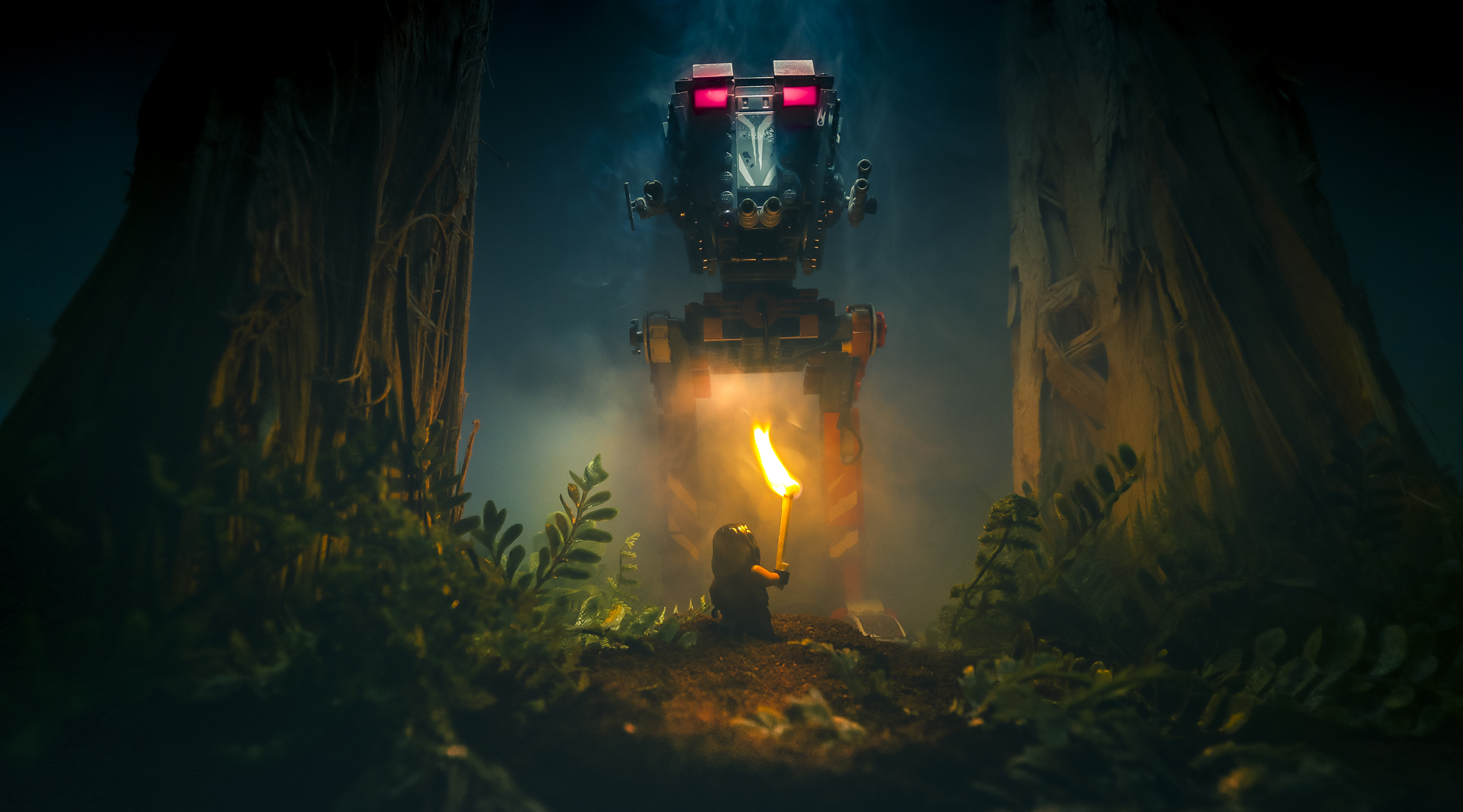
His method is disciplined minimalism. “Everything I shoot still to this day is with two lenses.” The 28mm is good for close character work; the wider lens adds scale to larger sets, pushing backgrounds back and making tiny spaces feel vast. Sets are practical and clever — it’s all real — and it took Hue a lot of trial and error to get the look just right. Redwood-like trunks are pieces of dried firewood; foliage is craft-store garland pulled apart into little fronds and bushes. The forest floor took some experimentation — he started with dirt he dug from the ground and poured on a table in his garage, but the scale was wrong, “too many weird chunks, and too many bugs.” So his makeshift forest floor is made of coffee grounds — great texture, easy to shape, “and the whole room smells like a Starbucks,” he jokes.
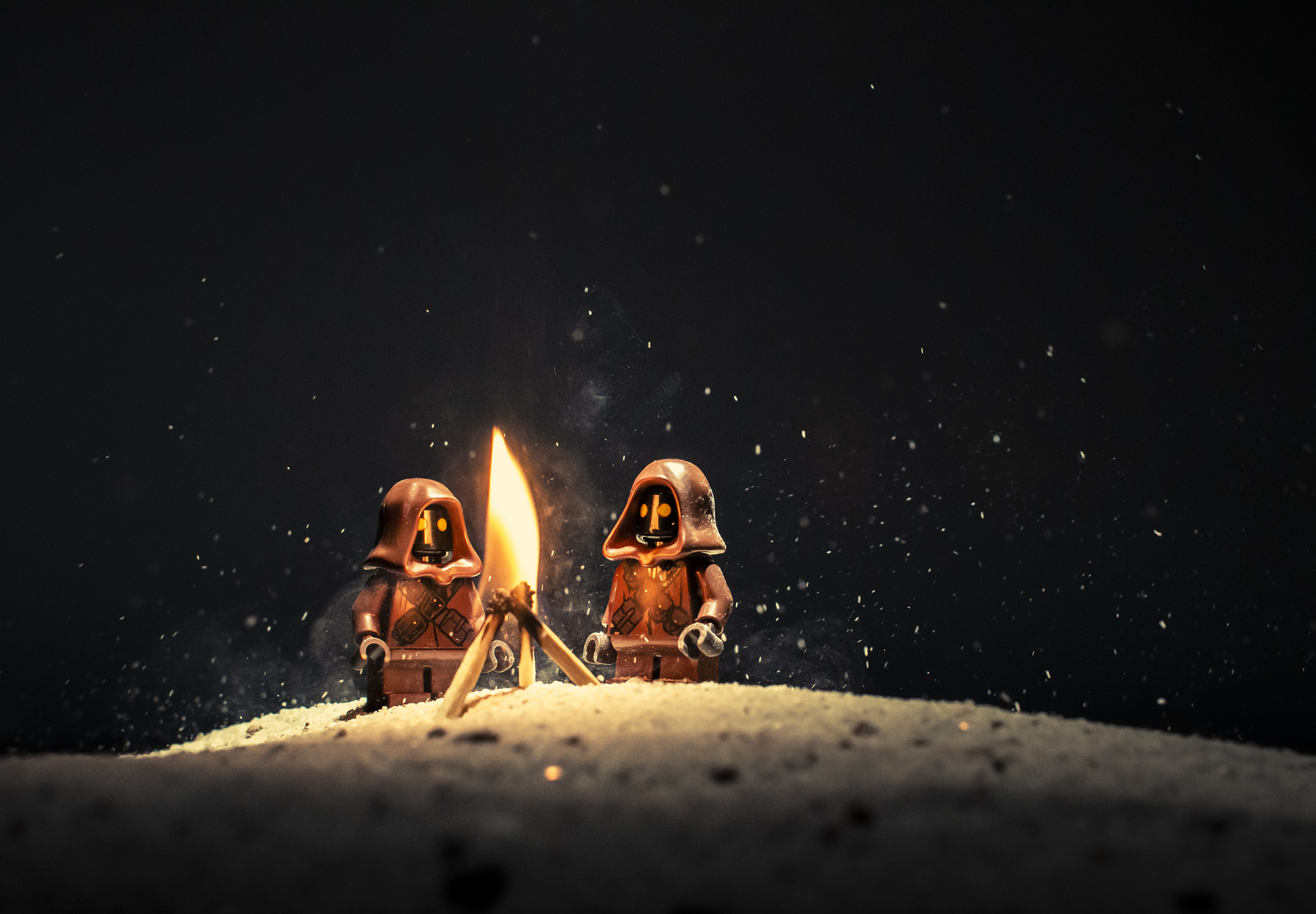
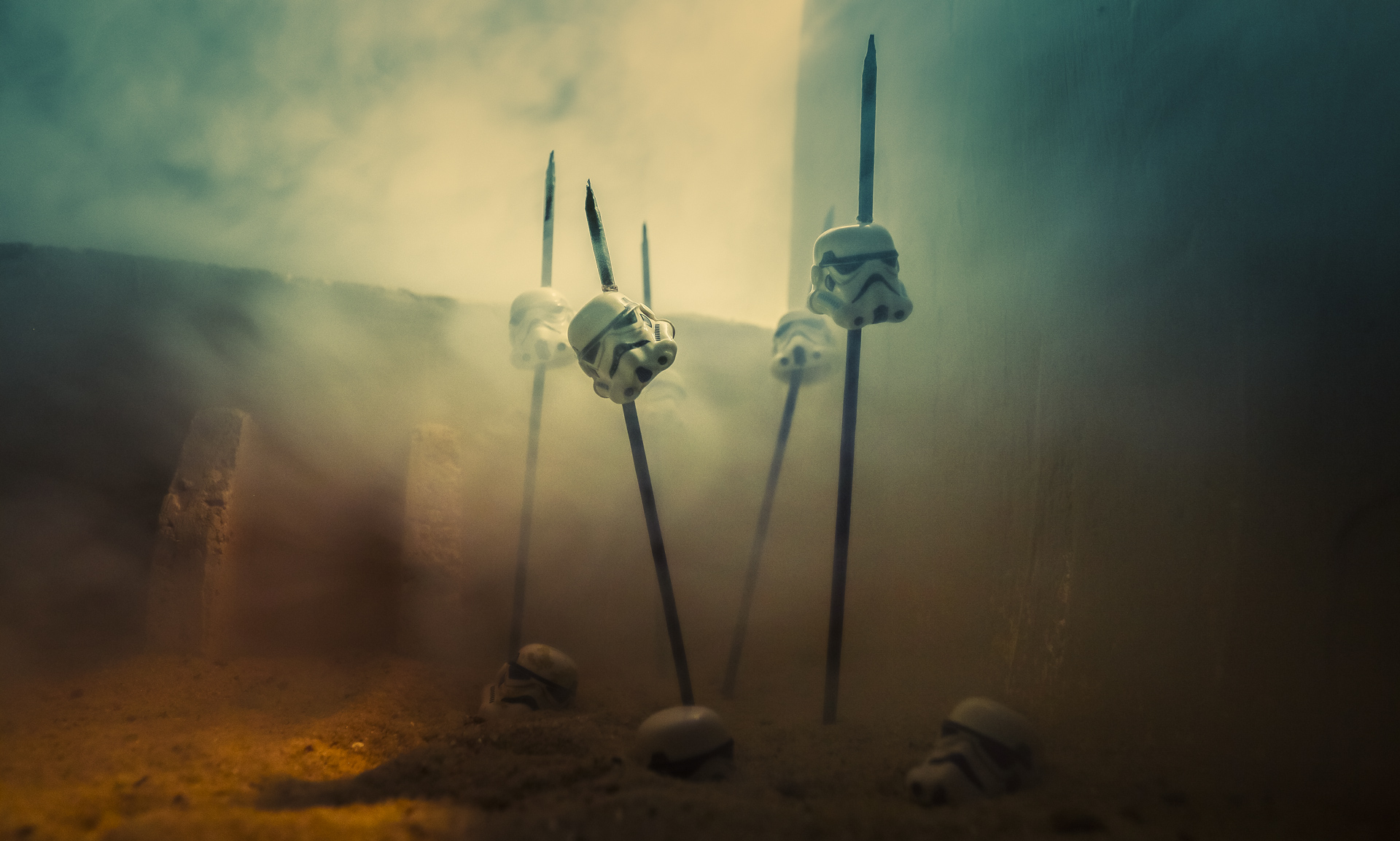
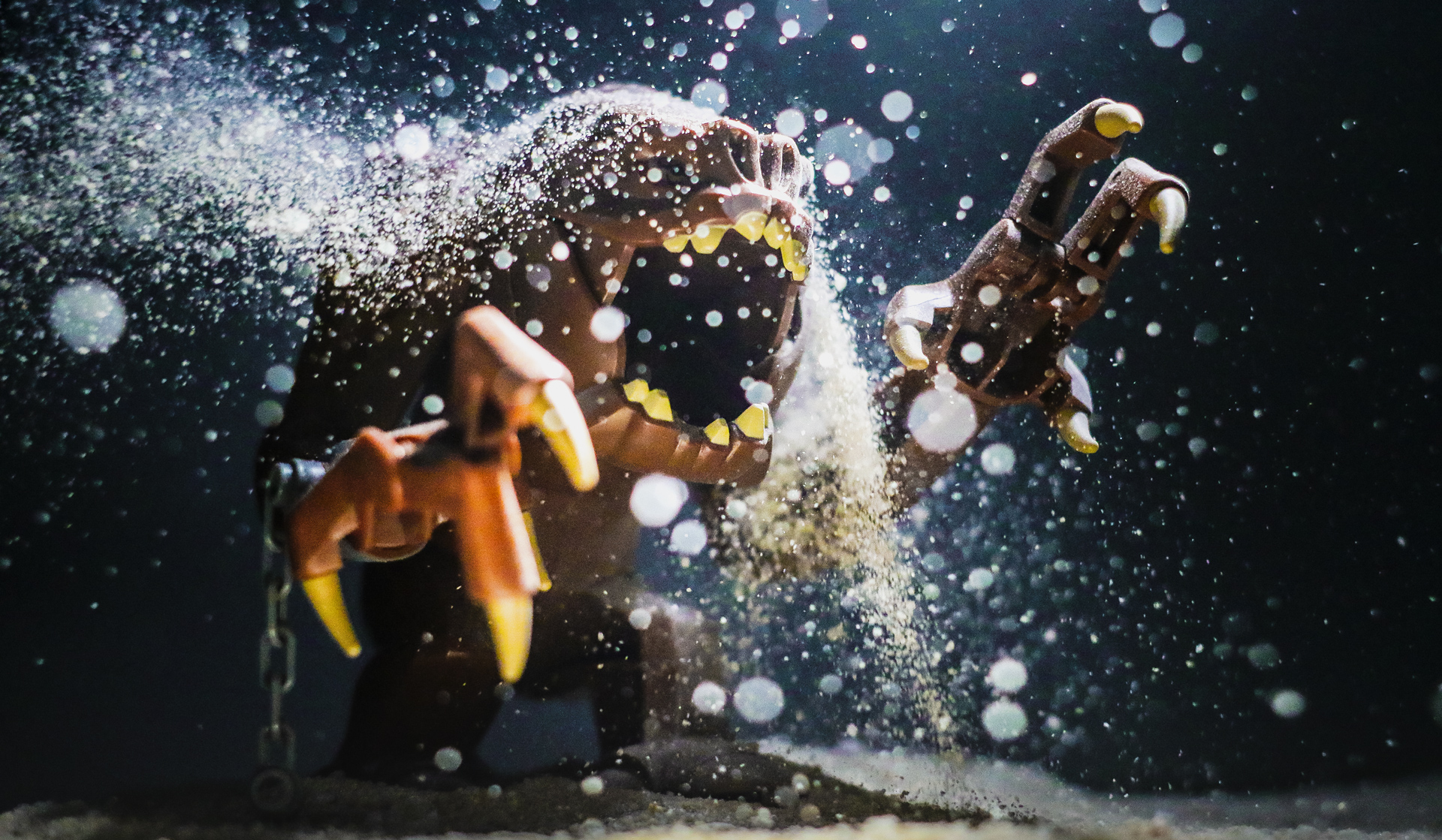
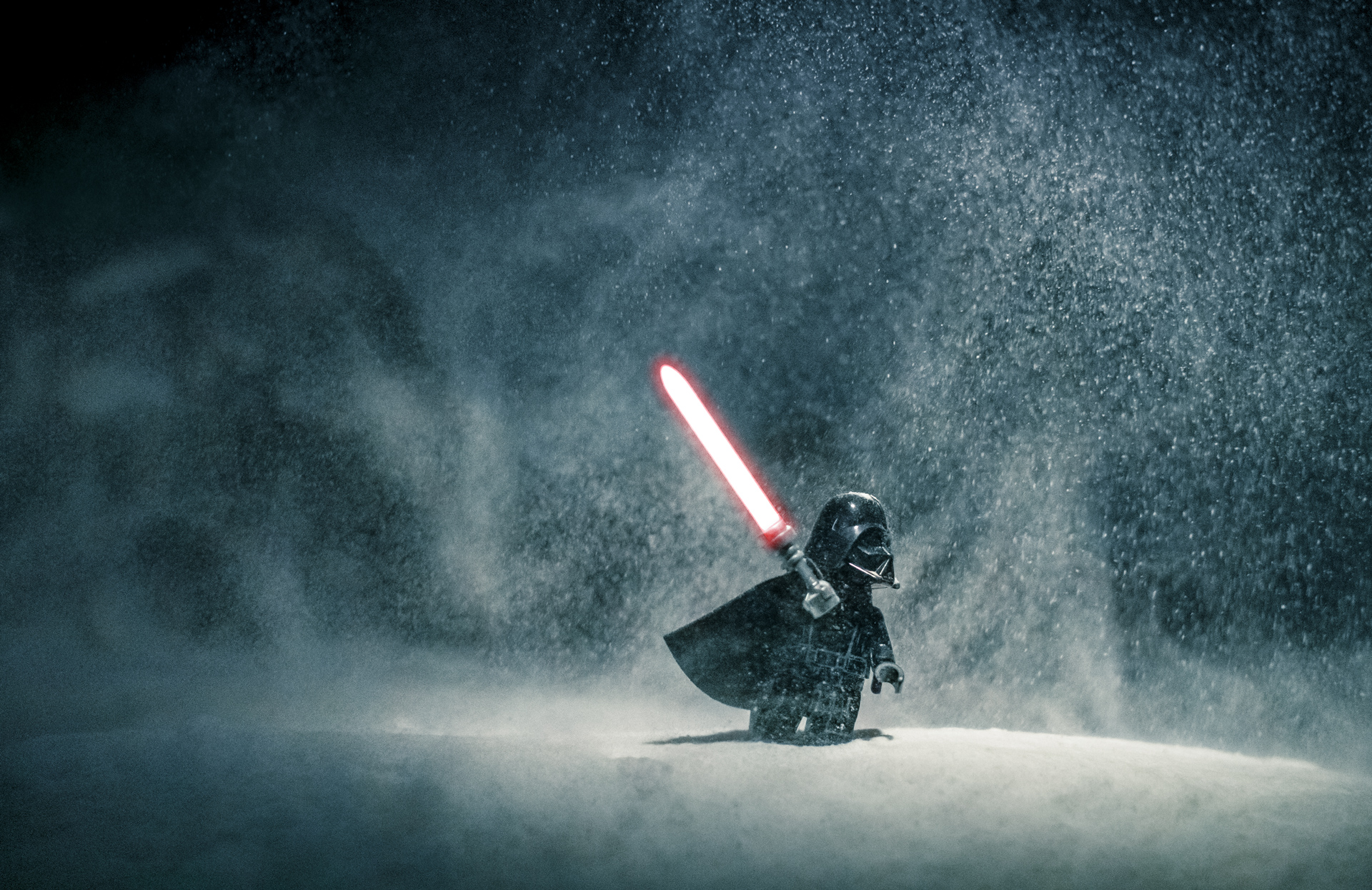
Lighting is equally streamlined. Hue tried panels and small LEDs, but mainly uses a single Fresnel, adjusting the beam from soft wash to tight spot. Atmospheric particles are achieved with sand, baking powder, and a fog machine, all shot — or in many cases, thrown, live. It’s all there to “add energy to the shots,” but it demands technical balance: shutter speed vs. available light so particles read as sparks, snow, or dust rather than smeary light-speed streaks. He keeps a small notebook of scene recipes — elements he knows work together to achieve specific effects.
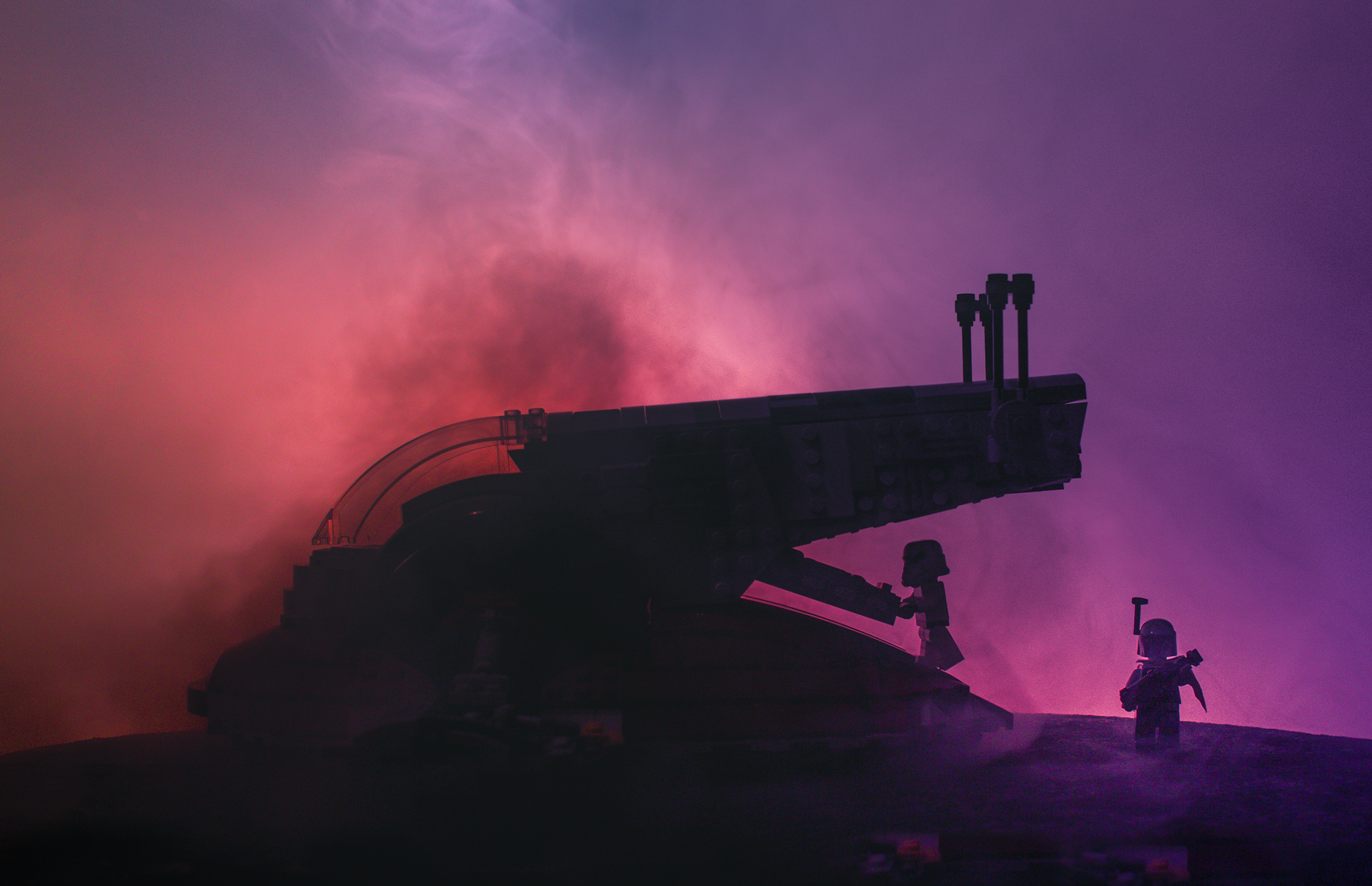
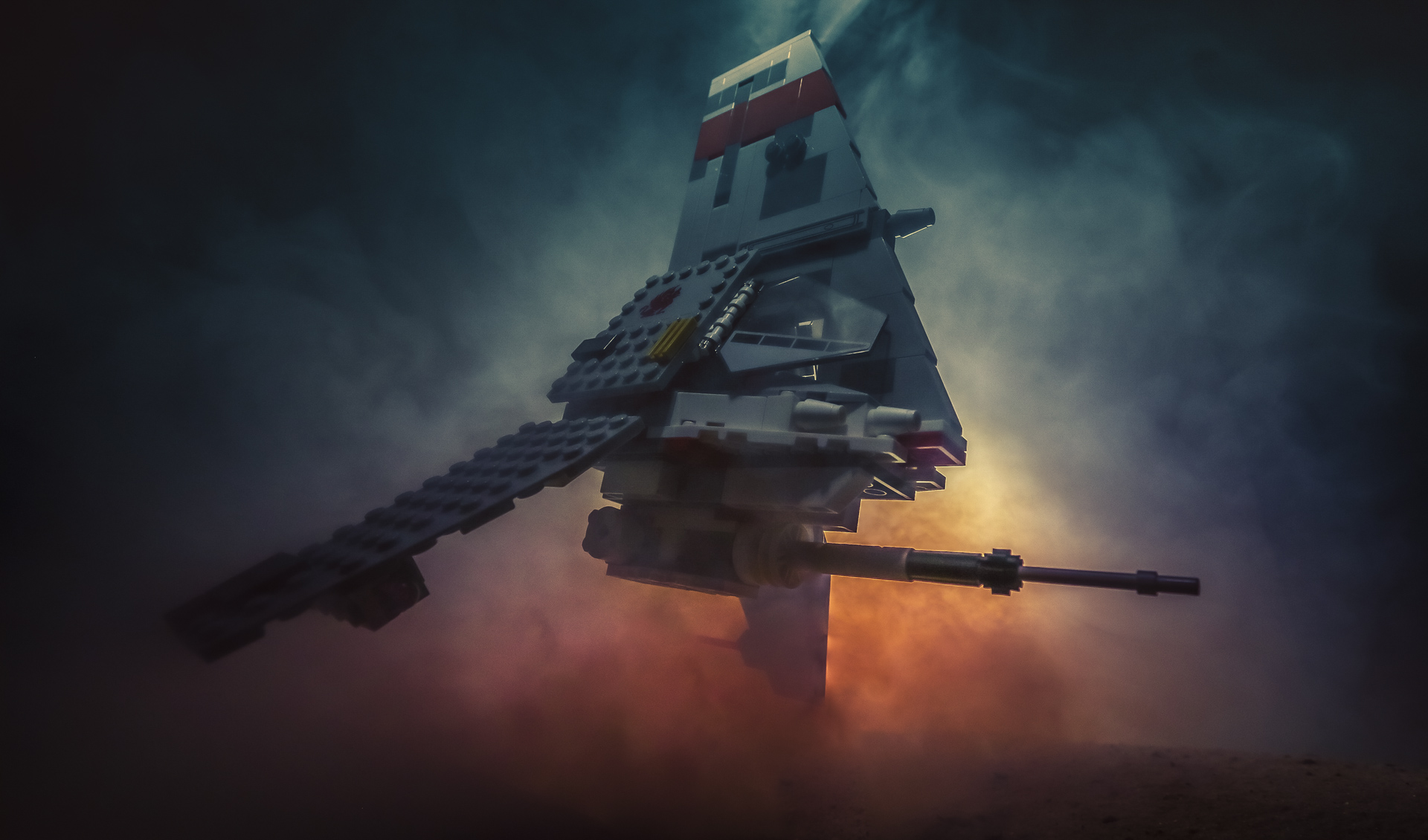
Two images from this series show how the whole system sings. In Oh no! The rancor! the creature explodes through a hail of debris. A wide lens inflates the cavern; a single hard key and fast shutter freeze the thrown particles so we feel the danger, not the technique. In Excuse me mister, a lone minifig holds a burning match before an Imperial AT-ST Walker in the trees. The torch motif started years back when Hughes built an alien exploring a cave — “he needs a light… I’m going to try a match.” Here, the tiny practical flame becomes a warm key against cool forest haze; Hughes’ DIY forest scene does the rest.
The craft has led to professional gigs. Hughes has shot sets for LEGO and other brands — shooting models and toys to place them in recognizable story moments. Lately, he’s circling back to his roots: he’s recreating environments he loved from earlier work, matching lighting and color grades from old notes — not for nostalgia, but because the constraint sharpens the spark, and he wants to create more dramatic images.
The frames you see here aren’t composites of what might have been. They’re records of what actually happened in a tiny world for a split second — coffee grounds flying, powder snowing, smoke curling, a match flaring. That’s the quiet magic Hughes chases: when play turns into picture and your brain forgets the scale.
You’re reading the BRICKA Issue 1 preview.
Subscribe to unlock the full magazine archive and future issues.