


Featuring Photography by Anna Bitanga
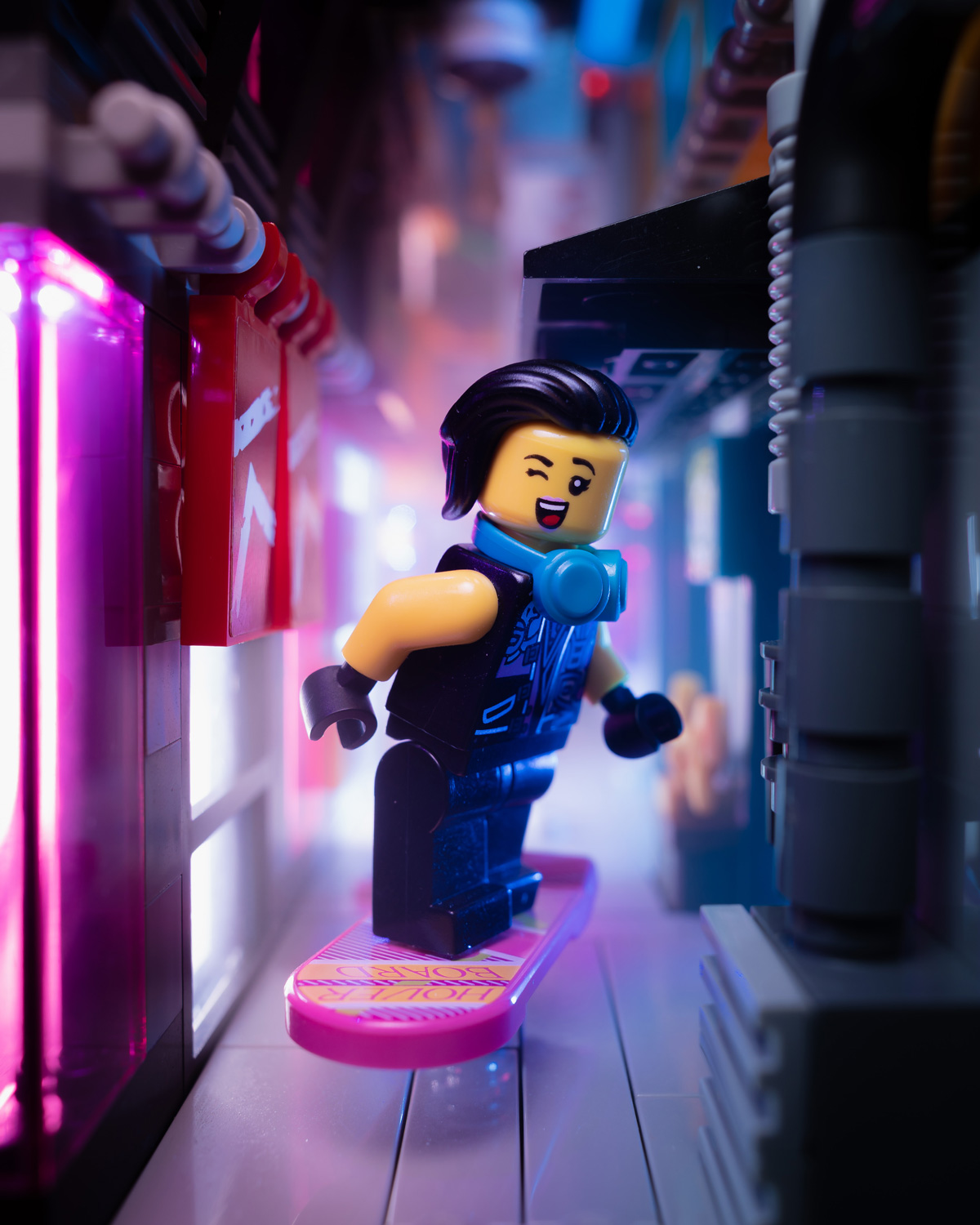
For Anna Bitanga, the whole point is light. LEGO and minifigures are simply the scale at which she works — a way to create constraints, build problems, and push herself as a photographer. She starts with characters, but what she’s really building are lighting opportunities: windows that glow, doorways that carve silhouettes, scenes that invite shadow. “Most of my photos are just exercises in lighting,” she shares. LEGO becomes the medium because it lets her invent these challenges from the ground up — then solve them with curiosity and precision.
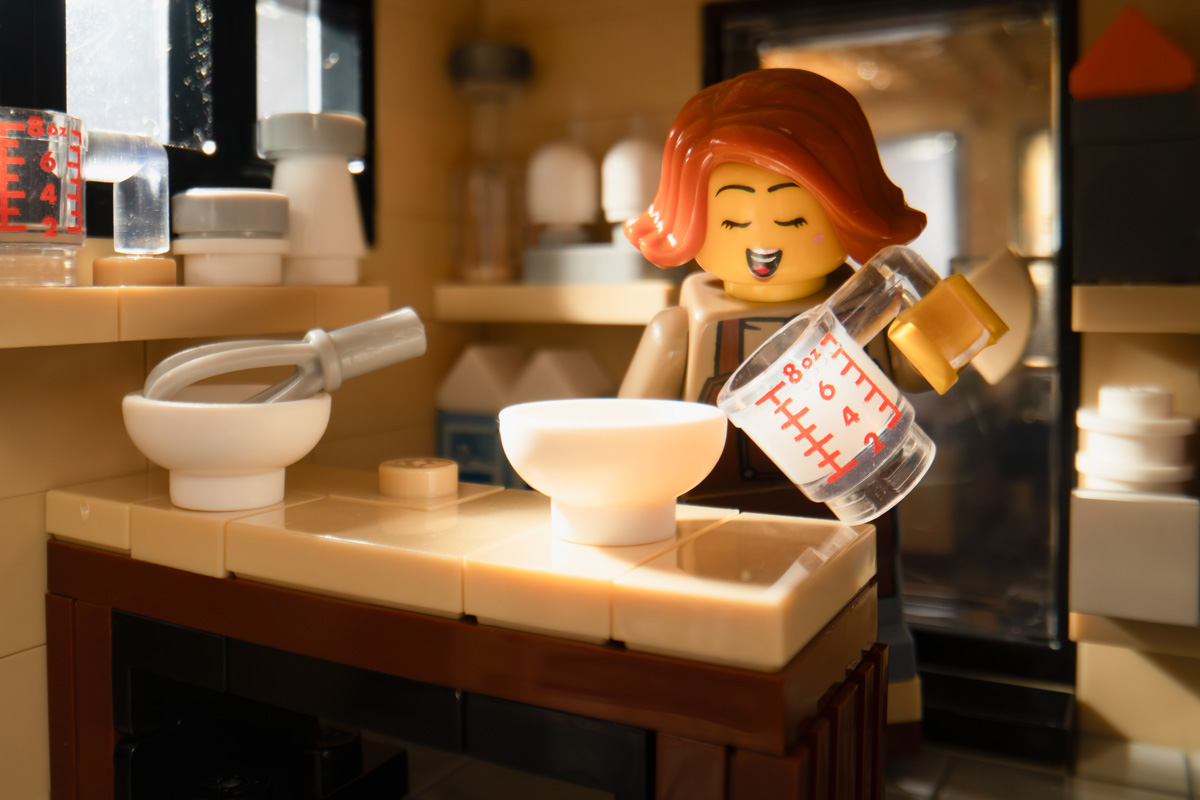
That philosophy is immediately visible in Baking Morning. A minifigure pours ingredients into a bowl, flour hanging midair, the countertop glowing with soft warmth. The scene feels domestic and real because the light behaves exactly as your eye expects, even at minifig scale. It’s intimate. It’s lived-in.
There's more! Continue reading this article by subscribing to BRICKA.
There's more! Continue reading this article by subscribing to BRICKA.
Photography entered her life long before minifigs. A constant observer, photography was her way to see the world. “I like looking at the detail of things — and forcing myself to slow down.” But her work stalled when human portraiture demanded social negotiation — asking people to pose, to perform, to give their time. As an introvert, it felt like too much. But she still wanted to take portraits. Parenthood reopened the door. Over a decade ago, the long hours at playgrounds became practice sessions. Minifigures became willing subjects: they were patient, expressive, and endlessly customizable. Bitanga began taking her little plastic subjects outside, crouching low to the ground in parks and streets, chasing natural light at a scale most people never notice. Passersby hovered, curious about whatever must be happening down there. Anna was simply shaping and capturing light.
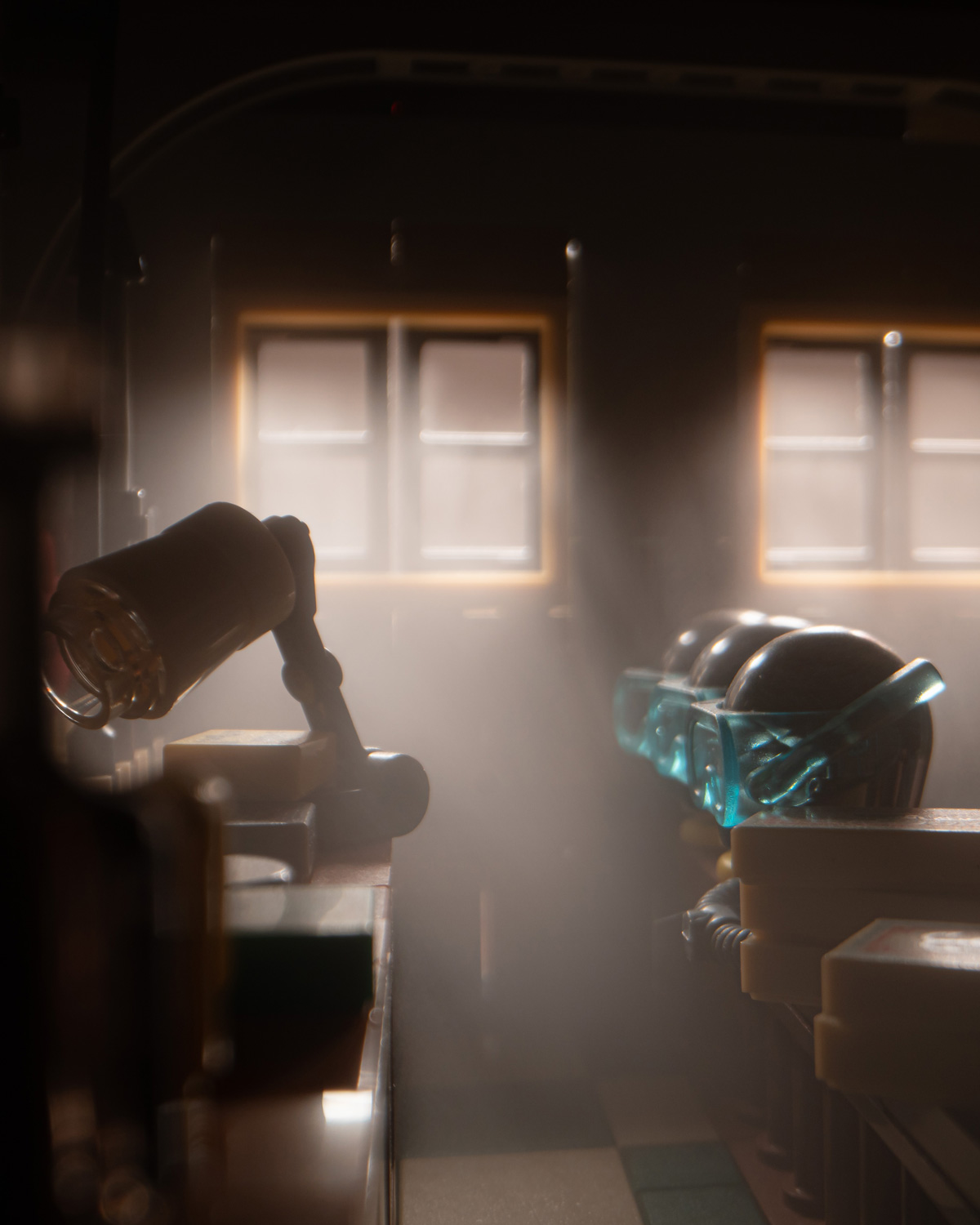
What separates her work from most LEGO photography is her refusal to settle for traditional lighting. “No lights are built for minifig scale. Everything is big compared to a minifigure.” In Fishing Store (Closed), light slices through dusty windows into an empty interior. No minifigure is required; the space itself feels occupied, or that it will be occupied. The space is built to feel fragile — imperfections intentional. In an era of AI polish and frictionless imagery, her work insists on texture, unevenness, and truth.
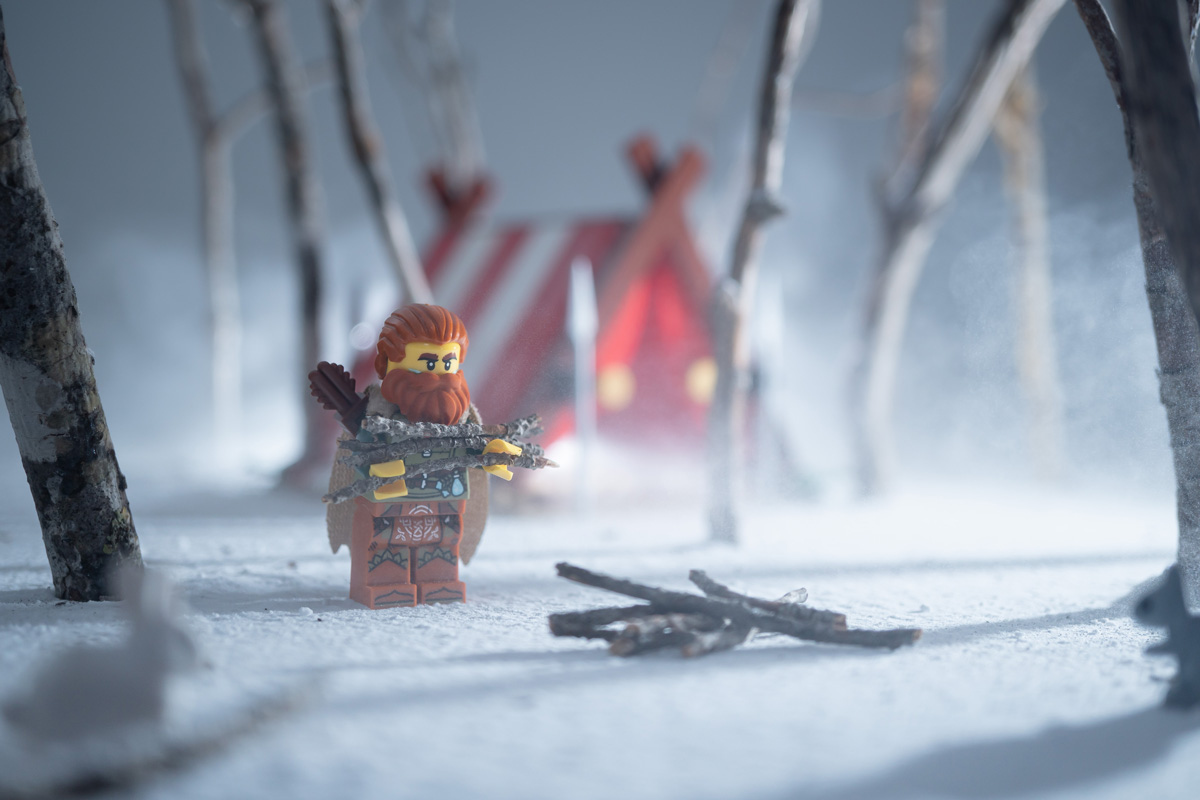
“I start with minifigures always.” Four Bricks Tall refers to the height of a minifigure, and Anna treats them like living portrait subjects, not props. She spends hours assembling faces and hair — “this is cute… this is cute…” — drawing on a love of Dungeons & Dragons and character creation. That character-first mindset now extends beyond photography into Minifig Realms, Bitanga’s custom accessories line for builders and minifig photographers. Designed originally for her own scenes, the cloaks and clothing elements give form to the kinds of characters LEGO rarely makes — and do so with the same restraint and intention she brings to her images.
Only after she has crafted her characters does she build the environment, and she builds it like a movie set: “I don’t build like a regular LEGO person. I build like someone who needs to light the scene.” She only really builds what the camera will see. Walls without roofs. Rooms without backs. Windows and doorways placed to shape light.

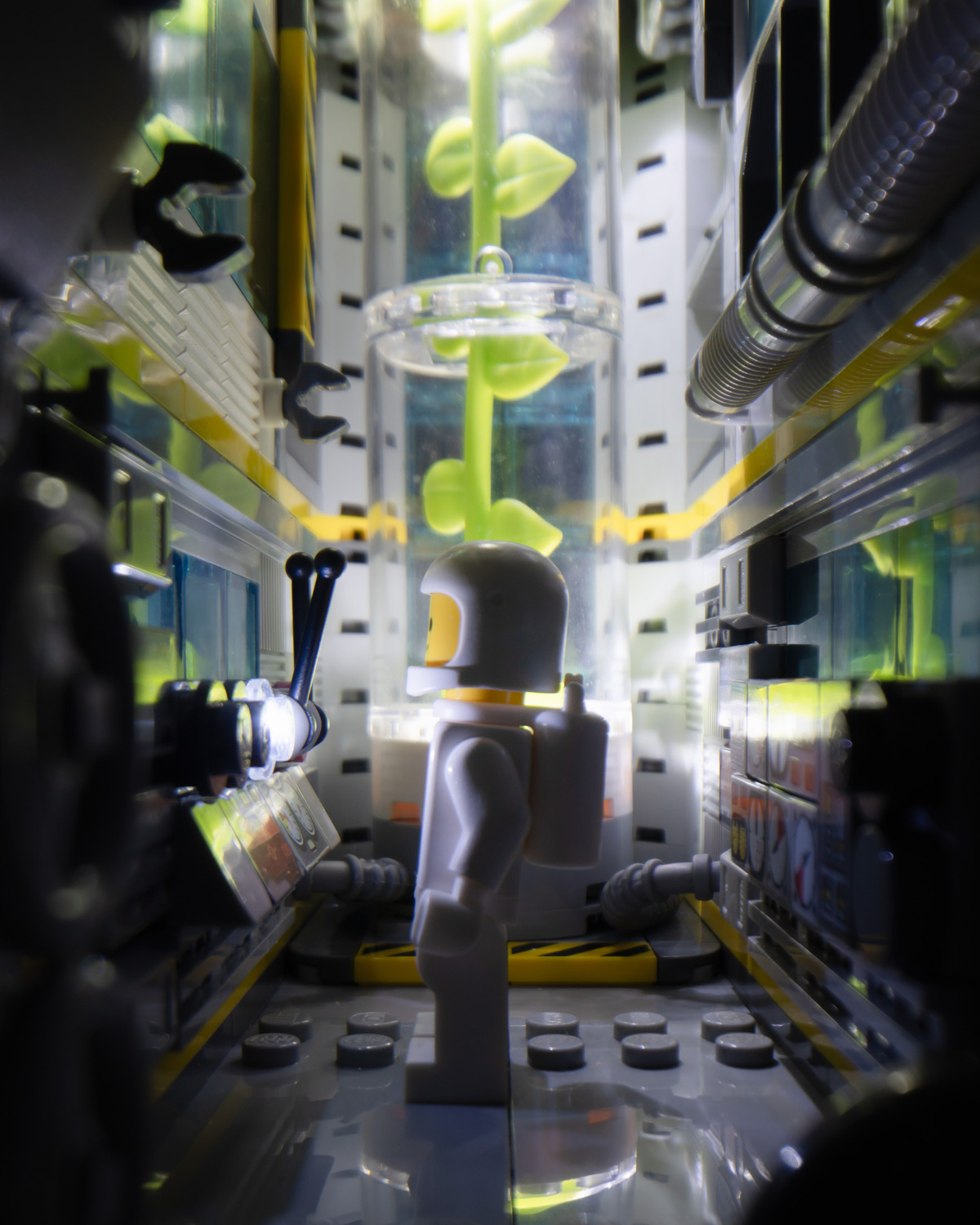
Space Botany Lab shows that philosophy in full. A translucent cylinder glows green. A tiny button emits light just strong enough to pull the figure’s gaze. Illumination pours through panels from both sides, layered and intentional. It looks complex because it is — a composition of practical lights and external sources working together to create depth at a miniature scale.
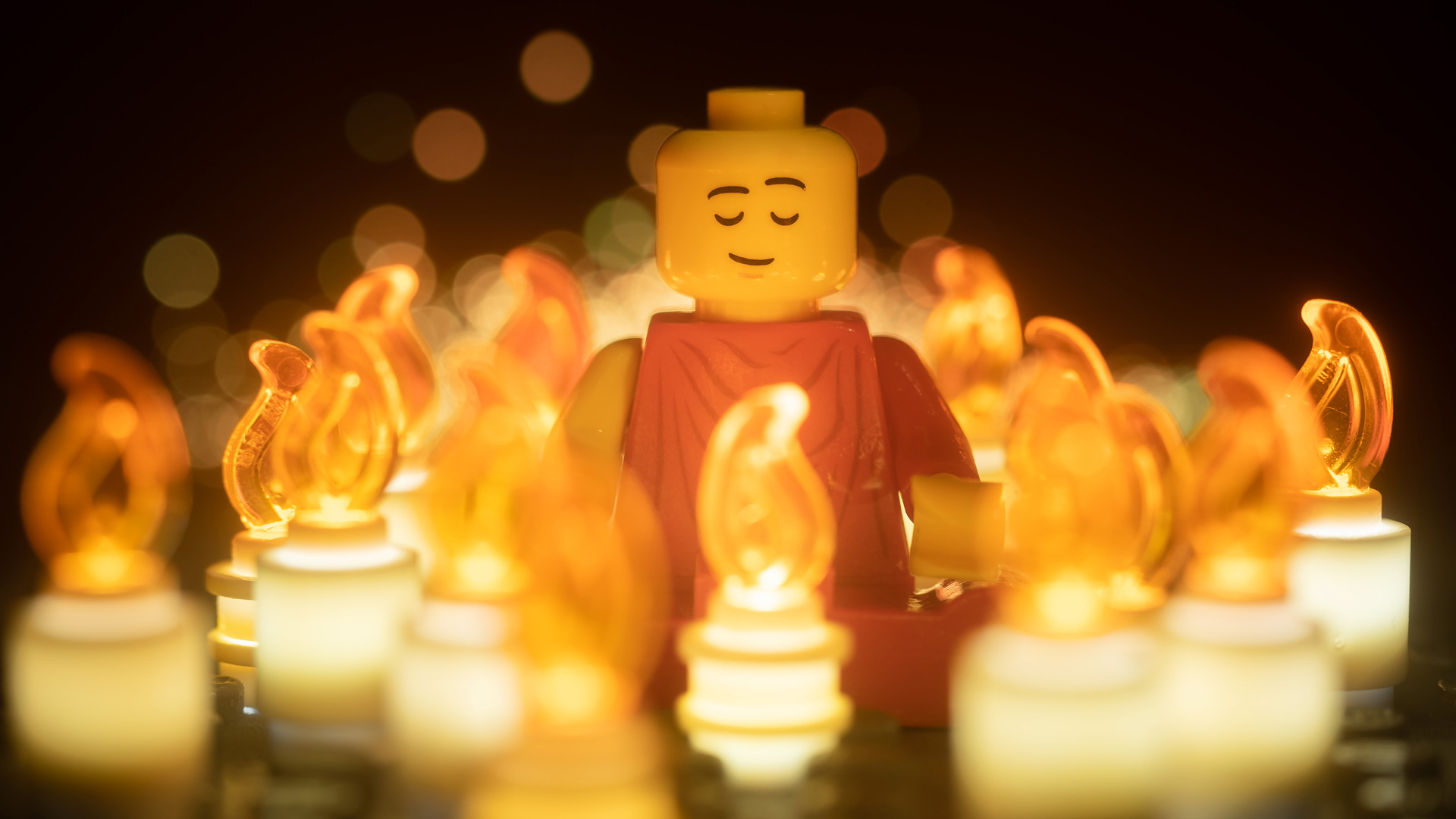
Anna doesn’t storyboard her visual stories. She follows the next lighting challenge. What happens if light is wireless? What if illumination comes from below? In Monk + Candles, a ring of flames feels ritualistic and magical, made possible by induction-powered lights concealed beneath the scene. In Radioactive, an eerie glow and a hint of fog turn a technical experiment into something narrative.
As her images circulated, people began asking, “How?” Teaching followed naturally, and for Bitanga, it’s more than giving back to the community; teaching tests her own knowledge. “If you can explain your process, that means you really understand it.” She also wants to see more great LEGO photography from her contemporaries, and in that way, she elevates others and pushes herself.
Anna has shot for LEGO, helped identify and vet photographers for brand projects, and played a key role in shaping how toy photography is recognized, curated, and taken seriously through platforms like Brick Central and publications like LEGO In Focus.
At the center of it all is something simple: it’s fun. As long as there’s light to shape, characters to build, and techniques to explore, Anna Bitanga will keep working at the four-bricks-tall scale — and seeing the world more clearly because of it.